
US halts Iran strikes, Abu Dhabi Ukraine talks & more
The United States has signaled a halt to strikes on Iran as regional negotiations over maritime transit in the Strait of Hormuz advance. Meanwhile, secret talks mediated by Washington between Russia and Ukraine in Abu Dhabi have introduced a contentious new framework for European security. Elsewhere, diplomatic shifts accelerate as Armenia and Turkey pursue closer ties away from Moscow's orbit.
10 stories62 sources checked
Listen to this edition
PiBrief Geopolitics, November 11, 2026
The lineup
In this edition
 01
US Signals End to Iran Strikes Amid Strait of Hormuz Talks; Oil Prices Fall
- 02
US Mediates Ukraine-Russia Peace Talks; Kushner's Security Framework Stirs European Concerns
 03
Abu Dhabi Talks Resume: Russia, Ukraine, U.S. Seek Security Framework Amidst Battlefield Clashes
 04
Abu Dhabi Summit: US Brokers Secret Talks Between Russia, Ukraine on European Security Architecture
 05
G7 Ministers Meet in Paris: Indo-Pacific Realignment and Ukraine Support Discussed
 06
France Summons Iranian Envoy Over Alleged IRGC Cyberattack on Supermarket Refrigeration Systems
 07
Armenian-Turkish Thaw Accelerates at COP31, Signifying Break from Moscow's Orbit
 08
CSTO Summit in Moscow: Russia Pushes Eurasian Architecture Amidst Deepening Fractures
 09
Qatar Mediates U.S.-Iran Tensions, Attends G7 Meeting Amidst Maritime Operation Concerns
 10
Italy Criticizes EU Allies Over Red Sea Security Contributions After Tanker Attack Off Oman
See all 10 as a listHide the list
- US Signals End to Iran Strikes Amid Strait of Hormuz Talks; Oil Prices Fall
- US Mediates Ukraine-Russia Peace Talks; Kushner's Security Framework Stirs European Concerns
- Abu Dhabi Talks Resume: Russia, Ukraine, U.S. Seek Security Framework Amidst Battlefield Clashes
- Abu Dhabi Summit: US Brokers Secret Talks Between Russia, Ukraine on European Security Architecture
- G7 Ministers Meet in Paris: Indo-Pacific Realignment and Ukraine Support Discussed
- France Summons Iranian Envoy Over Alleged IRGC Cyberattack on Supermarket Refrigeration Systems
- Armenian-Turkish Thaw Accelerates at COP31, Signifying Break from Moscow's Orbit
- CSTO Summit in Moscow: Russia Pushes Eurasian Architecture Amidst Deepening Fractures
- Qatar Mediates U.S.-Iran Tensions, Attends G7 Meeting Amidst Maritime Operation Concerns
- Italy Criticizes EU Allies Over Red Sea Security Contributions After Tanker Attack Off Oman
Story 1 of 10
2 min read
US Signals End to Iran Strikes Amid Strait of Hormuz Talks; Oil Prices Fall
U.S. President Donald Trump indicated that renewed military strikes against Iran are unlikely, contingent on progress in nuclear negotiations and the reopening of the Strait of Hormuz. This announcement led to a significant drop in global crude oil prices. Months of intensified warfare and maritime disruptions had previously threatened commercial navigation and driven up energy costs.
Read the full storyFold the full story2 min · 8 sources
Geopolitical calculations across the Middle East experienced a sharp recalibration on November 10 and 11, 2026, after U.S. President Donald Trump publicly indicated that renewed American military strikes against Iran are "highly unlikely"[1]. Trump’s statements, reiterated during a broad broadcast interview and disseminated throughout global policy circles, hinged the suspension of offensive action on ongoing progress regarding negotiations over Tehran’s nuclear apparatus and the operational reopening of the Strait of Hormuz[1]. The remarks triggered an immediate reaction across global financial markets, sending crude oil futures tumbling by more than 5%, with West Texas Intermediate dropping to $86.19 per barrel and Brent crude falling to $92.80 on major energy exchanges[1].
The prospect of diplomatic off-ramps follows months of intensified warfare in 2026 that featured joint U.S.-Israeli strikes against Iranian infrastructure and retaliatory maritime disruptions that closed the vital Strait of Hormuz to routine commercial navigation[2][1][3]. Maritime transit through the choke point had become perilous, with commercial vessels encountering naval blockades and sea mines, forcing international shipping conglomerates to reroute freight around Africa and driving global energy costs upward[1][4][5]. Concurrently, Washington had executed selective blockades while permitting limited China-bound oil traffic, utilizing maritime dominance as an economic lever to pressure Tehran into a comprehensive deal[2].
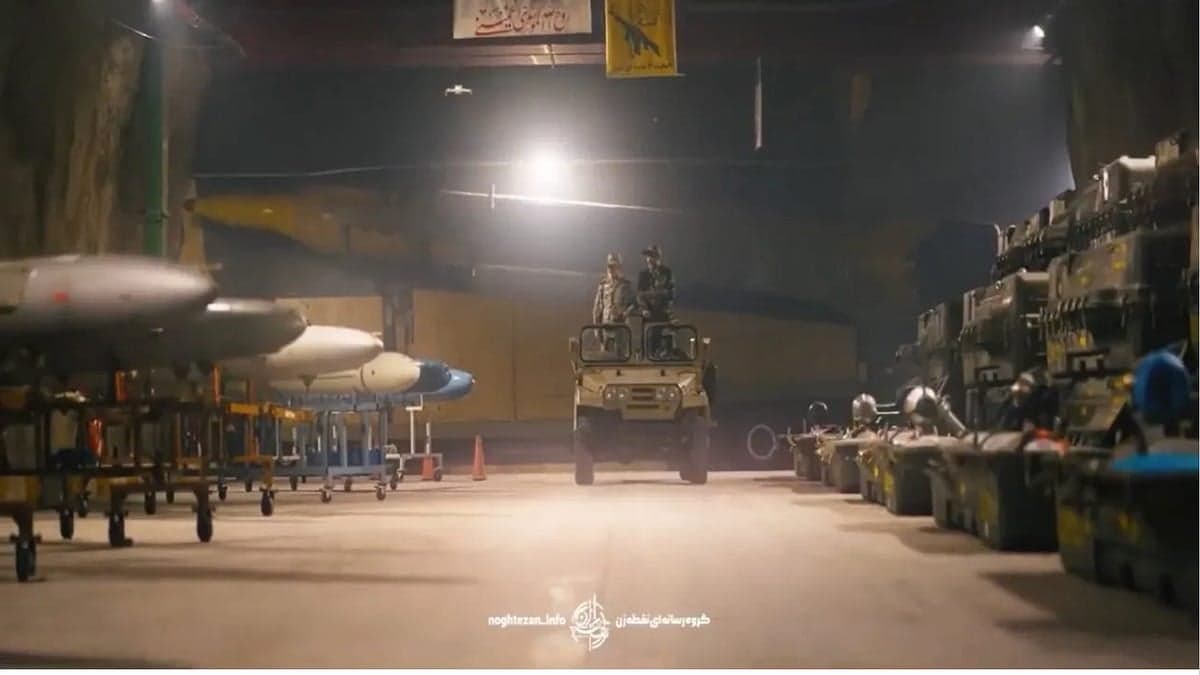
Despite Trump’s de-escalatory rhetoric, the underlying balance of power remains precarious[6][1]. In Tehran, military leaders displayed subterranean ballistic missile facilities and formally announced the lifting of self-imposed range limitations on select missile platforms, signaling deterrence capabilities should negotiations falter[6]. Furthermore, U.S. intelligence assessments and updates from the Institute for the Study of War (ISW) documented continued Iranian reliance on Caspian Sea maritime corridors to sustain arms transfers with Russia, demonstrating the resilience of the Moscow-Tehran strategic axis[7]. Meanwhile, domestic security anxieties inside Washington escalated, with Cabinet officials relocating personal residences to military installations following credible Iranian threat intelligence[6][4].
Regionally, traditional security partners are hedging against further shocks[8]. To mitigate vulnerabilities from Iranian-aligned proxy actions, the United Kingdom expanded its direct military commitments to Saudi Arabia, deploying fighter jets for defensive counter-air missions over the kingdom to safeguard urban infrastructure and energy facilities[8]. As Secretary of State Marco Rubio reiterated that rigorous economic pressure remains Washington's primary tool to force Iranian concessions, regional powers are balancing between fragile de-escalation in the Persian Gulf and the long-term reality of an entrenched, heavily armed Iranian deterrence network[6][4].
- United States
- Iran
- Strait of Hormuz
Story 2 of 10
3 min read
US Mediates Ukraine-Russia Peace Talks; Kushner's Security Framework Stirs European Concerns
High-level delegations from Ukraine and Russia met in Abu Dhabi for U.S.-mediated peace talks, addressing post-war security, humanitarian protocols, and de-escalation. Simultaneously, U.S. envoy Jared Kushner proposed a new European security architecture. Moscow demands territorial concessions and renunciation of Ukraine's NATO aspirations, while Kyiv insists on a ceasefire before territorial talks. European capitals expressed anxiety over being sidelined by U.S.-Russia bilateral arrangements.
Read the full storyFold the full story2 min · 7 sources
On November 10 and 11, 2026, high-level delegations from Ukraine and the Russian Federation engaged in their first United States-mediated peace negotiations in nine months, meeting behind closed doors in Abu Dhabi[1][2]. Facilitated by senior U.S. envoys Steve Witkoff and Jared Kushner, the discussions addressed post-war security arrangements, humanitarian protocols, prisoner exchanges, and bilateral de-escalation measures[1][2][3]. Emerging alongside the trilateral session was an ambitious and contested U.S. proposal spearheaded by Kushner aimed at constructing a broader "European security architecture"[4]. Reports indicated that U.S. mediators actively floated security arrangements modeled on NATO’s Article 4 and Article 5 to gauge whether Moscow would accept allied consultation mechanisms and defense guarantees for Kyiv in exchange for structured concessions[5].
The diplomatic initiative arrives at a critical juncture as Washington attempts to force momentum ahead of the winter season amid a military stalemate[2]. Kushner outlined the conceptual foundation of the new architecture as resting on permanent security consultations, robust crisis communication, increased military transparency, reciprocal escalation controls, and an enduring equilibrium for European stability[4]. Crucially, the framework asserts that every nation will retain sovereignty over its defense partnerships and that no single power will hold a veto over neighboring alignments[4]. However, on the negotiating table in Abu Dhabi, stark divides persist: Moscow has reiterated demands for territorial concessions - specifically over portions of Donbas still under Ukrainian control - and an explicit renunciation of Ukraine’s NATO aspirations[1][6][7]. Kyiv, backed by President Volodymyr Zelenskyy, continues to demand a formalized ceasefire before any territorial negotiations proceed, while insisting on binding multilateral defense pacts[1][6].
The initiative has opened significant friction between Washington and European capitals, who fear being sidelined in arrangements directly affecting the continent’s security[1][4]. European Union foreign policy chief Kaja Kallas delivered a cautious and critical assessment of Kushner’s architecture, stating that Europe already possesses established security institutions in NATO and the EU that must not be superseded by ad-hoc, opaque diplomatic frameworks[4]. Defense analysts across Europe have noted that Kushner’s core principles - guaranteeing sovereign defense choices without external vetos - stand in irreconcilable opposition to the Kremlin's longstanding demands to reverse NATO infrastructure to pre-1997 lines and suppress NATO enlargement[4][4]. Consequently, European strategists are calling for the EU and continental NATO allies to present their own unified framework grounded in the Helsinki Final Act rather than acquiescing to bilateral U.S.-Russian bargaining[4].
Despite these diplomatic overtures, the geopolitical reality on the ground remains volatile[1]. U.S. Secretary of State Marco Rubio characterized the opening rounds of the Abu Dhabi discussions as productive, and President Zelenskyy acknowledged the talks as constructive and substantive[1]. Yet, while negotiators met in the UAE, asymmetric and conventional hostilities continued unabated, underscored by Ukrainian drone strikes setting fire to port infrastructure in Russia's Leningrad region[1][7]. For international observers and security markets, the Abu Dhabi format marks the start of a delicate diplomatic transition: one where traditional alliance structures are being contested by great-power bilateralism, forcing European leaders to reconsider the autonomy and defense architecture of the continent[4][4].
- Ukraine
- Russian Federation
- United States
Story 3 of 10
3 min read
Abu Dhabi Talks Resume: Russia, Ukraine, U.S. Seek Security Framework Amidst Battlefield Clashes
Direct diplomatic talks between Russia and Ukraine, mediated by the United States, reconvened in Abu Dhabi on November 10, 2026, focusing on immediate humanitarian measures and potential prisoner exchanges. The negotiations, led by American envoys, aim to establish a new European security architecture, but occur amidst intense fighting on the ground, including Ukrainian drone strikes on Russian oil infrastructure and Russian attacks on Ukrainian power grids. The U.S. administration's push for breakthroughs follows significant domestic political shifts.
Read the full storyFold the full story2 min · 13 sources
Direct negotiations between Russia and Ukraine under United States mediation reconvened in Abu Dhabi on November 10, 2026, marking the first high-level trilateral diplomatic sessions between the parties in nearly nine months[1][2]. Led by American envoys Jared Kushner and Steve Witkoff, the talks entered their second day on November 11 after an initial four-hour session focused on immediate humanitarian measures and broad parameters for ending the war[3][2][4]. While Ukrainian President Volodymyr Zelenskyy characterized the discussions as "constructive and quite substantive," U.S. Secretary of State Marco Rubio, reporting from Paris, hailed the meetings as "very productive" while acknowledging that substantial hurdles remain before achieving a formal settlement[5][2][6]. Simultaneously, the negotiations addressed logistical terms for a potential large-scale exchange of prisoners of war, with American envoys preparing follow-up travels to Moscow and Kyiv to engage directly with Russian President Vladimir Putin and Ukrainian officials[5][7].
The renewal of direct diplomacy arrives amid dramatic political recalculations following the November 3 U.S. midterm elections, in which the Republican Party suffered severe legislative losses[8][9][10]. Weakened domestically by Democratic victories in both chambers of Congress, the administration of President Donald Trump has accelerated efforts to secure headline foreign policy breakthroughs[9][10]. Trump publicly signaled that Ukraine might eventually take on a "different shape" under a negotiated settlement[11], while Kushner presented a conceptual outline aimed at establishing a new overarching European security architecture modeled loosely on the defunct NATO-Russia Council[10]. Concurrently, battlefield hostilities remain intense: while envoys conferred in the United Arab Emirates, Ukrainian long-range drones struck Russia’s Baltic port of Ust-Luga in the Leningrad region, setting an oil export terminal ablaze, even as Russian forces launched coordinated missile and drone barrages targeting power infrastructure across several Ukrainian provinces[5][11].
The diplomatic initiative brings together a concentrated circle of international envoys and intelligence chiefs. Alongside Kushner and Witkoff, the American delegation includes Gen. Alexus Grynkewich, representing NATO operational coordination, while Kyiv’s delegation is headed by Rustem Umerov, Chief of Ukraine’s Foreign Intelligence Service[2]. On the Russian side, senior diplomats including Deputy Foreign Minister Sergei Ryabkov - who authored Moscow’s pre-invasion ultimatums in late 2021 regarding NATO infrastructure rollbacks - participated in discussions[5]. Diplomatic hosting and facilitation have been spearheaded by United Arab Emirates Deputy Prime Minister and Minister of Foreign Affairs Sheikh Abdullah bin Zayed Al Nahyan, who reaffirmed Abu Dhabi's ongoing role as a neutral diplomatic bridge among the belligerents[4][12].
Despite early progress on prisoner repatriation, the American strategy has provoked profound apprehension across European capitals[5][11]. In Paris and Berlin, officials have expressed alarm that Washington might circumvent European allies by negotiating regional security architecture directly with Moscow - a scenario President Zelenskyy warned would constitute a modern "Yalta 2.0" sphere-of-influence partition[5]. German Foreign Minister Johann Wadephul explicitly rebuffed Kushner’s sweeping security concept, insisting that existing European security norms must not be revised over the heads of the European Union and regional states[13]. Although Rubio reiterated that European powers must eventually be brought into the formal process, Washington’s unilateral posture has widened transatlantic fissures, leaving European defense planners scrambling to safeguard Ukraine’s sovereignty against any enforced territorial concessions[5][7][13].
- Russia
- Ukraine
- United States
Story 4 of 10
2 min read
Abu Dhabi Summit: US Brokers Secret Talks Between Russia, Ukraine on European Security Architecture
Senior delegations from Russia, Ukraine, and the United States met in Abu Dhabi for a two-day summit focused on ending the war and establishing a new European security framework. The U.S. proposal aims to create a shared security mechanism between Moscow and European capitals, similar to the defunct NATO-Russia Council. Significant disagreements emerged, with Russia prioritizing geopolitical concessions and Ukraine seeking multilateral guarantees against future aggression.
Read the full storyFold the full story1 min · 9 sources
On November 10, senior delegations from Russia, Ukraine, and the United States convened in Abu Dhabi for their first face-to-face trilateral negotiations in nine months, opening a critical two-day diplomatic summit aimed at engineering an end to the nearly five-year war[1][2][3]. While publicly framed as exploratory talks on postwar security guarantees, the core mechanism introduced by Washington involves a sweeping proposal crafted by U.S. presidential envoys Jared Kushner and Steve Witkoff to construct a new European security architecture[1][4]. Modelled loosely after the defunct NATO-Russia Council, the American blueprint envisions integrating Moscow and European capitals into a shared security mechanism to secure a permanent settlement[4].
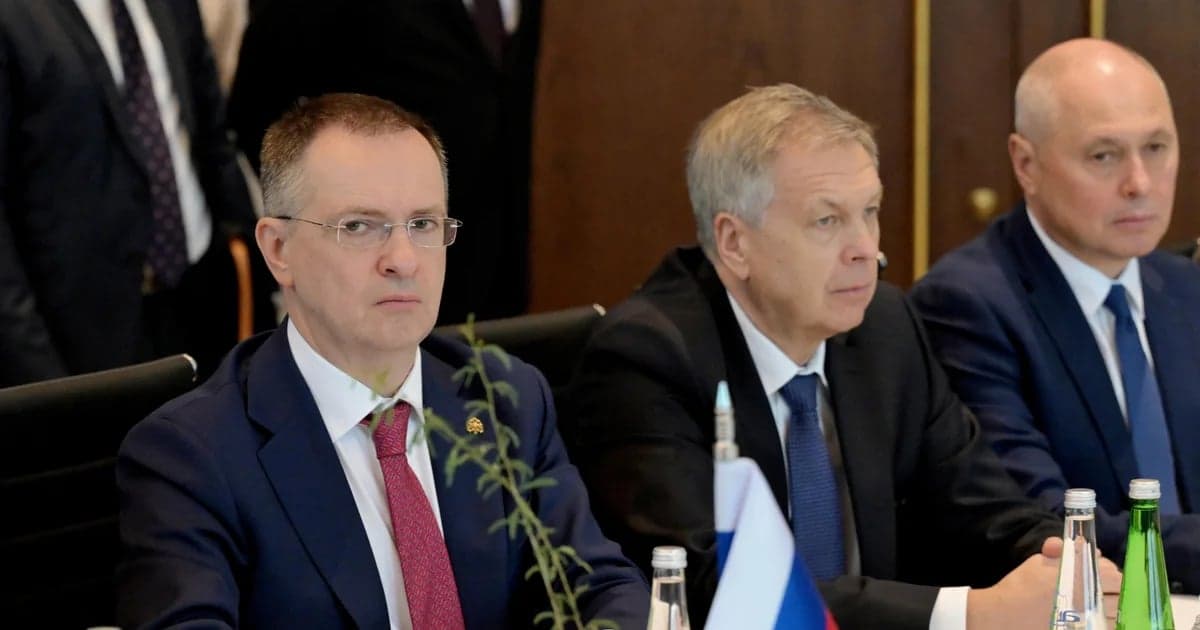
The diplomatic initiative has immediately surfaced fundamental divergences between the negotiating parties[2]. Russian negotiators - led by longtime presidential aide Vladimir Medinsky, military intelligence (GRU) chief Igor Kostyukov, and Deputy Foreign Minister Sergei Ryabkov - have sought to subordinate bilateral ceasefire terms to broad geopolitical concessions[5][2]. On November 10, Russian Foreign Minister Sergei Lavrov publicly insisted that it is “absolutely reasonable” to settle the overarching European security architecture before resolving the war on the ground, effectively reviving Moscow’s December 2021 ultimatums that demanded NATO roll back forces and military infrastructure to pre-1997 lines[5][1].
For Kyiv, represented in the United Arab Emirates by foreign intelligence chief Rustem Umerov, presidential chief of staff Kyrylo Budanov, and senior negotiator Davyd Arakhamia, the discussions focus strictly on binding multilateral guarantees against future Russian aggression[6][2]. Speaking from Copenhagen alongside Danish Prime Minister Mette Frederiksen, Ukrainian President Volodymyr Zelenskyy signaled guarded optimism, stating he was "very happy about what I hear" regarding recent diplomatic signals relayed by Kushner and Witkoff[7]. However, the parallel summitry has generated deep unease across Western Europe[8][4]. At a simultaneous G7 Foreign Ministers gathering in Paris, where Ukrainian Foreign Minister Andrii Sybiha met U.S. Secretary of State Marco Rubio, European diplomats expressed concern that the Kushner-led initiative risks conceding to Russian demands over NATO's forward posture without adequate European representation at the negotiating table[9][8][4][3].
- Russia
- Ukraine
- United States
Story 5 of 10
2 min read
G7 Ministers Meet in Paris: Indo-Pacific Realignment and Ukraine Support Discussed
G7 foreign ministers convened in Paris on November 10, 2026, to discuss critical global issues including the war in Ukraine, Middle East tensions, and supply chain security. U.S. Secretary of State Marco Rubio assured allies of continued American foreign policy commitment despite domestic political changes. A key focus was the U.S.-Japan alliance and strategic concerns regarding the upcoming APEC summit in China.
Read the full storyFold the full story2 min · 11 sources
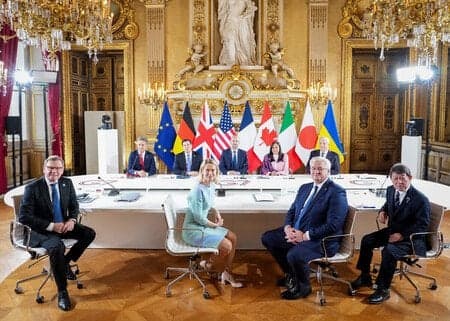
Foreign ministers of the Group of Seven (G7) industrialized powers concluded a pivotal two-day summit in Paris on November 10, adopting a joint communiqué addressing war termination efforts in Eastern Europe, Middle East escalation, and supply chain security[1]. Hosted by French Foreign Minister Jean-Noël Barrot, the gathering brought together U.S. Secretary of State Marco Rubio, German Foreign Minister Johann Wadephul, British Foreign Secretary Ed Miliband, and Japanese Foreign Minister Toshimitsu Motegi, alongside European Union High Representative Kaja Kallas and visiting delegations from Ukraine, Saudi Arabia, Egypt, Brazil, and South Korea[2][3][1]. Rubio used the summit to emphasize to skeptical allies that President Trump’s constitutional supremacy over foreign affairs ensures continuity in Washington’s external strategy regardless of the domestic political realignments caused by the recent midterms[3][1].
A central focus of the diplomatic maneuvering took place on the sidelines between Rubio and Japanese Foreign Minister Toshimitsu Motegi, who held their first face-to-face bilateral meeting since the U.S. election[4][5]. The ministers confirmed immediate initiatives to strengthen the deterrence and response capabilities of the U.S.-Japan military alliance across the Indo-Pacific[6][4]. The consultations come amid acute strategic anxiety in Tokyo regarding the upcoming Asia-Pacific Economic Cooperation (APEC) leaders' summit scheduled for November 18–19 in Shenzhen, China[6][7]. Prime Minister Sanae Takaichi’s government harbors mounting concerns that a politically embattled Trump might seek sweeping bilateral concessions or a historic trilateral pact with Chinese President Xi Jinping and Russian President Vladimir Putin during meetings in Shenzhen, potentially compromising allied containment strategies and leaving Japan exposed in the East China Sea[6][7].
The ministers also conducted intensive consultations regarding economic security, supply chain weaponization, and joint military technology development[4][1]. Motegi briefed European counterparts from Britain and Italy on the status of the joint Global Combat Air Programme developing a next-generation stealth fighter, while coordinating defensive countermeasures against North Korea’s state-backed illicit cryptocurrency seizures, which fund Pyongyang's ballistic missile programs[4][1]. On broader trade tensions, European leaders used the summit to harmonize responses against Chinese industrial manufacturing overcapacity, highlighting structural displacement in European automotive and heavy manufacturing sectors[8].
The immediate outcome of the Paris proceedings reveals an alliance system operating under severe diplomatic cross-pressures[9][10]. While G7 members successfully forged consensus on tracking illicit finance and maintaining baseline aid to Kyiv[11][1], European and East Asian allies are adjusting their foreign policies to hedge against American unpredictability[6][9]. By fortifying regional bilateral ties - such as Japan’s defense cooperation with European powers and the EU's push toward greater strategic autonomy - allied capitals are actively preparing for an international environment in which Washington’s commitments to multilateral defense umbrellas are increasingly subject to transactional renegotiation[9][4].
- G7
- Paris
- APEC
Story 6 of 10
2 min read
France Summons Iranian Envoy Over Alleged IRGC Cyberattack on Supermarket Refrigeration Systems
France summoned Iran's ambassador following findings that the Islamic Revolutionary Guard Corps (IRGC) conducted a cyberattack targeting French supermarkets' refrigeration systems in mid-October. The attack, attributed to a specialized IRGC cyber warfare unit, corrupted temperature controllers, leading to widespread food spoilage and minor fires. France is coordinating with allies for targeted sanctions and has issued international arrest warrants for alleged perpetrators.
Read the full storyFold the full story1 min · 8 sources
The French Ministry of Foreign Affairs escalated a severe diplomatic confrontation with Tehran on November 10, summoning the Iranian ambassador to Paris following official findings that the Islamic Revolutionary Guard Corps (IRGC) orchestrated a coordinated cyberattack against civilian food infrastructure[1][2][3][4]. The move follows an investigation into the mid-October sabotage of digital refrigeration controllers across approximately 700 French supermarkets[4][5][6]. French Foreign Minister Jean-Noël Barrot condemned the operation as an unprecedented assault on national critical infrastructure and confirmed that Paris is coordinating with European allies to impose targeted sanctions against Iranian cyber commanders[2][3][4].
According to technical findings released by Paris public prosecutor Laure Beccuau, forensic analysis traced the intrusive code to "Shahid Kaveh," a specialized cyber warfare unit operating under the IRGC's command[2][3]. The hackers breached internet-connected commercial temperature controllers manufactured by Danfoss, remotely switching commercial freezers into automated defrost cycles[5]. The resulting temperature spikes caused widespread spoilage of tons of fresh and frozen food, incurred tens of millions of euros in commercial damage, and sparked roughly twenty localized electrical fires[2][5][6]. The campaign also attempted to breach three blood banks operated by the French Blood Establishment (EFS) and coincided with similar refrigeration anomalies reported across facilities in Belgium, Luxembourg, and Sweden[5][6].
The Paris prosecutor’s office confirmed it has filed for international arrest warrants targeting the commander of Shahid Kaveh and two deputies on charges of organized cyber sabotage[2][3]. Speaking on French television, Barrot warned that France will deploy all proportionate countermeasures - including clandestine responses that may never be made public - to deter repeat attacks[2][4]. The attribution highlights a significant doctrinal shift in state-sponsored hybrid conflict, illustrating how geopolitical adversaries are willing to target consumer cold-chain logistics and low-level IoT infrastructure to impose economic pain far from the physical theater of war[7][5][8].
- France
- Iran
- Islamic Revolutionary Guard Corps (IRGC)
Story 7 of 10
2 min read
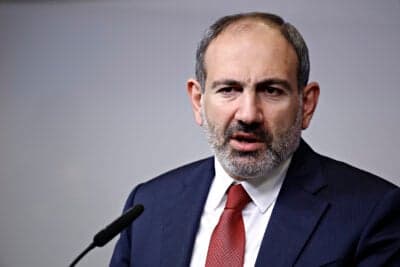
Armenian-Turkish Thaw Accelerates at COP31, Signifying Break from Moscow's Orbit
Armenian Prime Minister Nikol Pashinyan visited Antalya, Turkey, for the COP31 Summit, engaging in bilateral meetings with Turkish officials. This visit marks a significant milestone in normalizing relations between Yerevan and Ankara, accelerating the South Caucasus peace process and signaling Armenia's strategic shift away from Russian influence. The timing coincides with Pashinyan's boycott of the CSTO summit in Moscow.
Read the full storyFold the full story2 min · 3 sources
In a development carrying profound implications for the balance of power in Eurasia, Armenian Prime Minister Nikol Pashinyan arrived in Antalya, Turkey, on November 11, 2026, for a high-profile working visit centered around the United Nations COP31 Leaders' Summit[1]. Received officially by Turkish Deputy Culture Minister Serdar Çam, Pashinyan’s itinerary incorporated closed-door bilateral meetings with senior Turkish officials alongside engagements with international partners[1]. While ostensibly framed around global climate diplomacy, the visit marks a critical milestone in the normalization of relations between Yerevan and Ankara, accelerating the South Caucasus peace process and signaling a historic realignment away from regional reliance on Russia[1].
The visit builds upon a diplomatic normalization trajectory that began in late 2021 through designated special envoys, which gradually dismantled decades of total diplomatic estrangement, direct trade embargoes, and closed borders[1]. Confidence-building measures, which were accelerated by humanitarian exchanges and emergency border openings following the 2023 earthquakes, have evolved into substantive political and economic dialogue[1]. Pashinyan’s presence on Turkish soil on November 11 is particularly significant given the timing: it coincided directly with his deliberate boycott of the CSTO Council summit in Moscow, highlighting Yerevan's active recalibration of its regional alliances[1][2].
Strategic analysts at institutions such as SpecialEurasia noted that Pashinyan’s diplomatic maneuvers represent a strategic departure from Armenia's historical alignment[1]. Following the CSTO’s failure to intervene during border conflicts and the subsequent cooling of relations with the Kremlin, Armenia has vigorously pursued strategic flexibility[1][2]. By engaging directly with Turkey - a NATO member and Azerbaijan’s primary patron - Yerevan aims to establish regional stability and trade connectivity through direct bilateral consensus rather than via Moscow-brokered trilateral mechanisms[1]. This shift removes Russia's long-held role as the exclusive security broker of the South Caucasus, challenging Moscow's traditional leverage over transit routes such as the Middle Corridor[1][3].
The broader geopolitical reverberations of the Antalya meetings are manifold[1]. A durable thaw between Armenia and Turkey facilitates cross-border infrastructure revival and enhances stability along NATO’s southeastern flank[1]. However, the pivot also introduces domestic and geopolitical friction; hardline factions within the region view direct accommodation with skepticism, while Moscow monitors Yerevan's Western and Turkish diplomatic trajectory with open hostility[1]. By demonstrating an appetite for regional engagement independent of Russian patronage, Armenia’s leadership is redrawing the strategic map of the Caucasus, turning toward regional integration as its principal instrument of long-term sovereignty[1].
- Armenia
- Turkey
- Nikol Pashinyan
Story 8 of 10
2 min read
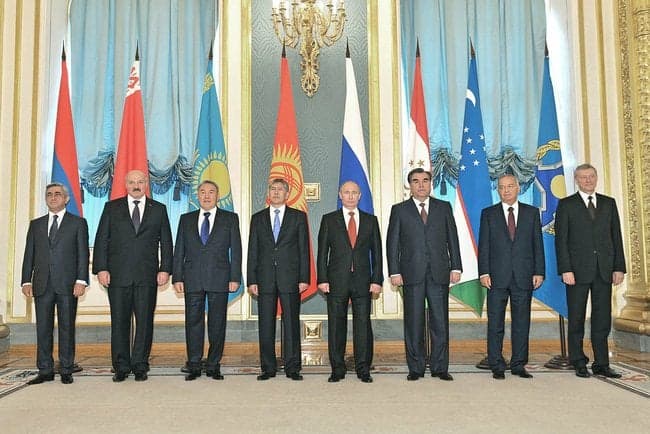
CSTO Summit in Moscow: Russia Pushes Eurasian Architecture Amidst Deepening Fractures
The Collective Security Treaty Organization (CSTO) convened in Moscow, where Russia proposed a revamped counter-terrorism strategy and a new Eurasian security architecture. The summit exposed internal distrust among member states, with concerns about Russia's diminished capacity as a security guarantor. Armenia conspicuously boycotted the assembly, signaling its growing geopolitical departure from Moscow's influence.
Read the full storyFold the full story2 min · 2 sources
On November 10 and 11, 2026, the Collective Security Treaty Organization (CSTO) convened its two-day high-level assembly in Moscow, comprising the International Collective Security Forum at the World Trade Centre and the formal Collective Security Council summit[1]. The summit represented the culmination of the Russian Federation's presidency of the bloc, during which Moscow formally prepared to hand over the organization's rotating chairmanship for 2027 to Tajikistan[1]. The Kremlin utilized the gathering to propose a major strategic overhaul, advocating for a revamped "Counter-Terrorism Strategy until 2030," deeper joint integration in advanced military technologies, and the erection of an alternative, non-Western collective security architecture spanning Eurasia[1][1].
The proceedings revealed persistent institutional vulnerabilities within the post-Soviet security bloc[1][1]. Rather than projecting an image of unified Eurasian strength to counter NATO's northern and eastern expansion, the summit exposed acute political distrust among member states[1][1]. While Moscow showcased plans for joint defense production and modernized equipment, regional defense specialists noted that Russia’s diminished conventional stockpiles limit its capacity to act as a genuine security guarantor for Central Asia[1]. Furthermore, critics and regional analysts observed that the alliance's new counter-terrorism priorities - heavily focused on combating "information threats" and "extremism" - function primarily as tools of internal surveillance and political suppression for member regimes rather than a concrete military deterrent against cross-border instability stemming from Afghanistan[1].
The most striking development of the two-day summit was the conspicuous absence of Armenia[1]. Armenian Prime Minister Nikol Pashinyan maintained an active boycott of the Moscow assembly, leaving Yerevan’s seat vacant[1]. Strategic analysts view Pashinyan's persistent refusal to participate as empirical confirmation of the alliance’s structural failure: when Armenia faced existential security crises along its border in recent years, the CSTO refrained from deploying collective defense mechanisms, cementing perceptions across the South Caucasus that the bloc acts as a "paper tiger"[1]. The contrast was further accentuated as Pashinyan chose instead to conduct diplomatic visits to Turkey on November 11, underscoring Yerevan’s accelerating geopolitical departure from Moscow's orbit[2][1].
Expert commentary surrounding the conclusion of the Moscow meetings suggests the CSTO is increasingly shifting from an effective mutual defense alliance into a ceremonial political forum[1]. While Moscow attempts to maintain the Central Asian republics - Kazakhstan, Kyrgyzstan, and Tajikistan - within its strategic gravitational pull, these states continue to pursue multi-vector foreign policies, hedging their bets through growing partnerships with China, Turkey, and Western powers[1]. As Tajikistan prepares to assume the 2027 chairmanship, the bloc faces deep ideological exhaustion, challenged by internal rivalries and an inability to project credible collective defense beyond the rhetorical ambit of the Kremlin[1][1].
- Collective Security Treaty Organization (CSTO)
- Russian Federation
- Moscow
Story 9 of 10
2 min read
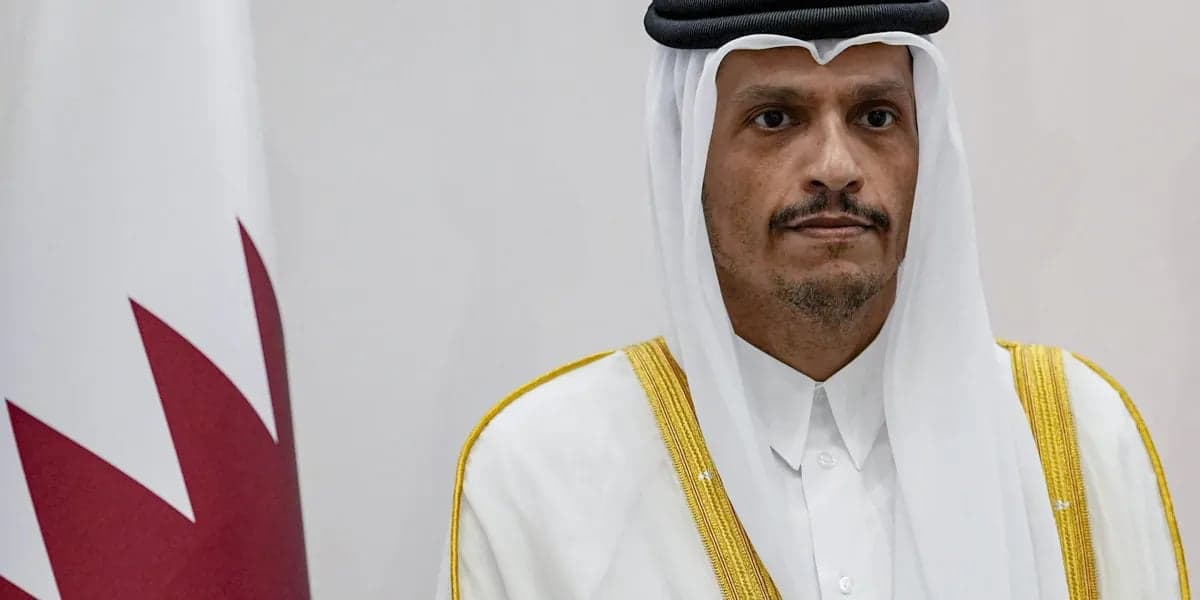
Qatar Mediates U.S.-Iran Tensions, Attends G7 Meeting Amidst Maritime Operation Concerns
Qatar's Prime Minister engaged in high-level diplomatic efforts to de-escalate U.S.-Iran tensions, meeting with U.S. officials before attending the G7 Foreign Ministers Meeting in Paris. While indirect talks have shown progress on procedural issues, a final agreement remains elusive, with the U.S. maintaining pressure through maritime operations. European nations at the G7 urged a diplomatic containment strategy amid concerns over energy volatility and retaliatory strikes.
Read the full storyFold the full story1 min · 4 sources
Qatar launched an aggressive diplomatic offensive on November 10 to de-escalate the broader regional confrontation between the United States and Iran, marked by an unscheduled appearance by Qatari Prime Minister Sheikh Mohammed bin Abdulrahman Al Thani at the G7 Foreign Ministers Meeting in Paris[1][2]. The diplomatic intervention followed back-to-back closed-door sessions in Washington, where Sheikh Mohammed met with U.S. President Donald Trump and Vice President JD Vance at the White House[1][2]. Emerging from those consultations, Qatari officials shuttled directly to European counterparts to outline terms for an off-ramp before ongoing maritime operations trigger a broader economic shock[1][2].
Briefing reporters in Doha, Qatari Foreign Ministry spokesperson Ibrahim bin Sultan Al Hashmi confirmed that indirect talks between American and Iranian officials have narrowed select procedural obstacles, though he cautioned that a final agreement remains elusive[1]. In parallel public commentary, President Trump suggested that Washington sees "positive momentum" toward ending open hostilities, though he reiterated that regional Gulf states benefit from U.S. enforcement actions such as "Operation Iron Gate," which has curtailed Iranian maritime commerce and overland transit[1]. Trump simultaneously warned that U.S. military forces remain "locked and loaded" should Tehran attempt any further provocations[1].
The high-level mediation in Paris exposed contrasting pressures inside the Western coalition[1]. European foreign ministers, contending with soaring energy volatility and hybrid retaliatory strikes on domestic infrastructure, pressed U.S. Secretary of State Marco Rubio to prioritize diplomatic containment[1][3]. Rubio publicly signaled that Washington currently sees "no need" to restart offensive combat operations inside Iranian territory[4]. However, speaking at a security forum in Abu Dhabi, senior Emirati diplomatic advisor Anwar Gargash injected caution into the proceedings, warning regional economies to brace for an extended period of instability rather than expecting a clean diplomatic breakthrough[1].
- Qatar
- United States
- Iran
Story 10 of 10
2 min read
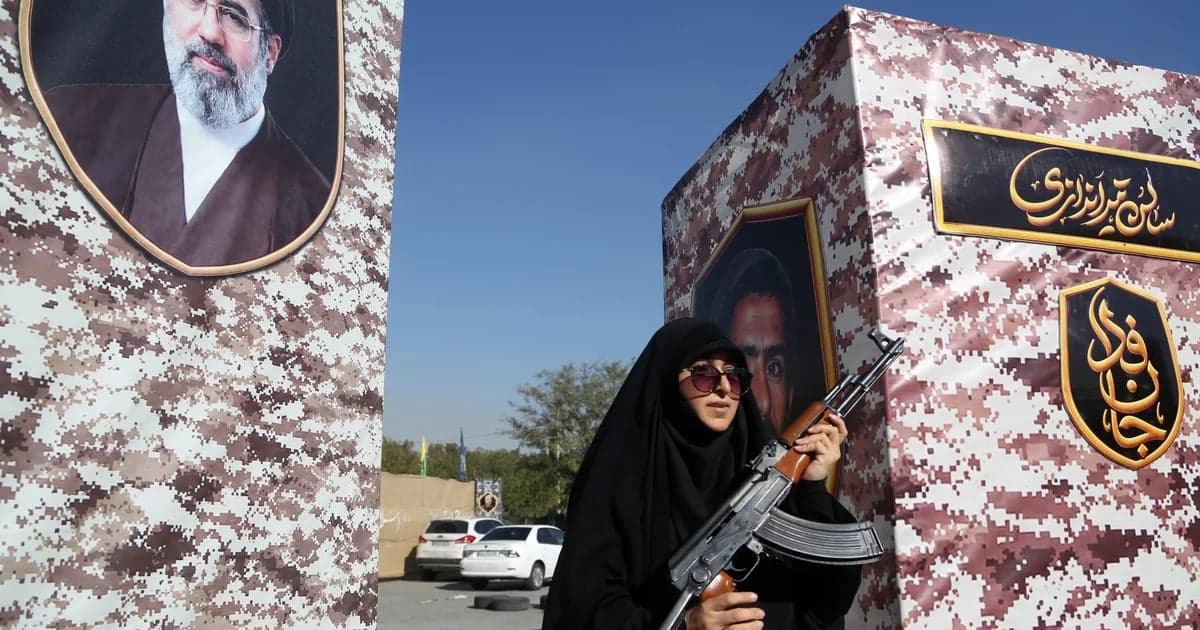
Italy Criticizes EU Allies Over Red Sea Security Contributions After Tanker Attack Off Oman
Italian Defense Minister Guido Crosetto publicly criticized European Union members for insufficient naval contributions to Operation Aspides, aimed at protecting Red Sea shipping. Despite a directive for more warships, Crosetto noted a lack of concrete deployments, with Italy and Greece bearing a disproportionate burden. This dispute coincides with an airborne projectile striking a commercial tanker off Oman, highlighting ongoing maritime security risks.
Read the full storyFold the full story1 min · 8 sources
Frictions over burden-sharing in international waterways broke into the open on November 10 when Italian Defense Minister Guido Crosetto publicly criticized European Union members for failing to deploy necessary naval assets to Operation Aspides[1][2]. Despite an urgent directive issued by EU Foreign Affairs High Representative Kaja Kallas requesting the mobilization of at least 10 warships to protect commercial transit corridors, Crosetto told reporters that he has "yet to see anything concrete" materialized by European capitals[2][3][4]. Crosetto warned that Italy and Greece are effectively carrying an unsustainable share of the European naval burden, even though sea lanes connecting through the Suez Canal remain vital to all European economies[5][6].
The political dispute over maritime commitments comes as shipping routes face compounding operational hazards[6]. On the evening of November 10, the United Kingdom Maritime Trade Operations (UKMTO) agency reported that an international commercial tanker was struck by an unidentified airborne projectile off the northeast coast of Oman[1]. The vessel had been transiting the southern navigation channel favored by Western commercial operators, a path that Iranian authorities have actively warned vessels to avoid in favor of inshore northern routes[1]. While the strike resulted in no casualties or environmental leaks, it punctured claims regarding total control over maritime choke points[1].
The maritime incident occurred almost simultaneously with public remarks from U.S. Defense Secretary Pete Hegseth, who declared that allied forces maintain firm control over the Strait of Hormuz[1]. Concurrently, Secretary of State Marco Rubio used the G7 platform in Paris to demand that partner nations "step up" their naval commitments in Middle Eastern littoral corridors[7]. With roughly 40 percent of Italy's foreign maritime trade routed through the Red Sea and Gulf region, Rome's frustration underscores a widening fissure between Southern European states bearing the logistical costs of commercial convoy protection and Northern European partners reluctant to divert naval assets away from territorial defense in the North Atlantic and Baltic basins[2][5][8].
- Italy
- European Union
- Operation Aspides
You're all caught up.
That's every story in Wednesday's PiBrief Geopolitics. And there's a newer edition waiting for you.
All PiBrief Geopolitics editions
Subscribe to receive daily briefings about geopolitics and world news in your email.
Get PiBrief Geopolitics in your inbox
A free newsletter on geopolitics and world news. Diplomacy, conflict, the global economy, and elections, ranked and explained, with an audio briefing in every edition.
Free forever / no account / 1-click unsubscribe