
Trump, Xi, Putin summit, Ukraine NATO talks & more
Donald Trump, Xi Jinping, and Vladimir Putin are preparing for an unprecedented trilateral summit on arms control in Shenzhen. Leaked diplomatic proposals reveal contentious negotiations over NATO boundaries and territorial concessions regarding Ukraine. Meanwhile, Washington is pushing to formalize a Quad leaders meeting as regional diplomacy kicks off at the ASEAN summit in Manila.
12 stories69 sources checked
Listen to this edition
PiBrief Geopolitics, November 15, 2026
The lineup
In this edition
 01
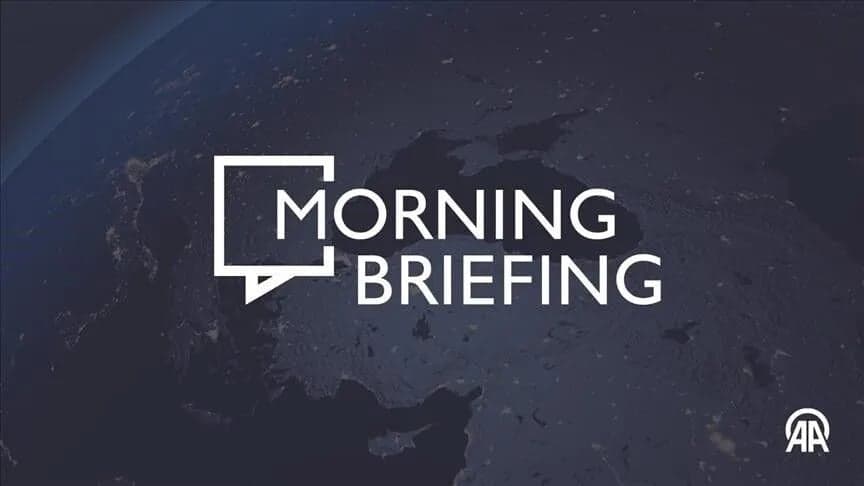
Trump, Xi, Putin to Hold Historic Trilateral Summit in Shenzhen on Arms Control
 02
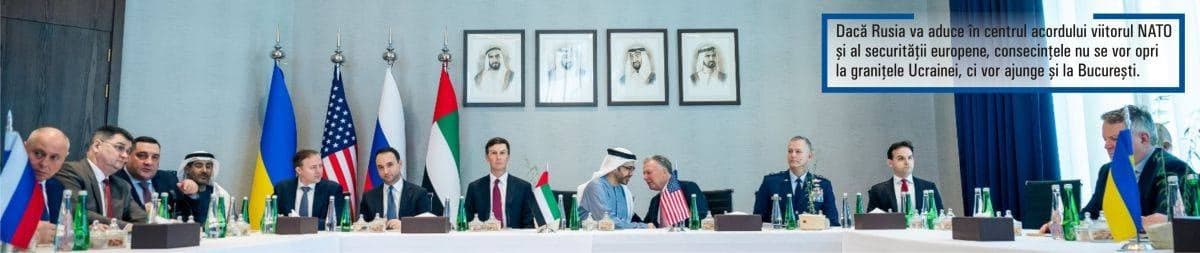
Leaked Documents: Russia Demands NATO Retreat to 1997 Borders; US Probes Donbas Trade-Off
 03
Zelenskiy Discloses U.S. Proposal: NATO Accession for Donbas Concessions
 04
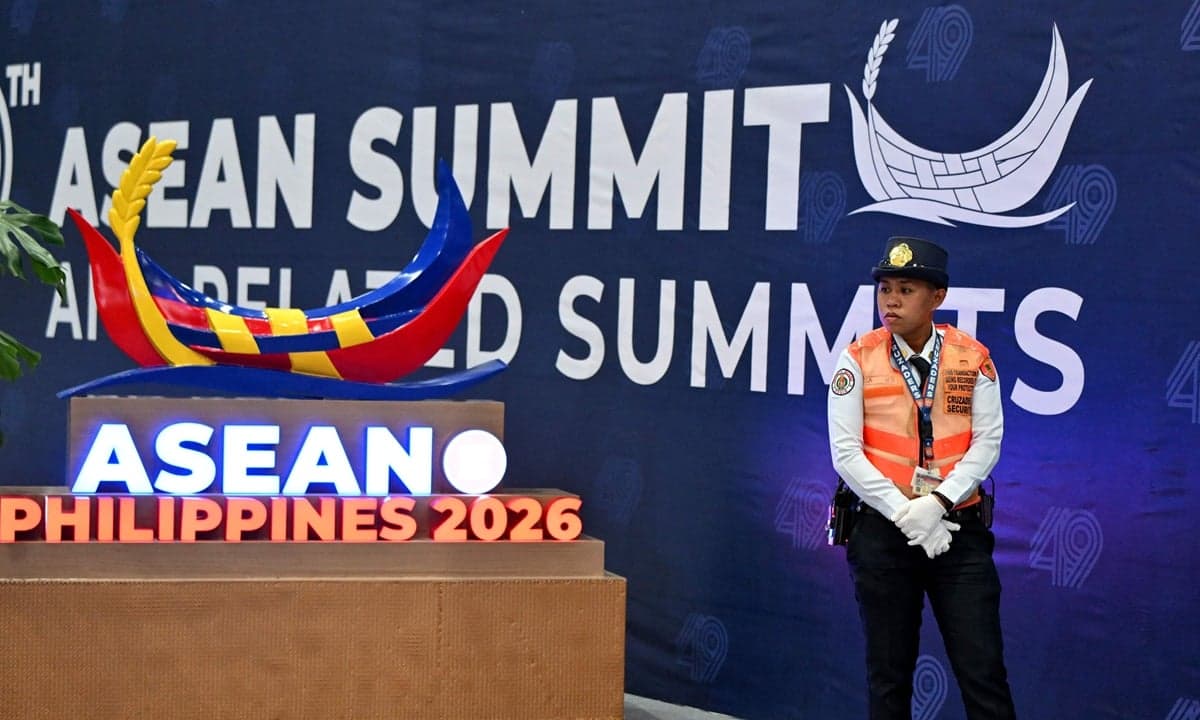
ASEAN Summit Opens in Manila; U.S. Seeks Formal Quad Leaders' Meeting
 05
Washington Pushes Formal Quad Summit Amid Manila Diplomacy
 06
Saudi Arabia Seeks EU Naval Support and Sanctions Against Iran Amid Gulf Tensions
 07
Iran Balances Hormuz Maritime Pressure with Qatari Mediation Efforts
- 08
Europe Unites Ukraine Peace Talks Bloc Amid Russian Hesitation
 09
EU and Nigeria Forge Migration Accord; Hardened Border Security Emphasized
 10
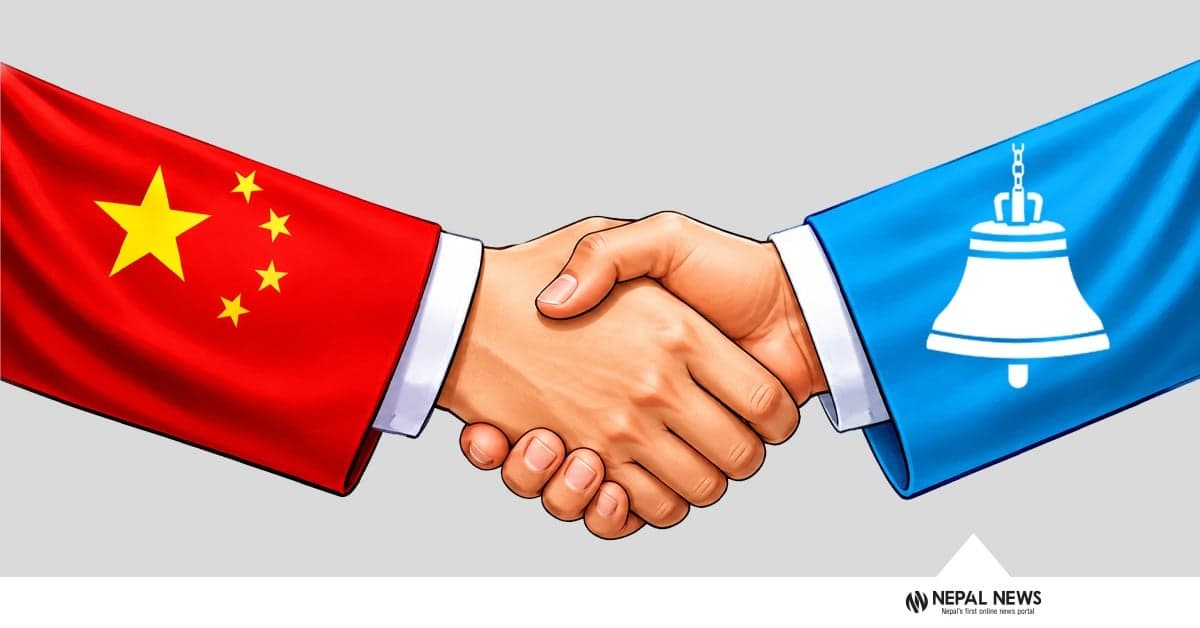
Beijing Courts Nepal's Non-Communist Party in Strategic Shift
- 11
Senate Hearing Challenges U.S. 'One Somalia' Policy, Eyes Somaliland Recognition
 12
Francophonie Summit: African Leadership Rift Over Rwanda's Secretary-General Bid
See all 12 as a listHide the list
- Trump, Xi, Putin to Hold Historic Trilateral Summit in Shenzhen on Arms Control
- Leaked Documents: Russia Demands NATO Retreat to 1997 Borders; US Probes Donbas Trade-Off
- Zelenskiy Discloses U.S. Proposal: NATO Accession for Donbas Concessions
- ASEAN Summit Opens in Manila; U.S. Seeks Formal Quad Leaders' Meeting
- Washington Pushes Formal Quad Summit Amid Manila Diplomacy
- Saudi Arabia Seeks EU Naval Support and Sanctions Against Iran Amid Gulf Tensions
- Iran Balances Hormuz Maritime Pressure with Qatari Mediation Efforts
- Europe Unites Ukraine Peace Talks Bloc Amid Russian Hesitation
- EU and Nigeria Forge Migration Accord; Hardened Border Security Emphasized
- Beijing Courts Nepal's Non-Communist Party in Strategic Shift
- Senate Hearing Challenges U.S. 'One Somalia' Policy, Eyes Somaliland Recognition
- Francophonie Summit: African Leadership Rift Over Rwanda's Secretary-General Bid
Story 1 of 12
2 min read
Trump, Xi, Putin to Hold Historic Trilateral Summit in Shenzhen on Arms Control
The U.S., China, and Russia will hold an unprecedented trilateral summit in Shenzhen on November 19, 2026, on the sidelines of the APEC meeting. Presidents Trump, Xi, and Putin will focus on nuclear arms control and regional security, excluding the Ukraine conflict from the formal agenda. This historic gathering follows the expiration of the New START treaty and marks the first formal joint meeting of the three nuclear superpowers' leaders.
Read the full storyFold the full story2 min · 9 sources
Official statements from the White House and the Kremlin confirmed that U.S. President Donald Trump, Chinese President Xi Jinping, and Russian President Vladimir Putin will convene for an unprecedented trilateral summit on November 19, 2026, in the southern Chinese tech metropolis of Shenzhen[1][2]. The historic tripartite gathering - scheduled to take place on the sidelines of the 33rd Asia-Pacific Economic Cooperation (APEC) Leaders’ Meeting - marks the first time the heads of the three nuclear superpowers will meet in a formal joint format[3][2]. White House spokeswoman Olivia Wales and Kremlin press secretary Dmitry Peskov both verified the summit framework, noting that the agenda will focus heavily on nuclear arms control and regional security flashpoints, including the ongoing conflict with Iran[1][4][5]. U.S. officials also confirmed that the conflict in Ukraine will be excluded from the trilateral session's formal agenda[4].
The diplomatic breakthrough follows months of strategic uncertainty after the expiration of the New START treaty in February 2026, which lifted limits on the American and Russian deployed atomic arsenals for the first time in more than fifty years[2]. Washington had previously rebuffed Moscow’s proposal to extend the bilateral pact, with the Trump administration demanding a modernized, trilateral framework that incorporates China’s expanding strategic arsenal, currently estimated at over 600 nuclear warheads[2]. Beijing had resisted trilateral disarmament talks on the grounds of arsenal parity, but Chinese Foreign Ministry spokesperson Mao Ning and senior leadership ultimately leveraged their role as APEC host to broker the talks[3][6]. The summit also takes place against the backdrop of a delicate trade truce between Washington and Beijing set to lapse in January 2027, as well as recent espionage allegations in Washington involving semiconductor supply chains that U.S. officials stated will be sidestepped to keep the summit focused on grand strategy[6][7].
International relations analysts have widely likened the forthcoming meeting to a modern-day Yalta Conference, noting that the three leaders are attempting to negotiate the parameters of a multipolar security architecture[8][9]. However, foreign policy experts, including scholars at the Brookings Institution and the University of Nevada, emphasize that the meeting may yield more symbolism than binding accords, cautioning that a comprehensive arms control framework remains difficult given sharp strategic divergences[8][3]. For Beijing, hosting the summit enhances President Xi’s standing as an indispensable global convener capable of mediating between Washington and Moscow[3][6]. In Washington and allied capitals, the exclusion of third parties like Kyiv has triggered heightened scrutiny over whether great-power bilateralism will sideline smaller sovereign states[8][9].
- Donald Trump
- Xi Jinping
- Vladimir Putin
Story 2 of 12
2 min read
Leaked Documents: Russia Demands NATO Retreat to 1997 Borders; US Probes Donbas Trade-Off
Leaked documents from backchannel peace talks in Abu Dhabi reveal Russia's demand for NATO to revert to its 1997 borders as a condition for ending the war in Ukraine. This includes rolling back forces and infrastructure from Eastern European members and prohibiting Ukraine's accession to NATO or the EU. Concurrently, U.S. officials reportedly discussed with Ukraine the possibility of voluntarily withdrawing forces from Donbas in exchange for accelerated NATO membership.
Read the full storyFold the full story2 min · 7 sources
A Russian negotiating document presented during backchannel peace discussions in Abu Dhabi between Russian delegates and senior Trump administration envoys Jared Kushner and Steve Witkoff revealed that Moscow is conditioning an end to the war in Ukraine on a sweeping dismantling of the post-Cold War security architecture[1][2][3]. The classified framework demands that NATO roll back its military forces, infrastructure, and forward deployments to their 1997 positions - effectively stripping security guarantees from Poland, the Baltic states, Romania, and other Eastern European members that joined the alliance after the collapse of the Warsaw Pact[1][2][4]. The document also seeks legally binding prohibitions against Ukraine ever joining NATO or the European Union, while demanding strict constraints on the scope and reach of French and British independent nuclear deterrents across continental Europe[1].
The revelation coincided with disclosure from President Volodymyr Zelenskyy, who confirmed that American interlocutors had for the first time explicitly asked Ukrainian officials whether Kyiv would consider voluntarily withdrawing its armed forces from the remainder of Ukrainian-controlled Donbas in exchange for accelerated NATO membership[5]. While U.S. Secretary of State Marco Rubio reportedly expressed private skepticism to European counterparts regarding whether such territorial concessions would ever satiate Moscow's long-term imperial ambitions, the emergence of the proposal underscores Washington's aggressive diplomatic push to secure a negotiated settlement[5]. At the same time, it illustrates a vast strategic gulf: while Washington envisions a localized territorial compromise coupled with Western security guarantees, Moscow is treating the conflict as leverage to reset the broader European balance of power[1][6].
The leaked demands sparked immediate outrage and bipartisan backlash in Washington and across European capitals[4]. Republican Senator Tom Cotton, Chairman of the U.S. Senate Intelligence Committee, denounced Moscow's position as "preposterous," declaring that further diplomatic negotiations under these terms are a "farce" and that Vladimir Putin will only halt hostilities when confronted with undeniable military defeat[4]. In Europe, defense analysts observed that the timing of Moscow’s document was calculated to counter parallel bilateral discussions between British and French defense officials in London, who have been exploring a coordinated Anglo-French nuclear deterrence framework to bolster European strategic autonomy independent of American political shifts[1]. Strategic analysts warn that entertaining Russian demands concerning 1997 borders risks destabilizing the core tenets of Article 5 collective defense, alienating NATO’s eastern flank and setting a perilous precedent in international law[7][4].
- Russia
- NATO
- Ukraine
Story 3 of 12
2 min read
Zelenskiy Discloses U.S. Proposal: NATO Accession for Donbas Concessions
Ukrainian President Volodymyr Zelenskiy revealed that U.S. negotiators proposed Kyiv cede the Donbas region to Russia in exchange for expedited NATO membership. This offer emerged during peace talks in Abu Dhabi, marking the first formal linkage of NATO guarantees to territorial concessions. Zelenskiy stated his government would not unilaterally surrender territory, emphasizing the need for a referendum on any such agreement.
Read the full storyFold the full story1 min · 6 sources
Ukrainian President Volodymyr Zelenskiy confirmed that American negotiators suggested Kyiv consider ceding the eastern Donbas region to Russia in exchange for accelerated accession to the NATO alliance[1]. Speaking to reporters following closed-door diplomatic talks with Russian representatives in Abu Dhabi, Zelenskiy disclosed that U.S. officials formally introduced the territorial trade-off during peace discussions, representing the first time Western mediators have formally linked NATO membership guarantees to permanent Ukrainian territorial concessions[1]. Zelenskiy affirmed that his government would not unilaterally surrender territory, stating that while he rejected a separate temporary humanitarian ceasefire proposed by Russian President Vladimir Putin in Kostiantynivka, any comprehensive final agreement involving constitutional alterations and territorial integrity would require approval via a nationwide referendum[1].
The revelation sheds light on the intensified diplomatic push by the Trump administration to force a negotiated resolution to the nearly five-year-old war prior to the scheduled trilateral meetings between the U.S., China, and Russia in Shenzhen[2][1]. Washington’s strategy appears geared toward securing an immediate cessation of hostilities by presenting Kyiv with formal Western security architecture in exchange for ceding areas currently under Russian military occupation[1]. The disclosure has sent tremors through European capitals, where key NATO allies, including Germany's political leadership, have urged Washington not to make surprise concessions to the Kremlin that could compromise long-term European security and undermine international borders[3][4].
Compounding Kyiv’s diplomatic friction with the United States, Zelenskiy also issued public criticism of private American defense technology contractors[5][6]. Specifically, Zelenskiy challenged SpaceX over its decision to impose a 161 kilometer-per-hour speed limit on Starshield satellite terminals operating within Russian-occupied territories, a restriction that has persisted for five days and impaired Ukrainian air defense operations against incoming drone barrages[6]. Zelenskiy warned that technical caps of this nature act as de facto political recognition of contested frontlines, complicating tactical defensive measures and signaling an erosion of allied support at a pivotal juncture in diplomatic negotiations[6].
- Volodymyr Zelenskiy
- NATO
- Donbas
Story 4 of 12
2 min read
ASEAN Summit Opens in Manila; U.S. Seeks Formal Quad Leaders' Meeting
The 49th ASEAN Summit commenced in Manila, focusing on supply chain integration, economic resilience, and South China Sea Code of Conduct negotiations. Simultaneously, the U.S. confirmed efforts to organize an in-person Quad Leaders' Summit in Manila, involving leaders from the U.S., India, Australia, and Japan. This parallel meeting aims to address critical minerals, naval interoperability, and maritime security.
Read the full storyFold the full story2 min · 13 sources
The 49th Association of Southeast Asian Nations (ASEAN) Summit opened in Manila on November 15, 2026, bringing together regional heads of state and international partners under the chairmanship of Philippine President Ferdinand Marcos Jr.[1][2]. Convening at the Philippine International Convention Center, regional leaders focused discussions on supply chain integration, regional economic resilience, and long-stalled negotiations with Beijing regarding a binding South China Sea Code of Conduct[2][3]. In an address to plenary delegates, International Monetary Fund Managing Director Kristalina Georgieva praised the bloc's adoption of the ASEAN Digital Economy Framework, pointing to Southeast Asia's 4.9 percent projected growth as a global bright spot navigating severe inflationary energy shocks and climate disruptions[4]. The summit's opening was preceded by significant bilateral milestones, including an agreement between Marcos and Canadian Prime Minister Mark Carney concluding negotiations on the Canada-Philippines Free Trade Agreement[5][6].
Simultaneously, the diplomatic stage in Manila became the focal point for major-power alignment when the U.S. State Department forcefully rejected claims that the Quadrilateral Security Dialogue (Quad) has lost momentum[7]. Responding to reports questioning the coalition’s vitality, U.S. Assistant Secretary of State for Global Public Affairs Dylan Johnson confirmed that Washington and its partners are actively working to formalize an in-person Quad Leaders' Summit in Manila for November 17[7][8]. The summit is scheduled to convene President Trump, Indian Prime Minister Narendra Modi, Australian Prime Minister Anthony Albanese, and Japanese Prime Minister Sanae Takaichi[7][9]. The gathering would mark the first summit of Quad leaders since September 2024 and their first in-person meeting during Trump's second presidential administration[10].
Diplomats familiar with the Quad planning indicated that the agenda will concentrate on critical minerals supply chain security, joint naval interoperability, and safeguarding commercial shipping corridors amid mounting disruptions in international waterways[10][11]. The diplomatic maneuver has drawn pushback from Beijing; state-aligned commentary in China argued that holding a Quad leaders' session parallel to ASEAN risks undermining "ASEAN centrality" and turns the Southeast Asian forum into an arena for major-power confrontation[3]. Southeast Asian diplomats have privately voiced concerns over balancing defense alignments with essential economic partnerships, particularly as leaders prepare for President Trump’s arrival and subsequent bilateral summits across the region[12][13].
- ASEAN
- Ferdinand Marcos Jr.
- Kristalina Georgieva
Story 5 of 12
2 min read
Washington Pushes Formal Quad Summit Amid Manila Diplomacy
The U.S. is actively working to formalize a Quadrilateral Security Dialogue (Quad) Leaders Summit in Manila, countering reports of the alliance weakening. This diplomatic push aims to institutionalize the Quad between the United States, India, Australia, and Japan on the sidelines of the ASEAN Summit.
Read the full storyFold the full story2 min · 6 sources
The United States executed a rapid diplomatic intervention to reaffirm the vitality of the Quadrilateral Security Dialogue (Quad), forcefully countering media reports that the Indo-Pacific alliance had fallen "on life support" due to high-level disengagement[1][2]. Assistant Secretary of State for Global Public Affairs Dylan Johnson publicly challenged claims of U.S. neglect, revealing that Washington and its partner nations are actively working to formalize a full Quad Leaders Summit between the United States, India, Australia, and Japan on the sidelines of the ASEAN Summit and East Asia Summit in Manila[1][2].
The diplomatic push materialized as global leaders converged on the Philippine capital for the 49th ASEAN Summit, hosted by Philippine President Ferdinand Marcos Jr.[3]. Attendees arriving in Manila included Australian Prime Minister Anthony Albanese, Canadian Prime Minister Mark Carney, Brazilian President Luiz Inácio Lula da Silva, and Indian Prime Minister Narendra Modi[3][2]. The friction followed a report alleging that shifting American strategic priorities and unilateral trade policies had diminished the operational relevance of the minilateral grouping[1][2]. In response, the State Department emphasized that Secretary of State Marco Rubio had convened five formal ministerial sessions with his Quad counterparts - including three within the past six months - and instituted regular monthly sherpa-level consultations[1][2].
The diplomatic choreography in Manila underscores how middle powers in the Indo-Pacific are hedging their strategies while seeking tangible commitments from Washington[4][2]. Rubio has stressed that the upcoming leaders' gathering is intended to deliver actionable maritime security and supply-chain initiatives rather than serving as a purely symbolic photo opportunity[2]. Concurrently, key partners are solidifying bilateral relationships to insulate against broader geopolitical turbulence; Canadian Prime Minister Mark Carney and Philippine President Marcos endorsed a joint framework targeting a comprehensive bilateral Free Trade Agreement by 2027, while Australia expanded mutual defense and naval coordination with Manila[3].
This diplomatic counter-offensive carries significant implications for regional security architecture, particularly in the South China Sea and Taiwan Strait, where Chinese naval forces have intensified regularized, unannounced patrol activities[5]. By formalizing a leaders-level Quad meeting within an ASEAN host nation, Washington and its partners seek to send an unambiguous signal of strategic continuity to Beijing[1][2]. However, the success of the initiative will depend on whether the four governments can bridge tactical disagreements over tariffs, critical technology export controls, and burden-sharing to deliver the institutionalized framework promised by U.S. diplomats[6][1][2].
- United States
- India
- Australia
Story 6 of 12
2 min read
Saudi Arabia Seeks EU Naval Support and Sanctions Against Iran Amid Gulf Tensions
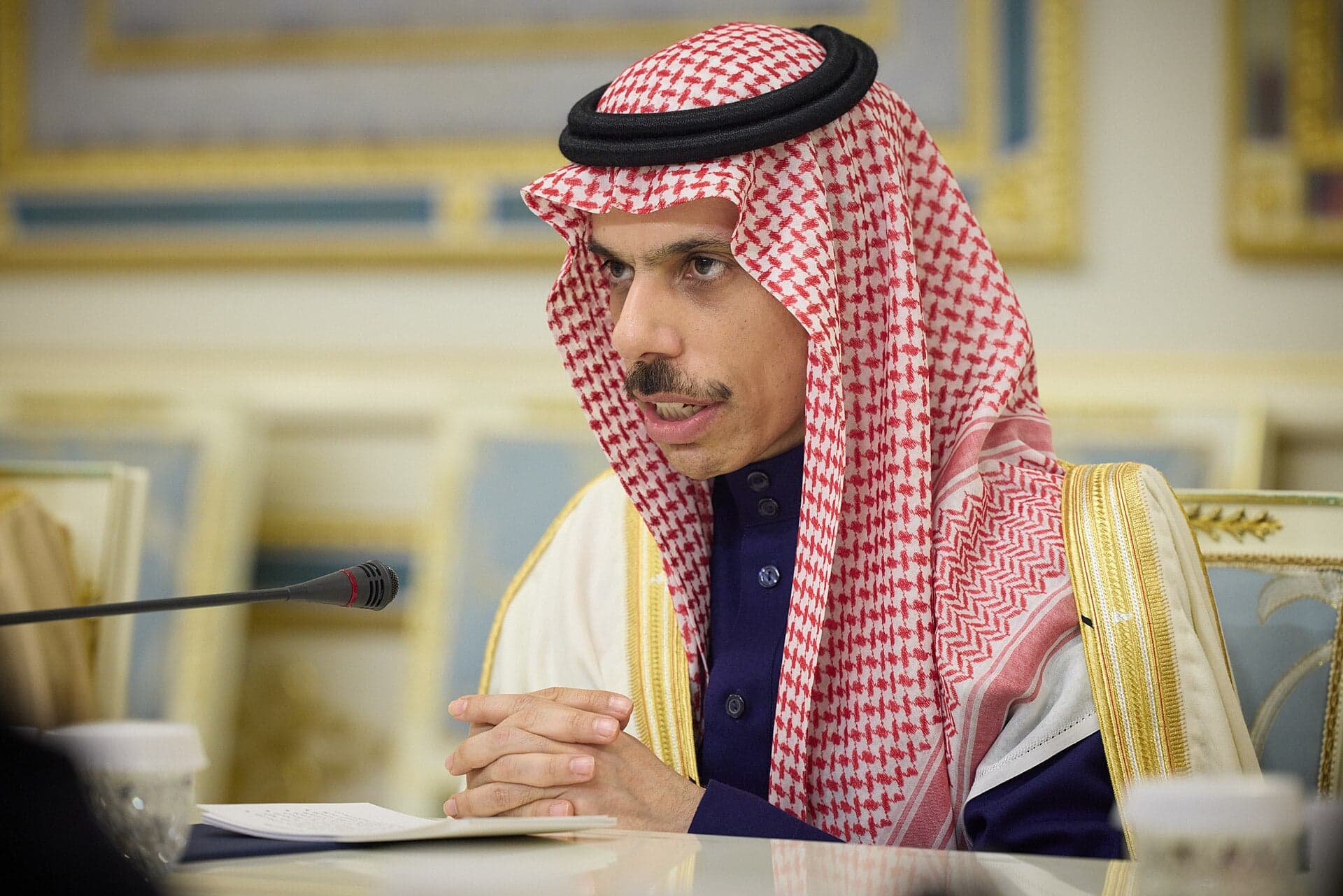
Saudi Foreign Minister Prince Faisal bin Farhan met with European counterparts in Brussels to secure commitments for naval escorts in the Strait of Hormuz and increased pressure on Iran's nuclear program. This diplomatic push follows a sharp military escalation, including IRGC drone strikes in Bahrain and alleged mine attacks on oil tankers near the Strait of Hormuz.
Read the full storyFold the full story1 min · 8 sources
Saudi Foreign Minister Prince Faisal bin Farhan held intensive bilateral meetings with European counterparts in Brussels ahead of the European Union Foreign Affairs Council[1]. Prince Faisal’s diplomatic mission is aimed at securing concrete European commitments to address severe disruptions to global maritime commerce in the Persian Gulf[1]. Specifically, Riyadh requested that European nations deploy naval vessels to escort merchant shipping through the Strait of Hormuz, expand the operational mandate of the EU’s Operation Aspides from the Red Sea into the Gulf, increase economic and diplomatic pressure on Iran’s nuclear program, and reschedule the postponed EU-Gulf Cooperation Council (GCC) leaders' summit in Riyadh[1].
The Saudi diplomatic offensive comes amid a sharp military escalation across regional chokepoints[1]. On November 15, the Islamic Revolutionary Guard Corps (IRGC) Aerospace Force launched a six-drone strike targeting a U.S. air defense radar installation at Al-Riffa Air Base in Bahrain[2][3]. Bahraini authorities issued emergency shelter alerts across the island nation, while Manama claimed its air defenses intercepted incoming projectiles[2][4]. Simultaneously, the IRGC Navy announced that multiple commercial oil tankers exploded and caught fire south of the Strait of Hormuz after striking naval mines, reiterating Tehran’s official declaration that the vital transit strait remains closed to unauthorized traffic[5][6][7]. The Iranian military establishment stated that its operations were retaliatory actions against U.S. airstrikes in southern Iran, warning that attempts to convoy vessels without Iranian authorization constitute illegal operations[2].
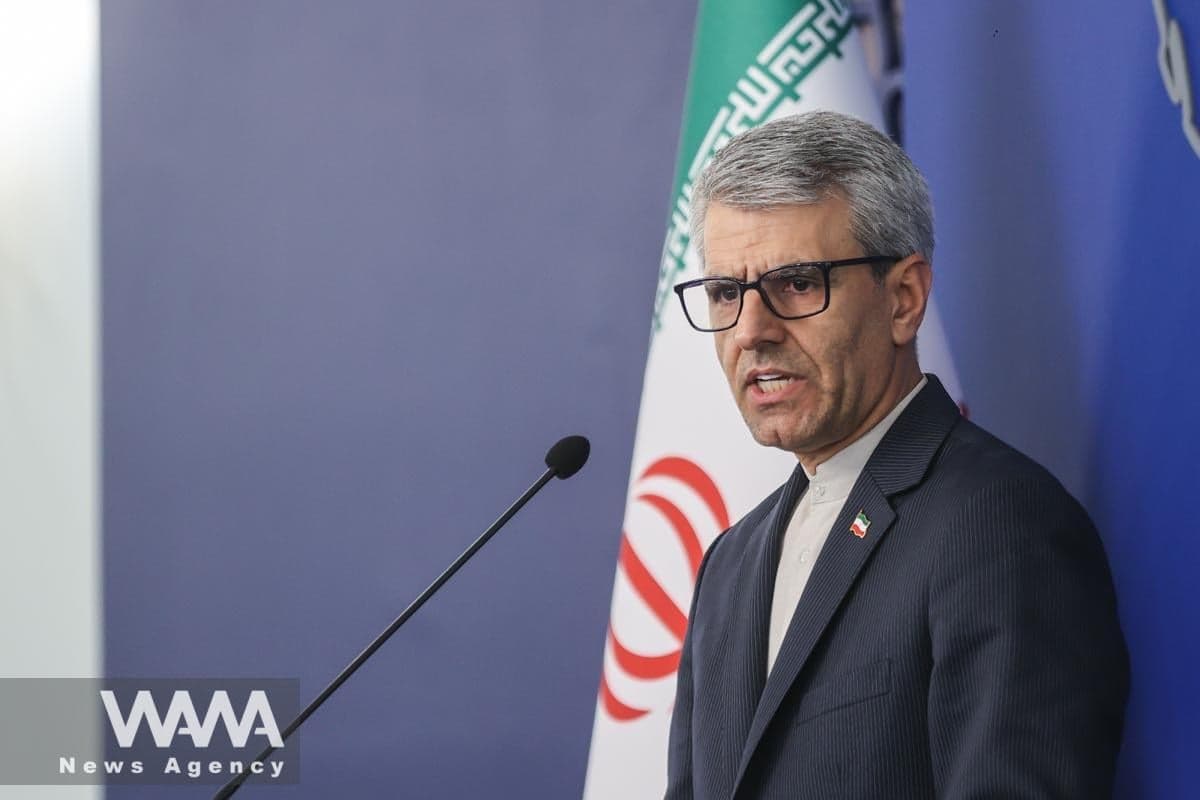
On the multilateral front, Iranian Foreign Ministry spokesman Esmaeil Baqaei accused the International Atomic Energy Agency (IAEA) and Western governments of politicizing nonproliferation oversight, asserting that biased reporting has inflicted an irreparable blow on international diplomacy[4]. Despite the belligerent posture, diplomatic backchannels remain active, with Qatari mediation aircraft traveling between Doha and Tehran in an effort to restore the stalled negotiations that collapsed following the spring and summer ceasefire arrangements[8][4]. Prince Faisal’s consultations with EU foreign ministers and High Representative Kaja Kallas will test Europe's willingness to commit naval assets to the Middle Eastern theater, as energy markets face renewed volatility from the closure of critical transit channels[1].
- Saudi Arabia
- European Union
- Iran
Story 7 of 12
2 min read
Iran Balances Hormuz Maritime Pressure with Qatari Mediation Efforts
Iran's IRGC Navy has enforced maritime measures in the Strait of Hormuz following incidents involving commercial tankers, while simultaneously hosting Qatari diplomats. Tehran frames these actions as regulatory enforcement against vessels in restricted zones. This dual approach occurs amid confidential talks involving European and Gulf powers mediated by Qatar.
Read the full storyFold the full story2 min · 7 sources
In a coordinated display of dual-track diplomacy and tactical deterrence, Iran’s Islamic Revolutionary Guard Corps (IRGC) Navy asserted maritime enforcement measures in the Strait of Hormuz after two commercial tankers caught fire along routes declared restricted by Tehran, while Iranian authorities simultaneously hosted a high-level Qatari diplomatic delegation[1]. The IRGC framed the maritime incident as regulatory enforcement against vessels operating with switched-off transponders in prohibited zones rather than direct state attacks[1]. Concurrently, Iranian Foreign Ministry spokesman Esmail Baghaei addressed regional and international developments, firmly rejecting regional demands for maritime reparations while leaving diplomatic channels open[2].
This calibrated escalation takes place against the backdrop of shifting diplomatic configurations following a confidential "Six-Party Meeting" in Paris involving foreign ministers from France, Germany, Italy, the United Kingdom, Saudi Arabia, and Qatar[3]. European and Gulf powers have rallied behind Qatari Prime Minister Mohammed bin Abdulrahman Al Thani’s mediation efforts to prevent a resumption of open hostilities between the United States, Israel, and Iran[3]. Tehran’s strategic maneuvers also reflect heightened political pressure in Washington, where legislative initiatives - including a War Powers resolution pushed by Representative Thomas Massie and broader efforts by newly emboldened Capitol Hill lawmakers - have sought to constrain executive military action against Iranian infrastructure[4].
The maneuver highlights a sharpening tension within Tehran's political and military command between hardline deterrence and urgent economic self-preservation[1][5][6]. While conservative defense officials portray the strait as an operational choke point that raises costs for Washington and its allies, Iran’s domestic economy is facing severe strain, with localized household inflation exceeding 80%, critical fuel and natural gas distribution shortfalls, and mounting currency volatility[1][5][7]. Establishment figures such as Parliament Speaker Mohammad Bagher Ghalibaf have quietly indicated that diplomatic frameworks must remain functional to prevent economic collapse[7], even as hardline elements resist perceived concessions[6].
For commercial maritime shipping, energy markets, and Gulf state security, the strategy creates a precarious environment of "neither war nor peace"[3]. While Iranian diplomats signal interest in a negotiated de-escalation mediated through Doha, the reliance on tactical naval mine incidents and ambiguous maritime enforcement introduces severe risks of accidental military miscalculation[1][3]. Western and regional powers remain engaged in quiet negotiations, recognizing that securing safe passage through Hormuz and containing nuclear breakout risks requires offering Tehran viable economic off-ramps before its domestic economic crises spiral into wider regional confrontation[1][3][5].
- Iran
- Islamic Revolutionary Guard Corps (IRGC) Navy
- Strait of Hormuz
Story 8 of 12
2 min read
Europe Unites Ukraine Peace Talks Bloc Amid Russian Hesitation
European leaders have established a unified negotiating bloc to represent the continent in upcoming Ukraine peace talks. This bloc includes key powers like Britain, France, Germany, Italy, and Poland, aiming to secure a direct seat at the table. The initiative follows concerns about fragmented European efforts undermining credibility and bargaining power.
Read the full storyFold the full story2 min · 1 source
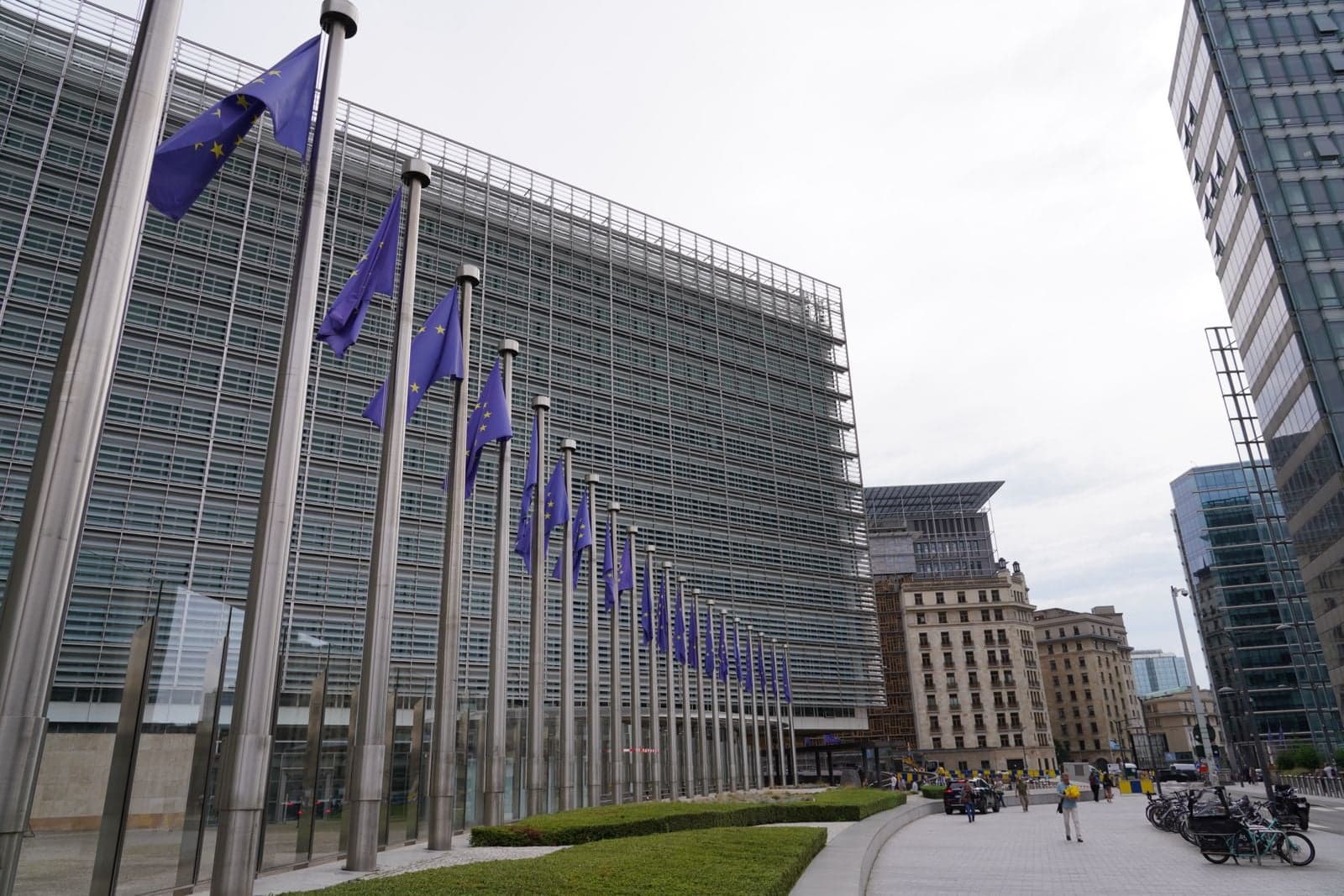
European leaders moved to formalize a unified negotiating team intended to represent the continent in upcoming Ukraine peace talks, following high-level deliberations that concluded around the European Political Community summit in Dublin[1]. European Council President António Costa announced that the designated team will integrate European Union institutions alongside direct representatives from key military and diplomatic powers: Britain, France, Germany, Italy, and Poland[1]. The initiative represents Europe’s most concerted attempt to date to secure a direct seat at the negotiating table, rather than having the continent’s long-term security architecture decided primarily in bilateral formats mediated by Washington[1][1].
The push for a single European delegation follows intense backchannel diplomacy driven by U.S. envoys Jared Kushner and Steve Witkoff, who met with Russian President Vladimir Putin in Moscow before briefing Ukrainian President Volodymyr Zelensky in Dublin[1]. While Kushner affirmed that a comprehensive peace settlement cannot be concluded without European participation, earlier diplomatic tracks - including closed-door discussions in Abu Dhabi - saw European diplomats relegated to peripheral meetings with Ukrainian officials while U.S. intermediaries negotiated directly with Moscow and Kyiv[1]. Italian Prime Minister Giorgia Meloni catalyzed the shift toward consolidation by sending a formal letter to Costa, warning that competing formats, fragmented regional initiatives, and parallel European emissaries were severely undermining Western credibility and diluting the continent's bargaining power[1][1].
Beneath the appearance of unity, however, the maneuver has triggered sharp internal debates within European capitals over foreign policy primacy[1]. EU High Representative for Foreign Affairs and Security Policy Kaja Kallas contended that her institutional appointment gave her an explicit mandate to represent the 27-nation bloc on security issues, arguing that Moscow should not dictate the identity of European interlocutors[1][1]. Conversely, German Chancellor Friedrich Merz defended the traditional "E3" coalition - France, Germany, and the United Kingdom - augmented by Italy and Poland, arguing that flexible intergovernmental formats have proven more operationally effective than centralized EU diplomacy[1]. Kallas conceded the structural challenge of balancing institutional EU representation with the vital security roles played by non-EU European powers like the UK and Norway[1].
The strategic impact of Europe’s diplomatic consolidation faces immediate hurdles from Moscow[1]. Kremlin spokesman Dmitry Peskov countered that Russia has not yet agreed to European participation in the U.S.-mediated framework, asserting that Moscow will only evaluate expanding the format after assessing whether European governments demonstrate an authentic commitment to compromise[1]. By holding back formal assent, the Kremlin appears to be exploiting tactical divisions between Washington and European capitals, attempting to preserve a narrower negotiating channel that sidelines Brussels while European leaders race to prevent a settlement imposed over their heads[1][1][1].
- European Union
- António Costa
- Britain
Story 9 of 12
2 min read
EU and Nigeria Forge Migration Accord; Hardened Border Security Emphasized
The European Union has finalized a significant migration and security partnership agreement with Nigeria, including a €100 million financing package. The accord establishes joint frameworks for interdicting human trafficking, modernizing identity verification, and enforcing readmission protocols for unauthorized Nigerian nationals in EU states. This agreement operationalizes the EU's Migration and Asylum Pact, reflecting a shift towards stricter external border enforcement.
Read the full storyFold the full story2 min · 4 sources
The European Union concluded a high-stakes bilateral migration and security partnership agreement with Nigeria in Abuja, accompanied by a dedicated €100 million European Commission financing package[1]. The accord establishes an operational framework between Nigerian border authorities and the European Border and Coast Guard Agency (Frontex) designed to accelerate joint interdiction of human trafficking cartels, modernize digital identity verification infrastructure, and enforce binding readmission protocols for Nigerian nationals residing without legal authorization in EU member states[1]. Negotiated under the leadership of EU migration officials, including EU Migration Commissioner Magnus Brunner, the agreement represents an operationalization of the European Union’s Migration and Asylum Pact[1].
The agreement follows a shift in European external policy forged at the 9th European Political Community (EPC) summit in Dublin, where 41 European heads of state and government endorsed an exit from open-door migration policies in favor of stringent external border enforcement and third-country processing mechanisms[2][3]. Faced with mounting domestic political pressure from right-leaning parties and strained municipal absorption capacities across major economies like Germany, France, and Italy, European leaders such as Italian Prime Minister Giorgia Meloni and Danish Prime Minister Mette Frederiksen have championed outsourcing border management and return logistics to partner countries along major migration corridors[4][3]. By securing Abuja’s institutional commitment to readmissions, Brussels aims to create a template for future migration diplomacy across Sub-Saharan Africa[1].
However, the pact has drawn immediate scrutiny and expert debate concerning both its operational efficacy and strategic implications[1]. Analysts in Brussels and West Africa point out that previous externalization arrangements across North Africa frequently yielded short-term suppression of migrant arrivals while creating diplomatic vulnerabilities, as transit governments leveraged migrant flows to extract recurring financial and political concessions[1]. Civil society watchdogs and human rights organizations have voiced concerns regarding transparency in the disbursement of the €100 million fund, questioning whether Nigerian law enforcement agencies can maintain international human rights standards during expedited repatriation operations[1]. Within European policy circles, observers noted that the agreement signals the growing subordination of European development aid and foreign policy to domestic security imperatives, transforming traditional diplomatic partnerships into transactional border containment alliances[1].
- European Union
- Nigeria
- Abuja
Story 10 of 12
2 min read
Beijing Courts Nepal's Non-Communist Party in Strategic Shift
China has shifted its diplomatic strategy in Nepal by directly engaging the Rastriya Swatantra Party (RSP), a non-communist force that now holds a significant parliamentary majority. This move deviates from Beijing's traditional approach of backing communist factions.
Read the full storyFold the full story2 min · 4 sources
In a noticeable departure from its traditional Himalayan diplomatic doctrine, the Chinese government has stepped away from its historical posture of quiet backchannel mediation to establish direct, public political linkages with Nepal's newly ascendant Rastriya Swatantra Party (RSP)[1]. Diplomatic reporting from Kathmandu revealed that Beijing initiated high-level engagement with a 20-member delegation of RSP lawmakers[1][2]. The direct outreach marks a decisive strategic transition: rather than relying exclusively on its long-standing policy of fostering alliances among Nepal's fractured communist factions, Beijing is adapting its statecraft to work directly with the non-traditional political forces now holding a decisive parliamentary majority[1].
The maneuver is an adaptation to Nepal's dramatically altered political landscape following the youth-led "Gen Z" political movement that upended traditional political dynastic power centers[1]. In the wake of those upheavals, the RSP emerged as the commanding political power with 182 seats in the House of Representatives, sidelining both the Nepali Congress and traditional communist parties such as the CPN-UML and CPN-Maoist Centre[1][2]. For over a decade, Chinese diplomats had invested heavy diplomatic capital in uniting and preserving the Nepal Communist Party (NCP); however, repeated coalition collapses, leadership defections, and erratic political maneuvering left Beijing’s regional influence vulnerable[1][2].
Beijing's active outreach is driven by immediate, pragmatic bilateral vulnerabilities that require direct government cooperation[1]. Chinese officials are seeking guarantees on several sensitive files, most notably safeguarding Belt and Road Initiative (BRI) infrastructure projects from administrative delays and managing high-stakes parliamentary investigations into the debt financing and construction of Pokhara International Airport[1]. Beyond economic infrastructure, Beijing aims to secure assurances regarding border security along the Tibetan frontier and counter expanding security and development engagement by the United States and India in Kathmandu[1][3][4].
This realignment indicates a broader operational shift in Chinese foreign policy toward South Asia, prioritizing functional state-to-state influence over ideological solidarity[1]. By directly engaging the RSP leadership - under figures like party chair Rabi Lamichhane and Prime Minister Balendra Shah - Beijing aims to ensure that Nepal's political overhaul does not derail its geopolitical transit corridors[1][2][3]. The outreach forces external rivals, notably New Delhi and Washington, to reassess their own diplomatic strategies in Kathmandu, ensuring that the Himalayan buffer state remains a central theater of great-power competition[1][4].
- China
- Nepal
- Rastriya Swatantra Party (RSP)
Story 11 of 12
2 min read
Senate Hearing Challenges U.S. 'One Somalia' Policy, Eyes Somaliland Recognition
A U.S. Senate hearing has prompted calls to reconsider Washington's long-standing 'One Somalia' policy by formally evaluating diplomatic recognition for Somaliland. Senator Ted Cruz questioned the nominee for Ambassador to Somalia on contradicting White House sentiment and operational realities.
Read the full storyFold the full story2 min · 2 sources
A subtle yet consequential challenge to long-standing U.S. foreign policy doctrine in the Horn of Africa unfolded during a Senate Foreign Relations Committee confirmation hearing, where senior lawmakers pressed the executive branch to formally reconsider diplomatic recognition for the Republic of Somaliland[1][1]. Senator Ted Cruz aggressively questioned the administration’s nominee for Ambassador to Somalia, Richard Kennington, over Washington's rigid adherence to the "One Somalia" policy[1][1]. Cruz cited explicit comments by President Donald Trump describing Somaliland as a "totally different country," arguing that career diplomatic policy contradicts both White House sentiment and operational realities on the ground[1][1].
Somaliland declared independence from Somalia in 1991, maintaining functional self-government, a distinct currency and security apparatus, and a consistent record of democratic transitions, including peaceful elections and transfers of power[1][1]. Despite these credentials, the international community, led by the African Union and Western capitals, has maintained formal recognition of the Federal Government in Mogadishu to avoid encouraging secessionist movements across the continent[1][1]. However, regional dynamics have shifted dramatically due to Somaliland's maritime positioning along the Gulf of Aden and Bab el-Mandeb strait - critical maritime routes threatened by regional unrest - as well as Somaliland’s unique decision to maintain formal bilateral ties with Taiwan, which has heightened its strategic relevance to U.S. national security circles[1][1].
During the exchange, Kennington acknowledged Somaliland’s operational governance, democratic track record, and crucial geopolitical location, conceding that the administration is seeking enhanced diplomatic engagement with authorities in Hargeisa[1][1]. Nevertheless, the nominee initially reiterated the State Department's established baseline supporting the sovereignty and territorial integrity of the Federal Republic of Somalia within its recognized 1960 borders[1][1]. Cruz’s persistent questioning highlighted an intensifying rift between legislative national security hawks - who view Somaliland as a reliable democratic and counterterrorism partner - and traditional diplomatic channels resistant to upending regional consensus[1][1].
The legislative push reflects an emerging geopolitical realignment in East Africa[1][1]. Moving toward recognition or entering formal bilateral security and port infrastructure agreements with Somaliland - centered on the strategic port of Berbera - would directly disrupt regional diplomacy[1][2]. Such a maneuver would trigger immediate pushback from Mogadishu and the African Union, yet it offers Washington and its maritime partners an alternative basing and trade hub along key Red Sea transit corridors, signaling that the debate over Somaliland's sovereignty is shifting into mainstream U.S. policy deliberations[1][1][2].
- United States
- Somaliland
- Somalia
Story 12 of 12
2 min read
Francophonie Summit: African Leadership Rift Over Rwanda's Secretary-General Bid
The 20th Summit of the International Organisation of La Francophonie (OIF) in Phnom Penh is overshadowed by a dispute between the Democratic Republic of the Congo (DRC) and Rwanda over the incumbent Secretary-General's potential third term. The DRC opposes Rwanda's Louise Mushikiwabo, citing alleged support for M23 rebels, and has backed an alternative candidate to avert a walkout.
Read the full storyFold the full story1 min · 7 sources
The 20th Summit of the International Organisation of La Francophonie (OIF) opened in Phnom Penh, Cambodia, marking only the second time the 88-member post-colonial diplomatic bloc has convened an Asian summit[1][2]. Presided over by Cambodian King Norodom Sihamoni, Prime Minister Hun Manet, and French President Emmanuel Macron, the summit gathered heads of state and government from across the French-speaking world under the theme “Reinvest in Peace for Shared Prosperity and Lasting Stability”[3][4]. Cambodian Prime Minister Hun Manet utilized his opening address to propose the creation of a formalized Francophone conflict prevention and mediation network, cautioning that unilateral actions and the redrawing of sovereign borders by military force pose systemic threats to global stability[3]. Vietnamese President To Lam also participated in the proceedings, holding bilateral sideline sessions with Southeast Asian and European counterparts to strengthen cross-regional infrastructure, transport links, and diplomatic cooperation[3][5].
Despite the focus on multilateral peace and digital education initiatives, the summit was quickly consumed by a contentious leadership dispute that threatens the structural cohesion of the Francophonie[6]. President Macron was forced into urgent shuttle diplomacy to prevent an immediate walkout by the Democratic Republic of the Congo (DRC), the organization's largest African member state by French-speaking population[7][6]. DRC leadership has threatened to exit the bloc if incumbent Secretary-General Louise Mushikiwabo of Rwanda is confirmed for a third term, citing Kigali’s alleged backing of M23 rebels destabilizing eastern Congo[6].
In a tactical compromise aimed at averting a split, Kinshasa withdrew its own candidate, Juliana Lumumba - daughter of independence leader Patrice Lumumba - and announced its support for former Romanian Prime Minister Dacian Cioloș to force a consensus around a neutral alternative[6]. The crisis in Phnom Penh underscores France’s eroding geopolitical leverage across central and western Africa, arriving after the formal departures of military-led governments in Mali, Niger, and Burkina Faso[6]. As the OIF approaches its leadership vote, the summit reflects a broader policy reassessment within Paris and Francophone capitals, balancing traditional post-colonial diplomatic alliances against rising regional realignments across the Global South[6].
- OIF
- Phnom Penh
- Emmanuel Macron
You're all caught up.
That's every story in Sunday's PiBrief Geopolitics. And there's a newer edition waiting for you.
All PiBrief Geopolitics editions
Subscribe to receive daily briefings about geopolitics and world news in your email.
Get PiBrief Geopolitics in your inbox
A free newsletter on geopolitics and world news. Diplomacy, conflict, the global economy, and elections, ranked and explained, with an audio briefing in every edition.
Free forever / no account / 1-click unsubscribe