
Trump-Xi-Putin summit, EU defense push & Nvidia halt
Donald Trump, Xi Jinping, and Vladimir Putin have unveiled a trilateral peace declaration, prompting European capitals to organize counter-diplomacy initiatives in Berlin. Meanwhile, European leaders are accelerating defense funding and new partnerships to secure ongoing support for Ukraine. In technology, Nvidia has halted advanced AI chip shipments to China amid mounting export scrutiny and espionage allegations.
13 stories94 sources checked
Listen to this edition
PiBrief Geopolitics, November 19, 2026
The lineup
In this edition
 01
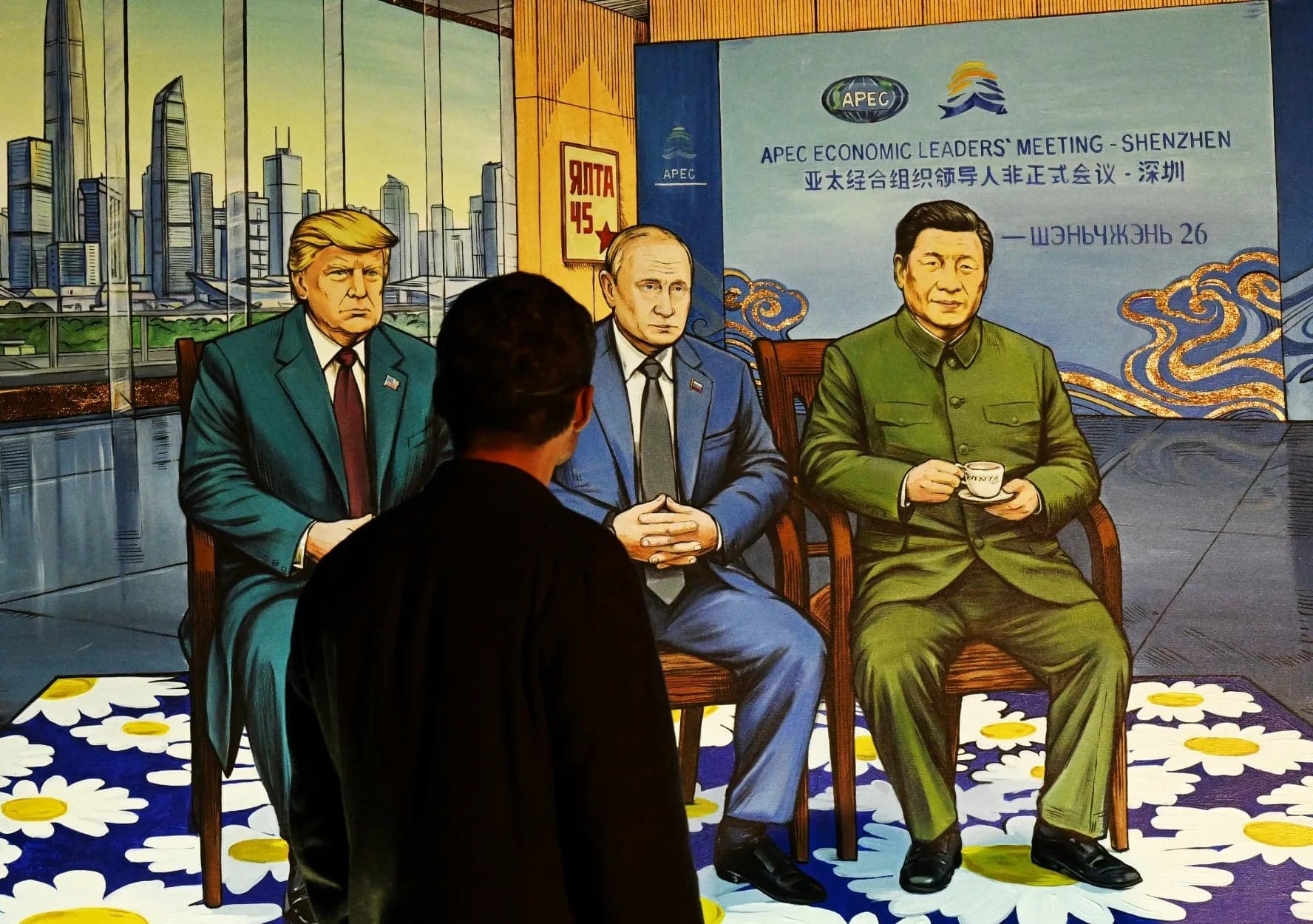
Trump, Xi, Putin Hold Historic Trilateral Summit, Announce 'Peace Declaration'
 02
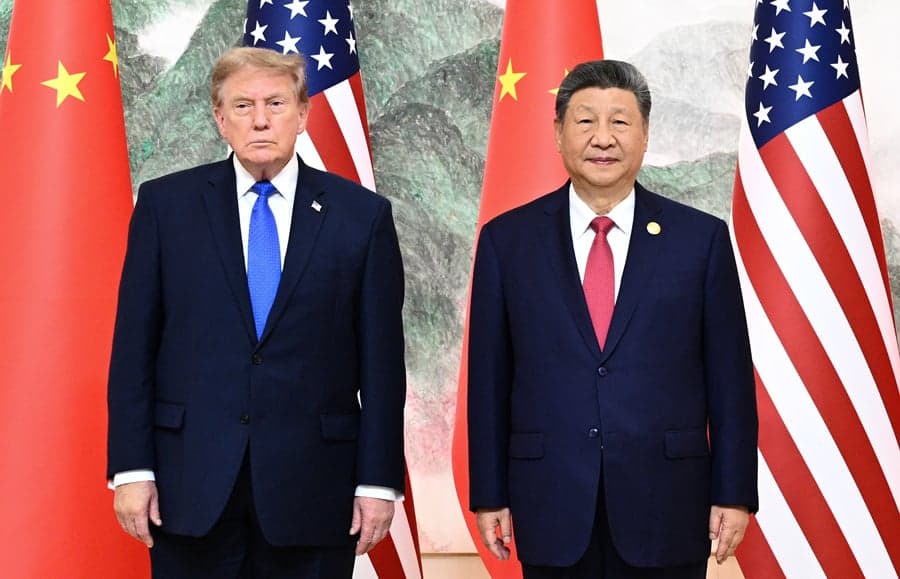
Xi and Trump Agree to 'Strategic Stability' Action Plan Amidst Tensions
 03
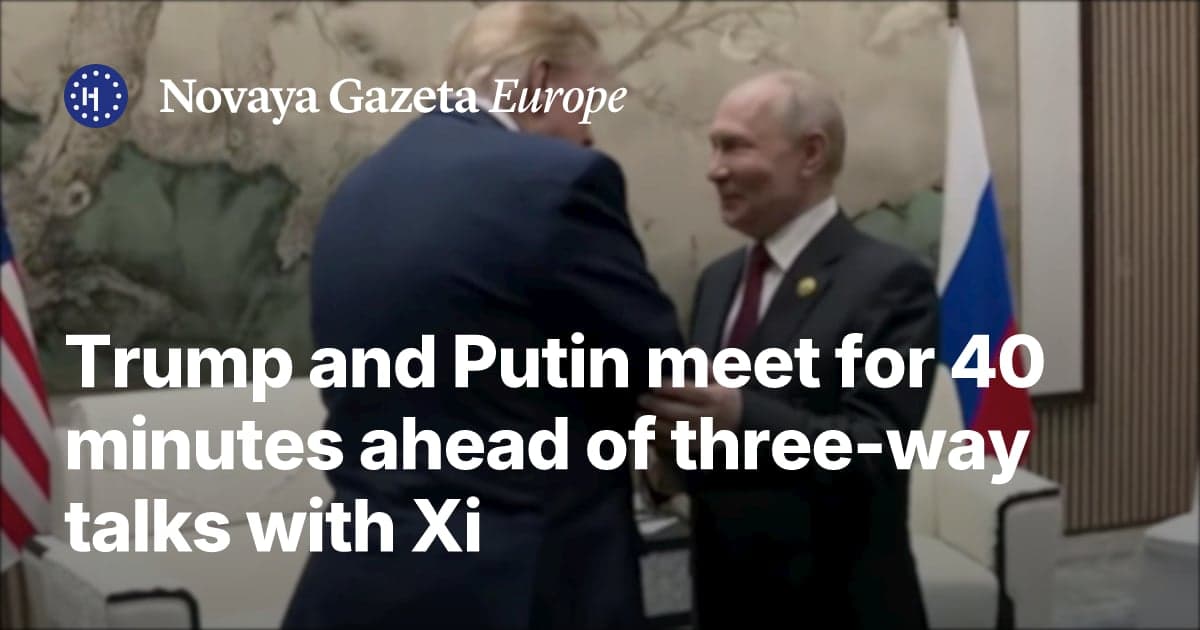
European Capitals Alarmed by Trilateral Trump-Xi-Putin Summit Excluding EU Input
 04
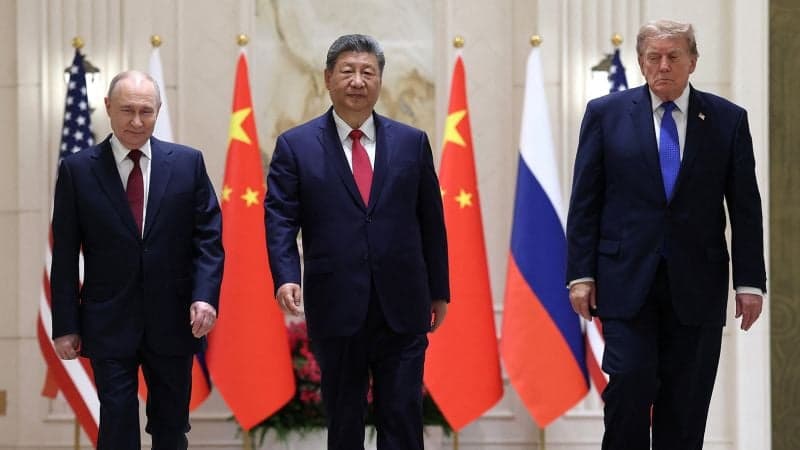
European Powers Form 'Coalition of the Willing' in Berlin to Counter Shenzhen Summit
 05
European Capitals Form 'E5+EU' Coalition, Bypassing Top Diplomat for Ukraine Peace Talks
 06
Europe Pushes Back Against U.S. Demands on Ukrainian Strikes, Accelerates Defense Initiatives
 07
EU Unveils €45 Billion Loan for Ukraine, Boosts Defense Industry Amidst Fiscal Reform
 08
U.S.-China Tech Diplomacy Marred by Espionage Allegations and Chip Controls
 09
Nvidia Halts AI Chip Shipments to China Amid Espionage Fallout and US Export Scrutiny
- 10
EU and UK Forge 'Integrated Partnership' to Strengthen Defense and Economic Security Post-Brexit
 11
EU Approves Landmark Trade Deal with Indonesia to Counter U.S. Tariffs and Secure Raw Materials
 12
Japan's PM Takaichi Meets Putin, Demands Release of Reporter and Return of Seized Assets
 13
Australian PM Albanese Directly Confronts Putin on Ukraine in APEC Plenary
See all 13 as a listHide the list
- Trump, Xi, Putin Hold Historic Trilateral Summit, Announce 'Peace Declaration'
- Xi and Trump Agree to 'Strategic Stability' Action Plan Amidst Tensions
- European Capitals Alarmed by Trilateral Trump-Xi-Putin Summit Excluding EU Input
- European Powers Form 'Coalition of the Willing' in Berlin to Counter Shenzhen Summit
- European Capitals Form 'E5+EU' Coalition, Bypassing Top Diplomat for Ukraine Peace Talks
- Europe Pushes Back Against U.S. Demands on Ukrainian Strikes, Accelerates Defense Initiatives
- EU Unveils €45 Billion Loan for Ukraine, Boosts Defense Industry Amidst Fiscal Reform
- U.S.-China Tech Diplomacy Marred by Espionage Allegations and Chip Controls
- Nvidia Halts AI Chip Shipments to China Amid Espionage Fallout and US Export Scrutiny
- EU and UK Forge 'Integrated Partnership' to Strengthen Defense and Economic Security Post-Brexit
- EU Approves Landmark Trade Deal with Indonesia to Counter U.S. Tariffs and Secure Raw Materials
- Japan's PM Takaichi Meets Putin, Demands Release of Reporter and Return of Seized Assets
- Australian PM Albanese Directly Confronts Putin on Ukraine in APEC Plenary
Story 1 of 13
3 min read
Trump, Xi, Putin Hold Historic Trilateral Summit, Announce 'Peace Declaration'
Leaders of the US, China, and Russia met for an unprecedented 80-minute summit at Kylin Villa during APEC. They released a joint four-point declaration reaffirming nuclear war is unwinnable, pledging dialogue on risk reduction, supporting UN Security Council reform, agreeing to expand oil and gas production, and asserting sovereign immunity for leaders. The meeting signals a shift towards personalized great-power dealmaking, with China positioning itself as a central arbiter.
Read the full storyFold the full story2 min · 18 sources
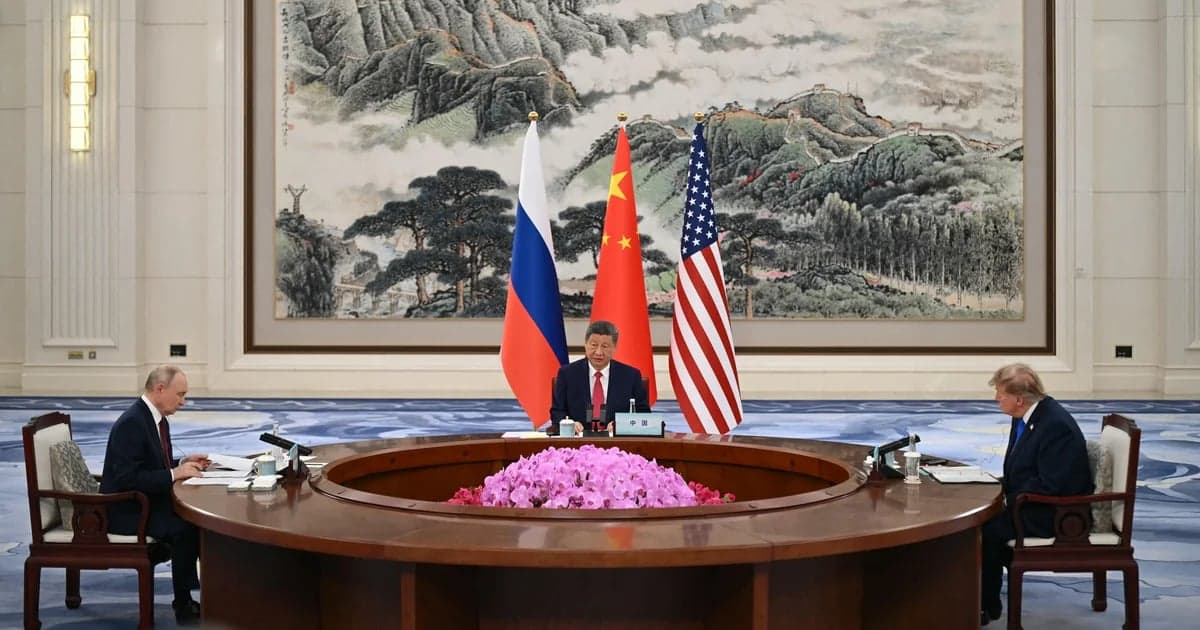
On the sidelines of the 33rd Asia-Pacific Economic Cooperation (APEC) Leaders' Meeting in Shenzhen, China, U.S. President Donald Trump, Chinese President Xi Jinping, and Russian President Vladimir Putin concluded an unprecedented 80-minute closed-door trilateral summit at the secluded Kylin Villa[1][2]. The meeting - first proposed by Putin during an October phone call with Trump - marked the first time the leaders of the three preeminent nuclear superpowers have gathered formally in such a format[3][4]. Following the sit-down, Chinese state media and the Kremlin simultaneously released a four-point joint "peace declaration"[4][5][6]. The document formally reaffirmed the principle that "a nuclear war cannot be won and must never be fought," pledged tripartite dialogue on nuclear risk reduction and non-proliferation, committed the three nations to promoting structural United Nations Security Council reforms, agreed to expand global production of oil and gas products, and asserted the "fundamental importance" of state consent and sovereign immunity for official leadership against international legal bodies[7][4].
The summit represented the culmination of a dramatic realignment away from institutional multilateralism toward personalized great-power dealmaking[8]. Observers quickly dubbed the summit a modern "Yalta 2.0," drawing sharp historical parallels to the 1945 conference where Franklin D. Roosevelt, Winston Churchill, and Joseph Stalin partitioned spheres of influence[3][8][9]. However, the symbolic geography in Shenzhen starkly inverted that postwar dynamic[10][11]. Xi Jinping occupied the literal center of the stage as host, projecting Beijing’s arrival as the central arbiter of global diplomacy[10][11]. Trump praised the dialogue as "making history" and framed his presence around a "special responsibility" to maintain high-level engagement with adversaries, openly describing Putin and Xi as friends[12][10][13]. Putin seized the platform to declare that instruments of Western economic dominance and sanctions had suffered a complete breakdown, claiming that Europe had entered a period of "humiliating decline" while the three powers shared "converging interests" in settling conflicts such as Ukraine[2][14][15].
The institutional implications of the accord sent immediate shockwaves through the international system[8][1]. By jointly targeting the authority of bodies like the International Criminal Court - which Trump separately denounced to reporters as having "gotten out of control" - the three leaders signaled an informal pact to shield state leaders from transnational accountability and challenge established multilateral dispute mechanisms[7][13][16]. Furthermore, the trilateral pledge to coordinate petroleum and gas supply shifts dynamics within global energy markets, countering Western price-cap regimes while advancing Beijing's priority of stabilizing industrial input prices[7][4]. While the leaders presented a unified visual front, analysts noted profound underlying divergences, particularly concerning ongoing tech export controls and long-term nuclear modernization programs[3][17][18].
European and Indo-Pacific partners responded with intense unease[1][11]. Polish Prime Minister Donald Tusk issued a scathing reaction to Trump’s characterization of Putin and Xi as partners, posting publicly: "God, protect us from such friends"[13]. Privately, allied diplomats voiced fears that the Shenzhen gathering functioned as an informal directorate designed to bypass traditional Western alliances and establish a tri-polar condominium over regional security files without consulting affected democratic nations[8][1][11].
- Donald Trump
- Xi Jinping
- Vladimir Putin
Story 2 of 13
2 min read
Xi and Trump Agree to 'Strategic Stability' Action Plan Amidst Tensions
Chinese President Xi Jinping and U.S. President Donald Trump met in Shenzhen, agreeing to draft an action plan for "strategic stability." The talks aimed to consolidate a détente, with discussions covering trade, fentanyl precursor flows, and "super intelligence." Despite conciliatory rhetoric, significant differences over Taiwan and other flashpoints remain.
Read the full storyFold the full story2 min · 8 sources
On November 19, 2026, Chinese President Xi Jinping and U.S. President Donald Trump convened at the lakeside Kylin Villa in Shenzhen, China, on the sidelines of the 33rd Asia-Pacific Economic Cooperation (APEC) Economic Leaders’ Meeting[1][2]. The direct talks - their third face-to-face bilateral meeting of 2026 - concluded with an agreement to draft a formal action plan designed to institutionalize a "constructive China-U.S. relationship of strategic stability" anchored in mutual respect, fairness, and reciprocity[1][3]. The meeting followed an elaborate arrival ceremony on November 18 at Shenzhen Bao'an International Airport, where Xi greeted Trump in person on the tarmac with a military band, honor guards from the People’s Liberation Army, and a fighter jet flyover, returning the formal diplomatic courtesies extended during Xi's state visit to Washington earlier in September[4].
During the closed-door bilateral session, the two leaders sought to consolidate an unexpected détente that had cooled the bilateral trade frictions of 2025[5]. Trump remarked that trade, investment, and bilateral cooperation in stemming fentanyl precursor flows had achieved productive momentum, adding that both nations must cooperate across agricultural commodities, energy supplies, and "super intelligence"[2]. Xi emphasized that the guiding role of head-of-state diplomacy remains irreplaceable in steering bilateral ties, noting that both administrations must deliver tangible results on presidential consensus[6]. Xi explicitly urged Washington to "make a longer list of cooperation and a shorter list of problems," while highlighting existing working-level cooperation on counternarcotics, telecommunications fraud enforcement, and the repatriation of undocumented immigrants[6][1].
Despite the conciliatory rhetoric, clear diplomatic boundaries were drawn over longstanding flashpoints, most notably Taiwan[7]. Xi warned Trump that on the Taiwan issue, the United States must "keep doing the right thing to avoid the emergence of great turbulence in the China-U.S. relationship"[7]. In official readouts released by China’s Ministry of Foreign Affairs, Trump reaffirmed the longstanding U.S. stance that Washington does not support "Taiwan independence"[2]. The two leaders also discussed ongoing coordination to avoid sudden escalations in regional hot zones, with Trump highlighting that maintaining bilateral stability was foundational to global order[2].
The summit marks a critical milestone in a packed diplomatic calendar between Washington and Beijing[8]. Trump and Xi are scheduled to hold a fourth face-to-face meeting in December 2026 at the G20 Leaders' Summit hosted at Trump National Doral Golf Club in Florida[8]. Strategic analysts, including Rush Doshi writing in Foreign Affairs, noted that while the high-level engagement has created temporary stability, structural contradictions over trade imbalances and technology supremacy mean the détente rests on delicate ground[8][5]. Nonetheless, the institutionalization of the "strategic stability action plan" establishes high-level communication mechanisms intended to manage economic disputes and prevent diplomatic friction from deteriorating into outright confrontation[6][1].
- Xi Jinping
- Donald Trump
- APEC
Story 3 of 13
2 min read
European Capitals Alarmed by Trilateral Trump-Xi-Putin Summit Excluding EU Input
European leaders have expressed significant concern over a trilateral meeting between U.S. President Donald Trump, Chinese President Xi Jinping, and Russian President Vladimir Putin. Held on the sidelines of the APEC summit in Shenzhen, the discussions focused on ending the war in Ukraine and reshaping global trade, with no European representation.
Read the full storyFold the full story2 min · 6 sources
European chancelleries have voiced deep strategic alarm following a high-level trilateral gathering on the sidelines of the Asia-Pacific Economic Cooperation (APEC) summit at Kylin Villa in Shenzhen, China[1][2]. U.S. President Donald Trump, Chinese President Xi Jinping, and Russian President Vladimir Putin convened for extensive discussions on ending the war in Ukraine, navigating Middle Eastern tensions, and establishing a new framework for global trade and arms control[1][3]. The summit was preceded by a 40-minute direct bilateral meeting between Trump and Putin, flanked by U.S. Secretary of State Marco Rubio, Treasury Secretary Scott Bessent, Russian Foreign Minister Sergey Lavrov, and Russian presidential foreign policy aide Yury Ushakov[3].
The absolute absence of European representatives from these deliberations has intensified fears across Brussels, Paris, and Berlin that global security architecture is being rewritten without European input[1]. Western observers and defense analysts noted that Beijing successfully framed the Shenzhen meeting as the emergence of a new tri-polar global directorate[2]. In European diplomatic circles, the summit was viewed with apprehension: during earlier preparatory discussions in Abu Dhabi, Russian chief negotiator Vladimir Medinsky openly advocated for a "new Yalta" settlement that would establish formal spheres of influence across the Eurasian perimeter[4].
The Shenzhen summit underscores an acute structural problem for the continent: its vast commercial weight has failed to insulate it from geopolitical marginalization[1]. Although the European Union remains one of the world's preeminent trading blocs and the chief financial underwriter of Ukrainian state stability, Washington and Moscow have increasingly treated the European continent as a secondary theatre[1][4]. Observers at European think tanks noted that Trump’s preference for personalized, transactional diplomacy with autocratic leaders bypasses multilateral norms, potentially allowing Moscow and Beijing to leverage trade compromises - such as extensions of the U.S.-China tariff truce - against European security interests[2].
In response to the Shenzhen dynamic, European capitals have redoubled efforts to operationalize the 40-nation "Declaration on Key Principles of European Security"[5]. Signed by European Political Community (EPC) leaders, the declaration affirms that any political or military settlement affecting the security of Europe must be negotiated directly with Europeans, and that Ukraine’s sovereignty cannot be bargained away by third parties[6][5]. However, the exclusionary optics of the Shenzhen meeting have exacerbated anxieties across eastern and northern European states, reinforcing the perception that Europe must rapidly construct an autonomous deterrent capability to prevent its security perimeter from being compromised[1][4].
- European Union
- United States
- China
Story 4 of 13
2 min read
European Powers Form 'Coalition of the Willing' in Berlin to Counter Shenzhen Summit
In response to the Shenzhen trilateral, European leaders convened in Berlin to coordinate defense commitments for Ukraine and shape future peace negotiations. The 'Coalition of the Willing,' including Germany, France, and the UK, along with Ukraine, discussed forming a Multinational Force for Ukraine (MNFU) for stabilization and deterrence. US envoys briefed European counterparts on Trump's talks with Putin and Xi.
Read the full storyFold the full story2 min · 10 sources
Hours after the images of the Shenzhen trilateral reverberated globally, European leaders convened in Berlin for a high-stakes summit of the "Coalition of the Willing" to coordinate defense commitments for Ukraine and safeguard Europe’s role in future settlement negotiations[1][2]. Hosted by German Chancellor Friedrich Merz alongside French President Emmanuel Macron and British Prime Minister Andy Burnham, the gathering brought together leaders and senior delegations from over 30 allied partner nations, as well as Ukrainian President Volodymyr Zelenskyy[1][2]. Signaling Washington's complex two-track diplomatic approach, U.S. special envoys Steve Witkoff and Jared Kushner also traveled to Berlin to brief European counterparts on Trump’s direct engagements with Putin and Xi[3][4][2].
The core operational focus of the Berlin summit was advancing concrete blueprints for post-war security guarantees, chief among them the formal design of the Multinational Force for Ukraine (MNFU)[4][5]). Envisaged as a joint stabilization and deterrence mechanism to be deployed immediately upon any negotiated ceasefire, the force is structured around three core pillars: sustaining the Ukrainian Armed Forces as the primary frontline barrier, deploying European coalition units on the ground to deter renewed aggression, and cementing binding bilateral and collective legal guarantees[4][5]). Zelenskyy pressed allies for urgent immediate deliverables as well, emphasizing critical packages to reinforce Ukraine’s air defense envelope and rebuild pulverized energy infrastructure heading into the winter[4][6][7]. Financial architecture took center stage as well, following the European Commission's proposal of up to €45 billion in additional funding for 2027 to supplement the ongoing €90 billion Ukraine Support Loan[7].
The summit highlighted growing continental anxiety over being excluded from backchannel agreements struck between Washington, Moscow, and Beijing[8][2]. Addressing the diplomatic climate, Chancellor Merz publicly appealed to the White House to maintain unity with NATO partners, reiterating: "Please, no surprises. Stay on Team Europe and Team Ukraine, and let us work together for a genuine peace"[2]. British Prime Minister Andy Burnham underscored that the United Kingdom remains squarely aligned with Kyiv, warning against any great-power settlement imposed without Ukrainian and European participation[9][2]. Zelenskyy firmly echoed the sentiment, asserting that no sovereign decisions regarding Ukraine's borders or security architecture could be validated in discussions held over Kyiv's head[7].
Despite the public display of resolve, significant intra-European fractures emerged during negotiations over defense expenditures[1]. Polish Prime Minister Donald Tusk declared that while Warsaw remains politically engaged in Europe's core negotiating track, Poland would not commit additional capital to the shared PURL financing mechanism at this stage[1]. Concurrently, leaders from Hungary, Slovakia, Bulgaria, and the Czech Republic confirmed plans to opt out of the next round of expanded European Union military financing packages for Kyiv, underscoring the mounting political friction facing European capitals as defense costs climb amid uncertain American commitments[1].
- Friedrich Merz
- Emmanuel Macron
- Andy Burnham
Story 5 of 13
3 min read
European Capitals Form 'E5+EU' Coalition, Bypassing Top Diplomat for Ukraine Peace Talks
A new diplomatic structure, the 'E5 plus EU institutions,' has been formed by European leaders to negotiate the future of European security and potential peace terms for the Ukraine war. This group includes the European Council and Commission presidents, along with France, Germany, the UK, Italy, and Poland. Notably, the EU's High Representative for Foreign Affairs, Kaja Kallas, has been excluded from these crucial negotiations.
Read the full storyFold the full story2 min · 10 sources
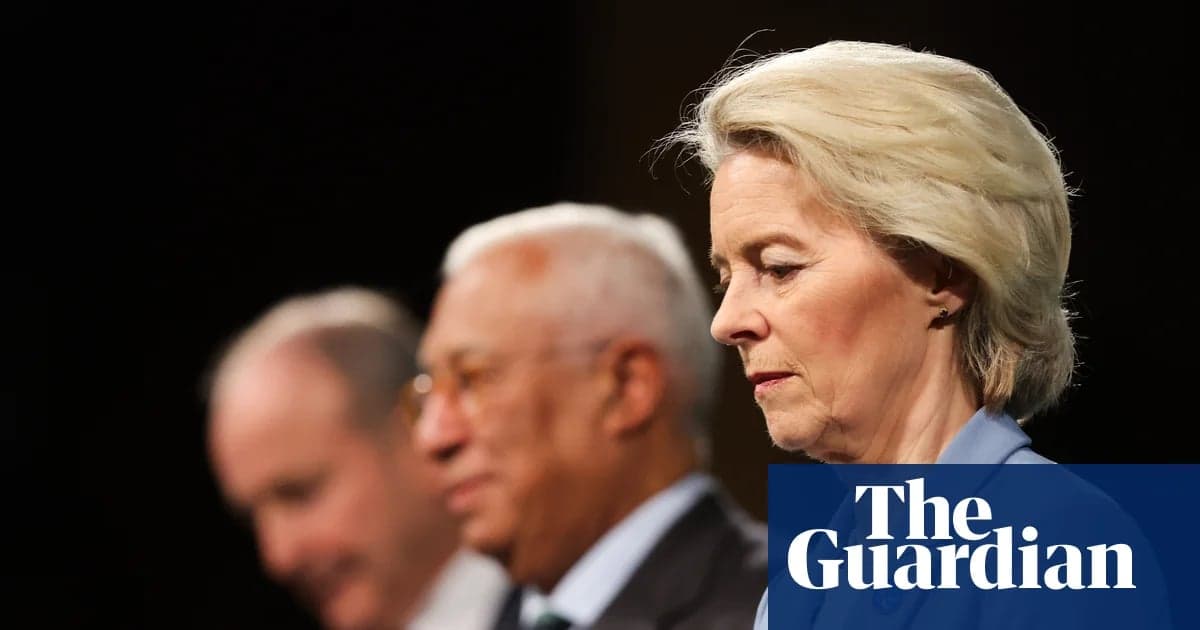
In a decisive institutional shift over the past 24 hours, European leaders have consolidated an ad hoc diplomatic structure - the "E5 plus EU institutions" - to negotiate the future of European security and potential peace terms regarding Russia's war in Ukraine[1][2]. The team combines European Council President António Costa and European Commission President Ursula von der Leyen with the continent's five major military powers: France, Germany, the United Kingdom, Italy, and Poland[3][1][4]. Crucially, the arrangement cements the formal exclusion of the European Union's High Representative for Foreign Affairs and Security Policy, Kaja Kallas, from the negotiating room, underscoring deep-seated structural turf wars between national capitals and the EU’s supranational diplomatic machinery[3][5].
The consolidation of this grouping follows high-stakes diplomacy in Abu Dhabi and Moscow, where U.S. special envoys Steve Witkoff and Jared Kushner engaged in preliminary talks with Russian and Ukrainian delegations[3][4][5]. When Russian representatives demanded sweeping concessions - including proposals reminiscent of the 1945 Yalta and Potsdam conferences aimed at rolling NATO's operational posture in Central and Eastern Europe back to 1997 baselines - European leaders moved swiftly to avoid being sidelined[6][7]. Despite Ukrainian President Volodymyr Zelenskyy’s public appeals for the European bloc to designate a single, authoritative negotiator, EU heads of state opted instead for a heavyweight multi-power format[3][8]. Under this division of labor, EU institutions are slated to handle Ukraine’s accession, financial reconstruction, and economic integration, while the E5 capitals coordinate defense guarantees in direct consultation with NATO[8][9].
The decision to bypass Kallas - who was appointed EU High Representative and Commission Vice-President in 2024 - marks a contentious moment for European external action[3]. While Kallas sought a mandate as the bloc's special envoy, national governments determined that her uncompromising reputation in Moscow would obstruct direct talks, prompting leaders like German Chancellor Friedrich Merz, French President Emmanuel Macron, and British Prime Minister Andy Burnham to favor a direct capital-led approach[5]. The move has drawn sharp domestic criticism, with analysts warning that relegating the head of the European External Action Service (EEAS) damages the Union’s ambition to operate as a coherent geopolitical actor and exposes enduring divisions between Western European powers and Baltic and Nordic perspectives[3].
The geopolitical implications of this format are far-reaching. By formally integrating non-EU Britain into the core European leadership council, the E5 architecture establishes an operative post-Brexit security alliance that operates outside formal EU treaties[4][10]. However, the mandate remains contentious among smaller member states. Leaders such as Maltese Prime Minister Robert Abela and Portuguese Prime Minister Luís Montenegro have cautioned that the negotiating mandate remains undefined and must focus strictly on Ukrainian territorial sovereignty rather than permitting broad concessions on the continent's wider defense posture[8]. Meanwhile, Russian Foreign Ministry spokesperson Maria Zakharova and Kremlin spokesman Dmitry Peskov have signaled that Moscow will condition European inclusion on whether the bloc shows genuine readiness to engage with Russian security demands, setting up an immediate trial of strength for the new negotiating team[4][5].
- E5+EU Coalition
- European Union
- Ursula von der Leyen
Story 6 of 13
2 min read
Europe Pushes Back Against U.S. Demands on Ukrainian Strikes, Accelerates Defense Initiatives
A strategic rift has emerged between the U.S. and European allies regarding the conduct of operations in Eastern Europe. U.S. official Elbridge Colby urged an end to Ukrainian deep strikes into Russian territory, citing escalation risks. European defense ministers, including Germany's Boris Pistorius, rejected this, arguing that restricting Kyiv's ability to hit Russian supply lines is strategically unviable.
Read the full storyFold the full story2 min · 9 sources
A confrontation between the United States and its leading European allies emerged at NATO headquarters and the EU Foreign Affairs Council in Brussels, exposing sharp strategic rifts over the Conduct of operations in Eastern Europe[1][2]. Addressing assembled EU defense ministers and the Ukraine Defence Contact Group, U.S. Under Secretary of War for Policy Elbridge Colby presented the Trump administration's doctrine of "flexible realism," warning that European allies must prepare for an imminent drawdown of U.S. conventional forces in Europe and demanding an end to Ukrainian long-range strikes into Russian territory[3][2][4]. Colby singled out recent Ukrainian strikes - including the partial destruction of the Crimean Bridge and attacks on rear logistics and commercial depots - arguing they have failed to alter front-line dynamics while stiffening Russian domestic resolve and escalating conflict risks[2].
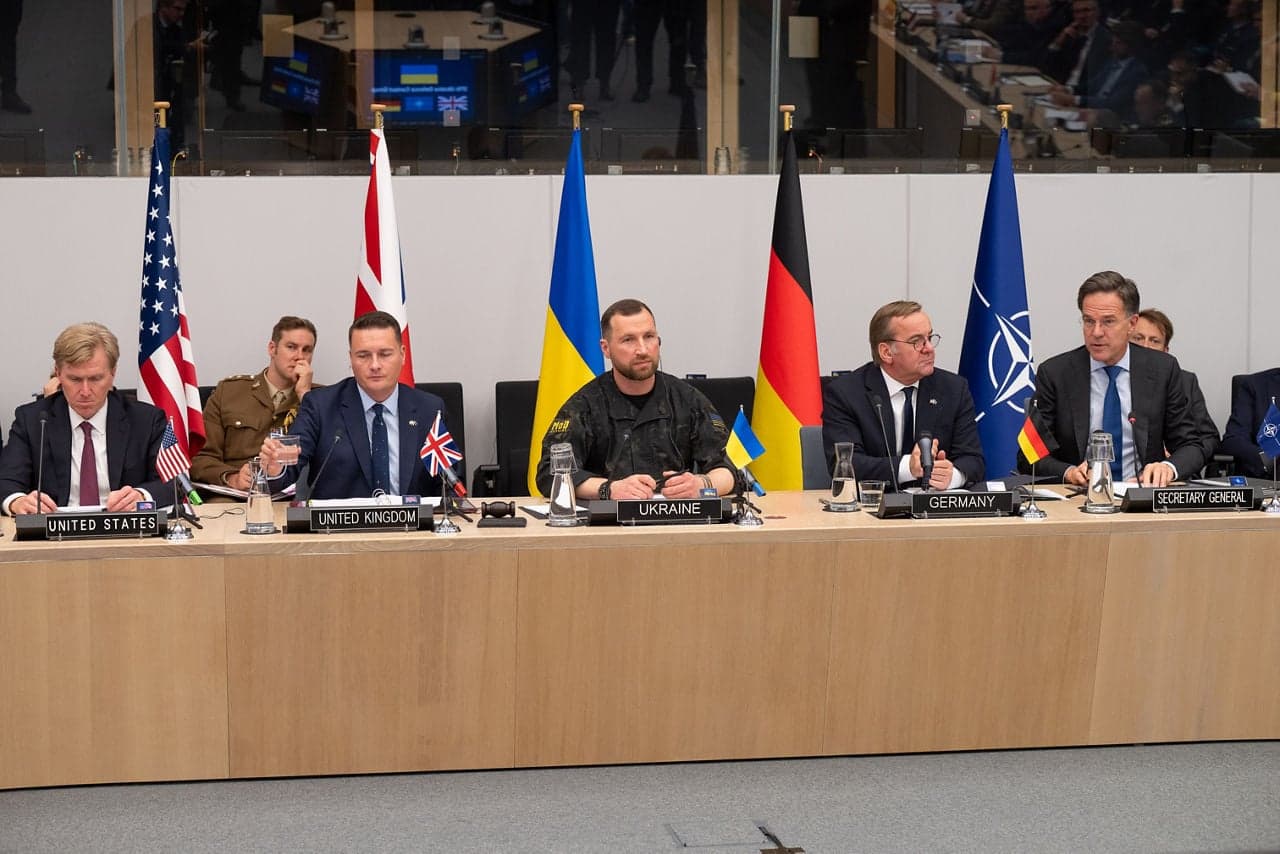
The American intervention provoked an immediate and blistering pushback from Europe’s key defense ministers[5]. German Defense Minister Boris Pistorius rejected Colby’s assessment, publicly labeling U.S. criticism of Ukrainian strikes against strategic military targets in Russia "quite a stupid thing"[5]. Speaking alongside British Defence Secretary Wes Streeting, Pistorius argued that while Moscow wages systematic terror against Ukrainian civilian heating, energy, and water infrastructure ahead of the winter, restricting Kyiv’s ability to disrupt Russian staging areas and supply corridors behind the lines is strategically unviable[2][5]. Pistorius warned that while U.S. troop levels in Europe are expected to decline, Washington’s unilateral pressure must not force critical capability gaps onto European armies[4].
Rather than yielding to Washington’s pressure to curtail offensive support, European governments moved over the last 24 hours to accelerate autonomous defense industrial initiatives[2][6]. Pistorius announced that Germany and Ukraine have officially established a new joint venture based in Germany to manufacture unmanned ground combat and logistics vehicles (UGVs) tailored for the front line[6]. Concurrently, Germany and Norway confirmed funding for another major package of U.S.-sourced munitions and interceptors for Ukraine through the Prioritized Ukraine Replenishment List (PURL) mechanism, while NATO Secretary General Mark Rutte welcomed hundreds of millions in freshly committed defense pledges to ensure Ukraine can fight through the winter[1][4].
This policy divergence represents a critical evolution in the transatlantic security pact. With Washington pursuing burden-shifting to focus military resources on the Indo-Pacific, European defense ministries are breaking with American operational guidelines[2][7]. Romanian National Defence Minister Ștefan-Radu Oprea met with counterparts in Brussels to push for rapid expansion of the EU's "Security Action for Europe" (SAFE) industrial platform, seeking joint procurement of Black Sea air-defense and maritime surveillance assets[8]. NATO Supreme Allied Commander Europe (SACEUR) General Alexus Grynkewich underscored this transition by promoting NATO's "Block, Blunt, Break" military operational doctrine - designed to shift the burden of initial conventional deterrence directly onto European land forces without waiting for U.S. reinforcements[9].
- United States
- European Union
- NATO
Story 7 of 13
2 min read
EU Unveils €45 Billion Loan for Ukraine, Boosts Defense Industry Amidst Fiscal Reform
The European Commission has proposed a €45 billion loan package for Ukraine to ensure budgetary stability until 2027 and directly support domestic defense production. This initiative aims to maintain Ukrainian state operations, repair infrastructure, and bolster its armaments industry, independent of U.S. aid uncertainties.
Read the full storyFold the full story2 min · 7 sources
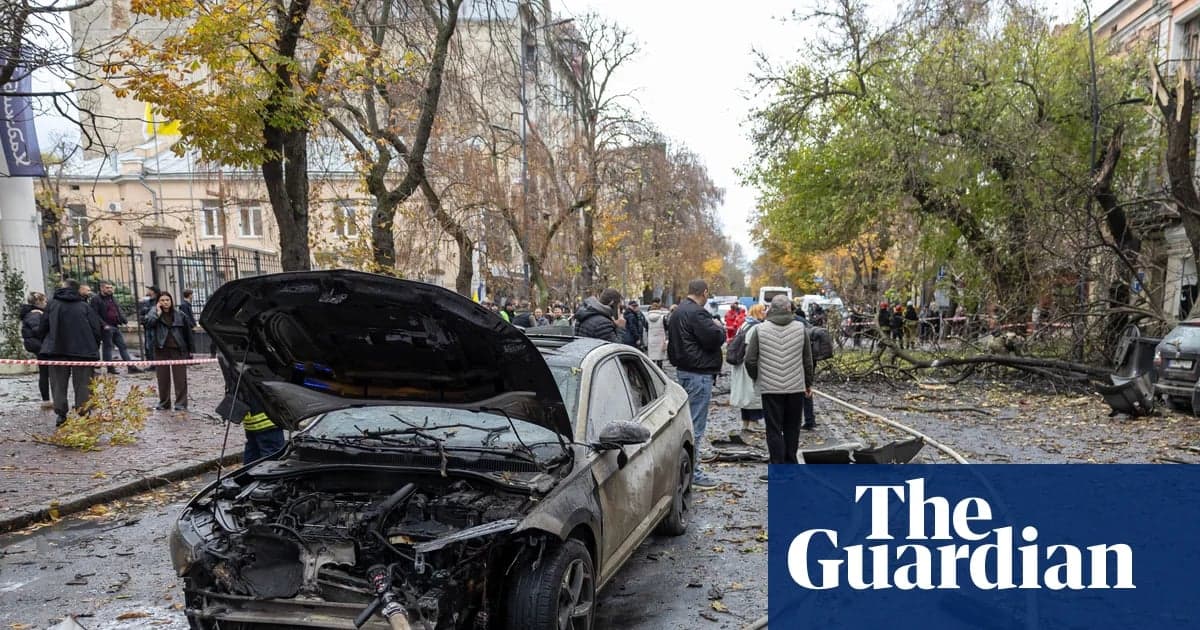
In an emergency fiscal intervention, the European Commission formally tabled a €45 billion loan package for Ukraine designed to prevent an impending budgetary cliff in 2027 and directly underwrite domestic defense production[1]. The financial facility comes at a critical juncture as Ukrainian infrastructure sustains waves of missile and drone strikes, and uncertainties over the durability of American economic aid mount[2][1]. By locking in predictable, long-term funding, Brussels aims to ensure the Ukrainian state can maintain essential government operations, repair devastated energy grids, and scale up its domestic armaments industry independently of shifting political winds in Washington[3][1].
The loan framework coincides with the release of the Commission’s Strategic Technologies for Europe Platform (STEP) annual report, which revealed that €23.9 billion has already been mobilized to stimulate critical technology manufacturing across Europe[4]. Under recently enacted "Defence Readiness Omnibus" rules, the EU officially integrated defense and dual-use technologies as STEP’s fourth pillar alongside digital, biotechnology, and clean technologies[4]. Funding channels including the European Innovation Council Accelerator and the Digital Europe program have begun directly capitalizing European defense contractors, scale-ups, and joint ventures manufacturing drones, electronic warfare components, and secure communications gear[4].
This fiscal offensive is paired with a loosening of the European Union's fiscal governance architecture[5][6]. The Economic and Financial Affairs Council has now approved the activation of the national "escape clause" under the Stability and Growth Pact for Italy and 18 other member states[5][6]. This regulatory waiver allows national governments to dramatically surge sovereign defense expenditure and industrial procurement without triggering punitive EU excessive-deficit procedures or destabilizing sovereign debt metrics[6].
The collective impact of these funding mechanisms signals a structural transition toward a permanent European defense economy[6]. Supported by specialized financing instruments like the €115 million AGILE programme for rapid military innovation and the proposed European Competitiveness Fund, the bloc is actively converting emergency wartime spending into enduring defense capability[6][7]. European defense planners emphasize that sustaining Ukraine's frontline through the €45 billion facility, while simultaneously exempting domestic defense investments from fiscal limits, represents the single most important policy pillar preserving European strategic autonomy amid global geopolitical realignment[1][6].
- European Commission
- Ukraine
- European Union
Story 8 of 13
2 min read
U.S.-China Tech Diplomacy Marred by Espionage Allegations and Chip Controls
U.S.-China tech diplomacy was overshadowed by allegations of former Nvidia CEO Jensen Huang and Megaspeed's Alice Huang diverting AI processors to China. The U.S. Department of Commerce also unveiled stricter rules on accessing advanced AI chips remotely, intensifying the tech rivalry.
Read the full storyFold the full story2 min · 6 sources
Despite the display of summitry in Shenzhen - China’s premier technological metropolis - the bilateral dialogue was shadowed by acute tensions surrounding artificial intelligence, semiconductor supply chains, and industrial espionage[1][2]. The summit occurred immediately after revelations involving former Nvidia CEO Jensen Huang and businesswoman Alice Huang, head of Megaspeed, who is under investigation by the U.S. Department of Justice over allegations of covertly diverting advanced American artificial intelligence processors to China[1]. U.S. intelligence agencies have raised suspicions that Alice Huang operated as a Chinese intelligence asset, prompting Beijing to dismiss the claims as "groundless speculation" and a politically motivated smear[1][3].
The controversy intersected directly with summit-week policymaking[3]. Days prior to the Shenzhen summit, the U.S. Department of Commerce unveiled a stringent interim rule specifically designed to prevent Chinese entities from bypassing export restrictions by remotely accessing advanced U.S. AI chips through third-party data centers overseas[1][3]. During the leaders' gala dinner on November 18, Trump reportedly raised the semiconductor issue directly with Xi, later telling reporters that while they discussed Nvidia "briefly," broader questions regarding advanced dual-use compute and technological sovereignty remain active friction points in bilateral relations[3].
Underlying friction also manifested in sharp diplomatic skirmishes and tightly managed press optics throughout the day[4]. Chinese security and press officials barred Bloomberg White House correspondent Annmarie Hordern from covering the trilateral leaders' meeting after she pressed officials with pointed questions during the earlier bilateral session between Trump and Xi[4]. In parallel, state media ecosystems engaged in a subtle propaganda exchange: Chinese state television broadcast footage highlighting an apparently drowsy Trump during daytime sessions, while White House digital channels circulated video clips showing Trump assisting Xi up a summit escalator[4].
The technological flashpoints underscore the dual-track nature of the contemporary U.S.-China relationship: personal diplomatic cordiality and top-line stabilization contrasted with an unyielding tech cold war[4][5]. While both Washington and Beijing have signaled interest in establishing bilateral working tracks on "super intelligence" and emerging tech governance, Washington’s tightening regulatory cordon around remote cloud compute access and China's continued pursuit of independent domestic semiconductor ecosystems indicate that technology controls remain the core theater of structural conflict[1][6].
- Nvidia
- Jensen Huang
- Alice Huang
Story 9 of 13
3 min read
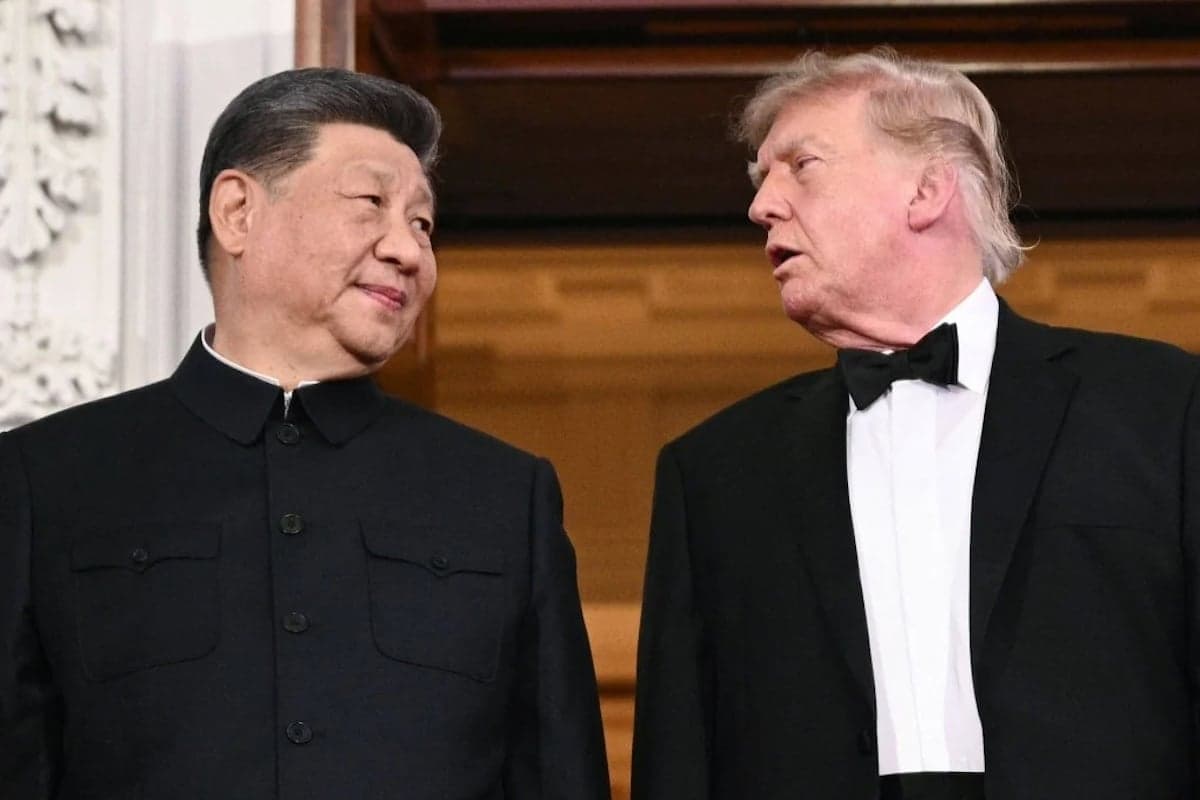
Nvidia Halts AI Chip Shipments to China Amid Espionage Fallout and US Export Scrutiny
Nvidia announced a complete halt to shipments of AI chips to China following the resignation of founder Jensen Huang amid espionage allegations. This move intensifies scrutiny on US export controls, with lawmakers investigating potential national security compromises by the Commerce Department. Proposed legislation aims to mandate stricter export curbs on semiconductors.
Read the full storyFold the full story2 min · 14 sources
Simultaneously shaping the summit, the fragile economic detente between the United States and China faced severe strain following dramatic revelations regarding semiconductor supply chains and high-level corporate espionage[1][2]. On November 18, Nvidia’s newly appointed interim Chief Executive Officer, Colette Kress, announced during an earnings briefing that the corporation had completely halted all shipments of U.S.-approved artificial intelligence chips to China, including the high-performance Hopper-generation H200 accelerators[3][4]. The sudden embargo came in the immediate wake of the November 12 resignation of founder Jensen Huang, who stepped down following closed-door intelligence briefings and public disclosures linking him to an affair with an alleged Chinese intelligence operative[1][5][6].
The fallout from the Nvidia crisis quickly spilled into executive-branch policymaking and congressional politics[1][6]. Capitol Hill lawmakers and the congressional "Gang of Eight" initiated aggressive investigations into whether the Commerce Department, led by Secretary Howard Lutnick, had compromised national security by granting export waivers and slow-walking enforcement actions against overseas chip diversion networks[1][6]. Scrutiny intensified around the Megaspeed controversy, involving allegations that a Singapore-based data and cloud provider facilitated illicit compute diversion and remote access for Chinese entities attempting to circumvent restrictions on advanced AI hardware[7][8]. In response, bipartisan coalitions led by Senate and House committee leaders advanced statutory amendments to the pending National Defense Authorization Act (NDAA) - including the AI Overwatch and MATCH provisions - designed to legally mandate rigid export curbs and eliminate executive discretionary waivers on semiconductor exports to Southeast Asia and China[7][6].
This technological standoff severely constricted Donald Trump's leverage during his bilateral negotiations with Xi Jinping in Shenzhen[1][9]. Trump had sought an extension of the bilateral tariff ceasefire agreed upon in Busan, South Korea, which is set to expire on January 10, while pushing Beijing to loosen strict export licensing mandates on critical rare earth elements imposed in April 2025[1][7][10]. Facing intense political domestic pressure and calls from both parties to codify strict tech restrictions, the U.S. administration found its room to negotiate chip access in exchange for Chinese trade or agricultural concessions largely closed[11][1][9]. Anticipating protracted friction, Trump used a diplomatic stopover in Manila alongside Quad partners to champion newly minted multilateral critical mineral security pacts, projecting that Washington and its allies would build out alternative supply chains to counter Beijing's dominance in rare earth processing[12][13].
The immediate industry response triggered widespread volatility across semiconductor markets and technology equities[11][4]. With Nvidia halting shipments of products that had accounted for $2.4 billion in licensed data center revenues in the previous quarter alone, global tech supply chains braced for renewed regulatory interventions[4]. Meanwhile, in discussions during the APEC plenary, International Monetary Fund Managing Director Kristalina Georgieva warned that the intersection of geopolitical fragmentation and technological nationalism represents an acute systemic risk, noting that trade in AI infrastructure now accounts for more than 10 percent of all global goods trade and cannot be abruptly cordoned off without creating major macroeconomic drag[14].
- Nvidia
- Colette Kress
- Jensen Huang
Story 10 of 13
2 min read
EU and UK Forge 'Integrated Partnership' to Strengthen Defense and Economic Security Post-Brexit
The European Union and the United Kingdom are advancing towards an 'integrated partnership' to bridge post-Brexit divides, focusing on economic policy, industrial coordination, and collective security. This move is driven by shared vulnerabilities to hybrid aggression, supply-chain weaponization, and unpredictable trade policies from the U.S.
Read the full storyFold the full story2 min · 8 sources
The European Union and the United Kingdom have accelerated efforts over the past 24 hours to dismantle lingering post-Brexit barriers, advancing toward an ambitious "integrated partnership" that joins economic policy, industrial coordination, and collective security[1][1]. In a high-impact policy directive released on November 19 by the European Policy Centre (EPC), European economic and foreign policy architects outlined a roadmap to transition EU-UK relations from damage-control diplomacy to structural integration[1]. Driven by shared vulnerability to Russian hybrid aggression, supply-chain weaponization, and unpredictable trade policies from Washington, both sides are moving to merge critical elements of their industrial bases[1][1].
The policy recalibration follows the political transition in London under Prime Minister Andy Burnham, whose administration has actively pursued deep-level alignment with Brussels on foreign affairs and defense[1][2]. British Defense Secretary Wes Streeting’s unified front alongside European defense ministers in Brussels this week exemplified this convergence[3][4]. The new framework treats security, trade, regulatory alignment, and defense innovation as interconnected domains rather than siloed issues[1]. Under the emerging arrangements, the UK is seeking participation in European defense supply networks, dual-use technology development, and collaborative procurement initiatives alongside the EU’s Strategic Technologies for Europe Platform (STEP)[1][5].
Key figures shaping this alignment emphasize that geopolitical imperatives have overridden the ideological disputes of the previous decade[1]. Writing on the policy shift, EPC Chief Executive Fabian Zuleeg stressed that closer EU-UK cooperation is no longer a matter of managing Brexit’s administrative fall-out, but an urgent strategic necessity to preserve European competitiveness and liberal democracy[1]. Simultaneously, the model draws upon the EU’s recently forged "Alliance for the Future" with Canada, which pioneered associate security and technology partnership frameworks for non-EU democratic powers[6][7][8].
Nevertheless, significant institutional obstacles remain before an integrated pact can be codified[1]. Negotiators in Brussels point out that deeper single-market access will require strict adherence to regulatory standards, dispute-settlement mechanisms, and financial contributions, which could reignite domestic political sensitivities in Westminster[1]. Furthermore, political bandwidth in continental Europe is constrained by fiscal negotiations and coalition friction in key member states[1]. Despite these headwinds, the Burnham government and EU leadership have initiated confidential, below-the-radar pre-negotiations to lock in long-term defense-industrial agreements that cannot easily be unraveled by future political shifts[1][1].
- European Union
- United Kingdom
- Brexit
Story 11 of 13
2 min read
EU Approves Landmark Trade Deal with Indonesia to Counter U.S. Tariffs and Secure Raw Materials
The European Union has approved a comprehensive Free Trade and Investment Agreement with Indonesia, a strategic pivot to diversify export markets and secure critical raw materials. This move aims to protect European industries from potential U.S. tariffs and intense competition from China.
Read the full storyFold the full story2 min · 2 sources
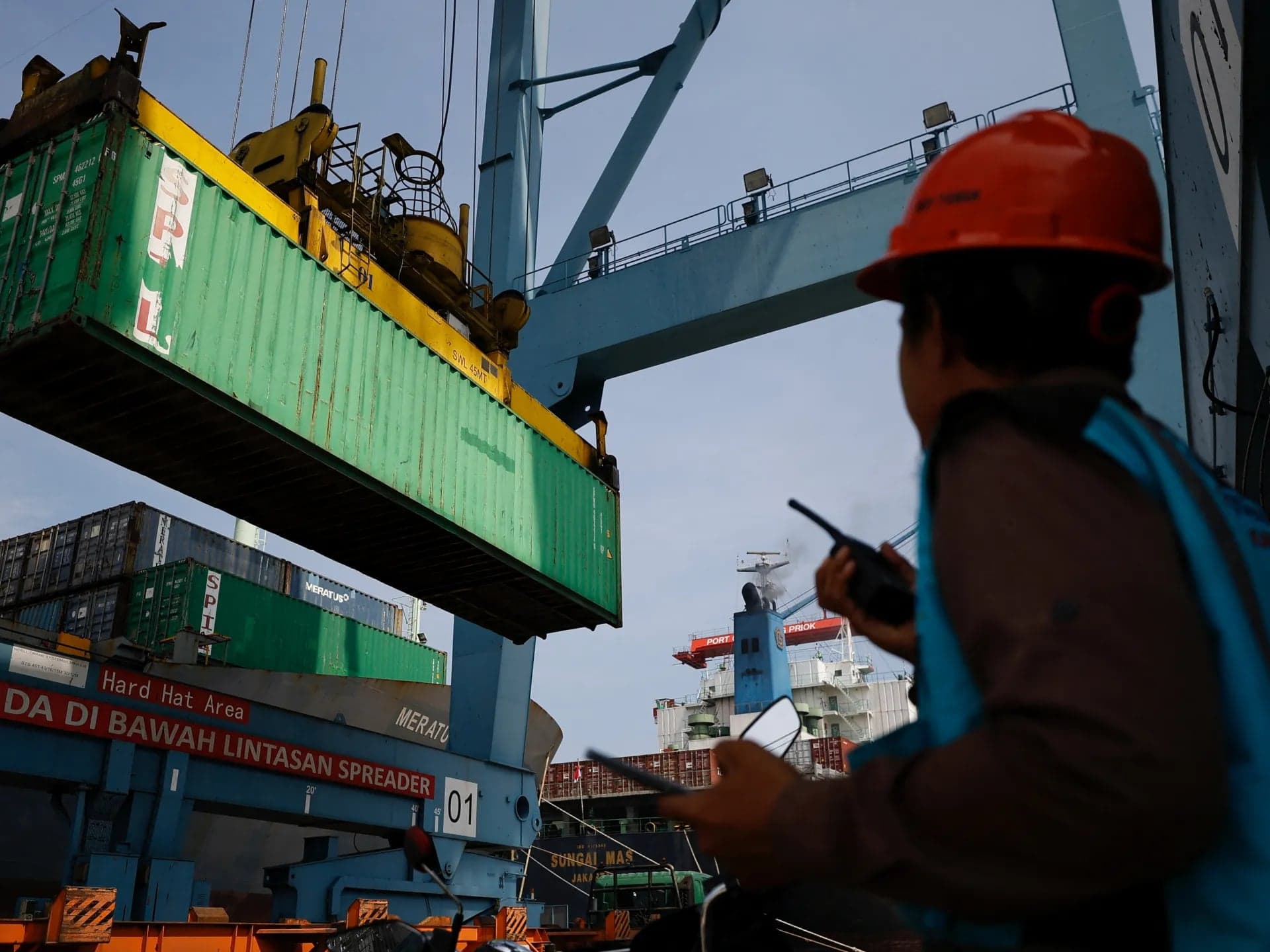
European Union governments granted formal approval for the signing and provisional application of a comprehensive Free Trade and Investment Agreement with Indonesia[1]. The Council of the European Union’s decision represents an aggressive geopolitical pivot to diversify European export markets and secure access to critical raw materials ahead of severe trade measures threatened by U.S. President Donald Trump[1]. Negotiated over a decade and concluded in technical terms late last year, the agreement was fast-tracked by member states seeking to immunize European industry against intensifying protectionism in North America and aggressive export competition from China[1].
The economic terms of the pact will dismantle tariffs across virtually all bilateral trade[1]. Over 90% of import duties on European goods entering Indonesia will be eliminated immediately upon provisional entry into force, while Jakarta’s prohibitive 50% tariff on European-manufactured automobiles will be systematically phased out within five years[1]. In return, Indonesian agricultural and manufactured exports gain preferential access to the EU single market just prior to the January 1, 2027 expiration of Indonesia’s status under the Generalized Scheme of Preferences (GSP)[1]. European officials estimate that the accord will save European businesses approximately €600 million ($658.3 million) annually in customs duties alone[1].
The trade pact represents a breakthrough following years of acrimonious regulatory disputes[1]. Relations between Brussels and Jakarta had deteriorated over the European Commission’s deforestation regulations and decisions to phase out palm oil from transport biofuels by 2030, which prompted Indonesian retaliatory measures and World Trade Organization complaints[1]. However, mounting external geopolitical risks forced both sides to compromise[1]. Irish Minister for Foreign Affairs and Trade Helen McEntee, representing the Council, underscored that tying the world’s largest single market to Southeast Asia’s largest economy and fourth most populous nation provides a vital hedge against global trade instability[1].
Beyond tariff relief, the alliance carries decisive strategic value for Europe’s industrial transition[1]. Indonesia controls the world’s largest proven reserves of nickel and holds significant deposits of bauxite and copper, materials essential for European electric vehicle manufacturing, defense electronics, and energy infrastructure. By securing supply chain agreements with Jakarta, the EU reduces its critical dependencies on Chinese refining networks while blunting the impact of potential U.S. cross-tariffs on European technology inputs[1][2]. The deal now moves to formal signature and European Parliament ratification, marking one of the fastest trade treaty implementations in modern EU history[1].
- European Union
- Indonesia
- United States
Story 12 of 13
2 min read
Japan's PM Takaichi Meets Putin, Demands Release of Reporter and Return of Seized Assets
Japanese Prime Minister Sanae Takaichi held an unannounced 30-minute bilateral meeting with Russian President Vladimir Putin, the first leader-level encounter between the two nations in over seven years. Takaichi demanded the release of a detained Hokkaido Shimbun reporter and protested the seizure of Japan Tobacco Inc.'s assets in Russia, actions that have severely strained bilateral relations.
Read the full storyFold the full story2 min · 4 sources
In another major diplomatic encounter on the summit's perimeter, Japanese Prime Minister Sanae Takaichi held an unannounced 30-minute bilateral discussion with Vladimir Putin late Wednesday evening following the APEC gala dinner[1][2]. The encounter marked the first direct, leader-level meeting between Tokyo and Moscow in more than seven years, dating back to September 2019 when Shinzo Abe met the Russian president, and represented the first face-to-face dialogue between Japanese and Russian heads of state since the February 2022 invasion of Ukraine[2]. The talks, arranged at Tokyo's request, departed sharply from Japan’s recent posture of strict diplomatic disengagement[1][2].
The substance of Takaichi’s representations focused on escalating bilateral crises involving Japanese nationals and commercial entities in Russia[1][2]. Takaichi formally demanded the immediate and unconditional release of Yuki Imai, a reporter for the Hokkaido Shimbun who was arrested by Russian security services in October on espionage charges - allegations Tokyo has vigorously denied[1][2]. In parallel, Takaichi protested and demanded the revocation of a presidential decree issued by Putin earlier in November that seized control of Japan Tobacco Inc.’s local subsidiary, summarily placing its assets and manufacturing operations under the temporary management of a domestic Russian enterprise[1][2]. Takaichi argued that such state expropriations directly violate international commercial standards and set a dangerous precedent for foreign investment[1][2].
The meeting unfolded in an atmosphere of pronounced friction[3]. Tokyo-Moscow relations deteriorated significantly throughout late 2026, exacerbated by Putin’s controversial official visit in August to Etorofu Island - part of the disputed Northern Territories seized by Soviet troops in 1945 - which drew formal diplomatic protests from Japan[3][2]. Relations grew more fraught following joint Russian-Chinese military air patrols near Japanese airspace and across the Taiwan Strait[4]. Furthermore, Takaichi's defense policy, including statements affirming that Japan could deploy defensive force if military actions against Taiwan threaten Japanese sovereignty, had drawn sharp pushback from both Beijing and Moscow[4].
At a press conference following the talks, Takaichi confirmed that she and Putin agreed to maintain functional communication channels at the leadership level, characterizing the re-establishment of direct contact as the encounter's principal structural achievement[1][2]. Nonetheless, the interaction highlighted the precarious diplomatic tightrope Japan must walk: managing immediate national security friction and securing its detained citizens while maintaining alignment with Western sanctions and resisting broader Russian power projection across Northeast Asia[4][2].
- Sanae Takaichi
- Vladimir Putin
- Shinzo Abe
Story 13 of 13
2 min read
Australian PM Albanese Directly Confronts Putin on Ukraine in APEC Plenary
During the APEC plenary session in Shenzhen, Australian Prime Minister Anthony Albanese directly addressed Russian President Vladimir Putin, calling for an end to the war in Ukraine and linking it to global inflation and cost-of-living pressures. This unscripted confrontation occurred despite China's efforts to promote regional trade integration and marked Putin's first APEC appearance in a decade.
Read the full storyFold the full story2 min · 8 sources
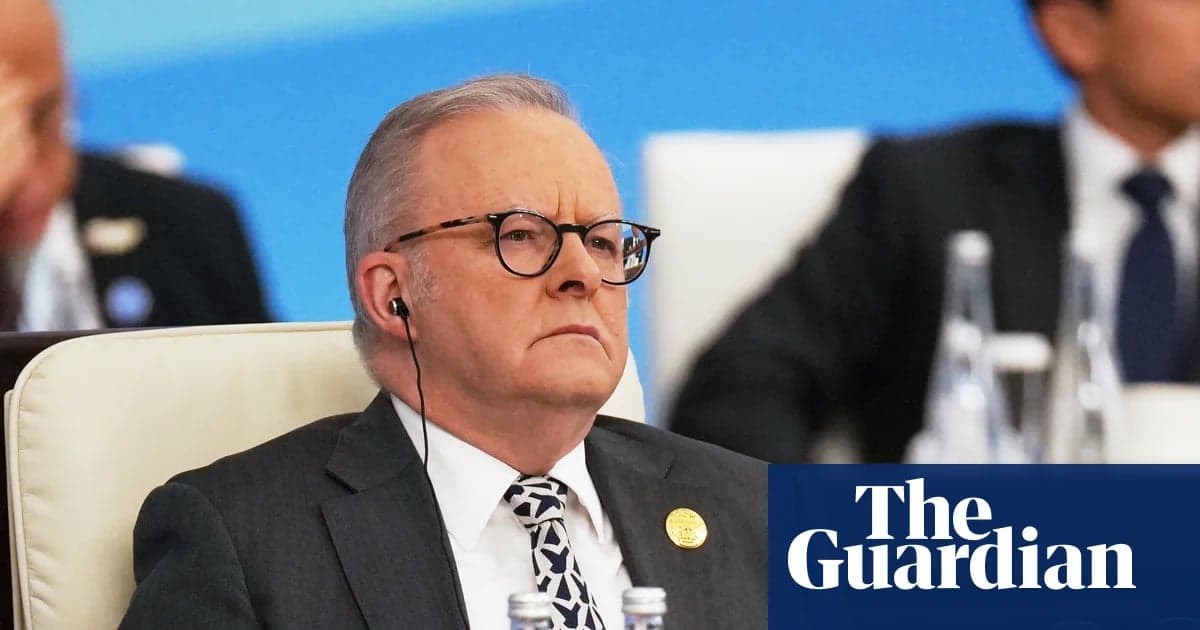
The choreographed unity of the APEC plenary session in Shenzhen fractured when Australian Prime Minister Anthony Albanese utilized his official address to directly challenge Russian President Vladimir Putin over the global fallout of the war in Ukraine[1][2]. Speaking before more than 20 heads of state and government - including host Xi Jinping and Donald Trump - Albanese abandoned conventional diplomatic phrasing[1][2]. Looking across the chamber directly at Putin, who reportedly kept his head down throughout the intervention, Albanese stated: "Two of the biggest causes of disruption to trade are the conflicts in Ukraine and the Middle East, and we must do all we can to end them. Conflict in the Middle East is having an impact on global inflation and causing cost of living pressures in our economies. And I say very directly to President Putin: end your war, end it now"[1][2][3].
The intervention occurred against a backdrop of acute domestic and international sensitivity[4][3]. Albanese had faced intense criticism earlier in the week from Australia’s Ukrainian community and political opponents after agreeing to participate in the traditional APEC leaders' "family photo" alongside Putin[4][2][3]. The Russian leader's presence in Shenzhen marked his first appearance at an APEC summit in nearly a decade, an attendance Beijing actively facilitated to demonstrate Moscow's international standing[3][5]. Defending his participation, Albanese told reporters that while he respected China’s procedural role as host, taking part in official summit photography did not diminish Canberra's strategic stance[4][3]. Australia has been one of the largest non-NATO suppliers of assistance to Kyiv, committing approximately AUD 1.9 billion ($1.26 billion) in total aid, including AUD 1.6 billion in direct military hardware[4].
Albanese’s remarks directly linked military hostilities to broader geoeconomic instability, framing the conflicts in Eastern Europe and the Persian Gulf as the primary structural drivers of global supply chain breakdown, maritime trade disruptions, and persistent inflationary pressures across the Asia-Pacific[1][4]. The confrontation interrupted Beijing's efforts to steer the summit's messaging toward unobstructed regional trade integration, digital connectivity, and the formal adoption of the "Shenzhen Vision" for regional cooperation[6][7].
The confrontation underscored the deep ideological fissures persisting beneath the surface of the Asia-Pacific economic architecture[8][2]. While non-aligned and regional emerging markets prioritized discussions on supply chain continuity and energy security, Western-aligned middle powers demonstrated an unwillingness to normalize Moscow's diplomatic rehabilitation[8][4]. By delivering an unscripted rebuff in an open forum, Canberra signaled that middle powers intend to actively resist great-power attempts to sanitize territorial aggression in regional economic dialogues[1][2].
- Anthony Albanese
- Vladimir Putin
- Xi Jinping
You're all caught up.
That's every story in Thursday's PiBrief Geopolitics. And there's a newer edition waiting for you.
All PiBrief Geopolitics editions
Subscribe to receive daily briefings about geopolitics and world news in your email.
Get PiBrief Geopolitics in your inbox
A free newsletter on geopolitics and world news. Diplomacy, conflict, the global economy, and elections, ranked and explained, with an audio briefing in every edition.
Free forever / no account / 1-click unsubscribe