
Shenzhen pact, ICJ Myanmar ruling & US Gulf moves
Global powers establish a new governance framework at the Shenzhen summit while the International Court of Justice issues a landmark ruling on Myanmar. Meanwhile, Washington expands its Persian Gulf blockade targeting Iranian oil shipments, escalating regional friction. Across the Atlantic, European leaders continue to accelerate plans for strategic autonomy.
15 stories70 sources checked
Listen to this edition
PiBrief Geopolitics, November 21, 2026
The lineup
In this edition
 01
Great Powers Forge Shenzhen Declaration: A New Trilateral Order on Global Governance
- 02
Shenzhen Summit Reshapes Global Alliances, U.S. Pushes Ukraine Peace Deal
 03
ICJ Rules Myanmar Committed Genocide; Global Powers Divided on Enforcement
 04
Europe Accelerates Strategic Autonomy Amid U.S. Alliance Uncertainty
 05
US Expands Persian Gulf Blockade to Halt Iranian Oil Transfers, Raising Regional Tensions
 06
Iraq Reclaims Militia Stronghold, Shifting Geopolitical Balance with Iran
 07
EU and India Align Trade, Security, and Maritime Norms
 08
Indo-Pacific Middle Powers Form Independent Alliances Post-Manila Quad
- 09
Taiwan and Marshall Islands Launch $20 Million Credit Facility for Economic Sustainability
- 10
China and Indonesia Initiate Comprehensive Economic Partnership Talks
- 11
U.S. Congress Scrutinizes Saudi Civil Nuclear Pact Amid Nonproliferation Concerns
 12
Denmark Ratifies Greenland Defense Pact with U.S. for Missile Defense and New Bases
 13
France Launches 'Children First' Pact with 56 Nations to Address Global Child Welfare Crisis
 14
UN Talks on Autonomous Weapons Stall, Delaying Binding Rules Until 2028
- 15
U.S. Treasury Targets Iranian 'Oil Trustees' in New Sanctions Round
See all 15 as a listHide the list
- Great Powers Forge Shenzhen Declaration: A New Trilateral Order on Global Governance
- Shenzhen Summit Reshapes Global Alliances, U.S. Pushes Ukraine Peace Deal
- ICJ Rules Myanmar Committed Genocide; Global Powers Divided on Enforcement
- Europe Accelerates Strategic Autonomy Amid U.S. Alliance Uncertainty
- US Expands Persian Gulf Blockade to Halt Iranian Oil Transfers, Raising Regional Tensions
- Iraq Reclaims Militia Stronghold, Shifting Geopolitical Balance with Iran
- EU and India Align Trade, Security, and Maritime Norms
- Indo-Pacific Middle Powers Form Independent Alliances Post-Manila Quad
- Taiwan and Marshall Islands Launch $20 Million Credit Facility for Economic Sustainability
- China and Indonesia Initiate Comprehensive Economic Partnership Talks
- U.S. Congress Scrutinizes Saudi Civil Nuclear Pact Amid Nonproliferation Concerns
- Denmark Ratifies Greenland Defense Pact with U.S. for Missile Defense and New Bases
- France Launches 'Children First' Pact with 56 Nations to Address Global Child Welfare Crisis
- UN Talks on Autonomous Weapons Stall, Delaying Binding Rules Until 2028
- U.S. Treasury Targets Iranian 'Oil Trustees' in New Sanctions Round
Story 1 of 15
3 min read
Great Powers Forge Shenzhen Declaration: A New Trilateral Order on Global Governance
The U.S., China, and Russia have signed the 'Declaration toward Peace' at the APEC summit, establishing a new framework for international relations. The accord focuses on strategic stability, UN reform, oil supply coordination, and challenging international court overreach. This summit marks a significant shift from the post-WWII international order.
Read the full storyFold the full story2 min · 17 sources
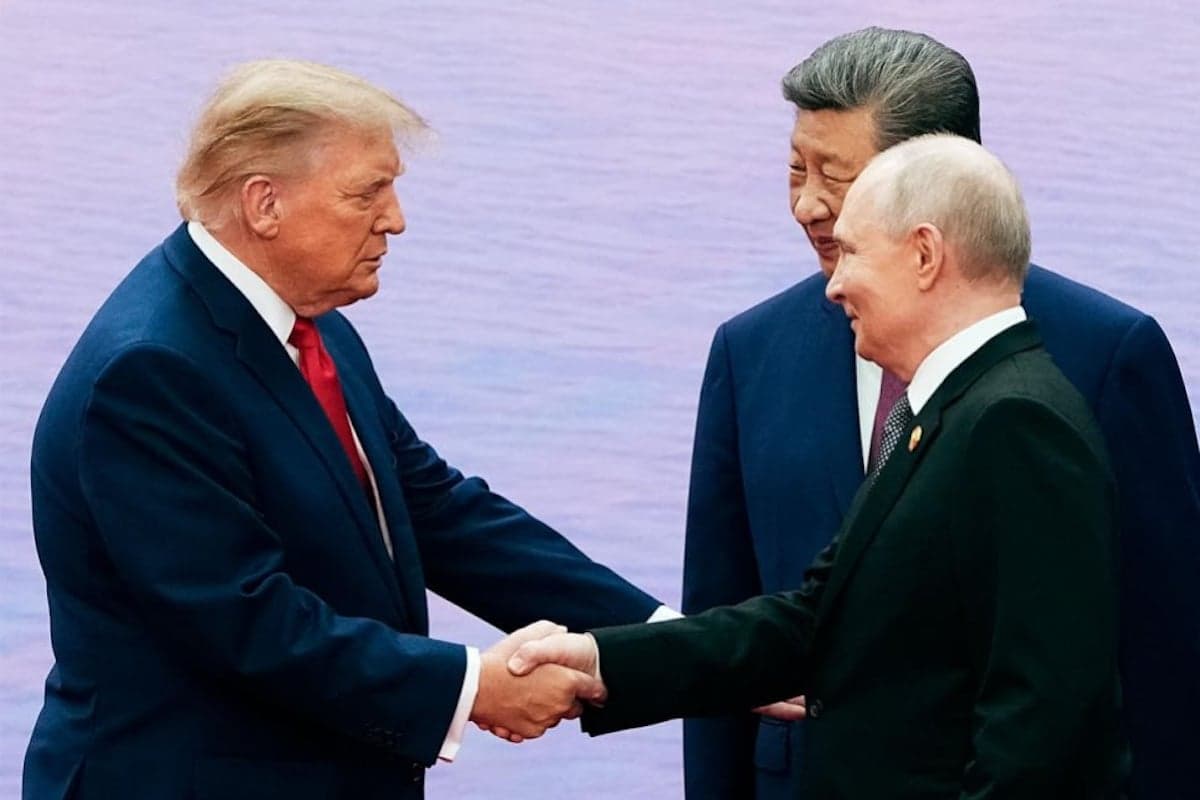
In the wake of an unprecedented meeting on the sidelines of the Asia-Pacific Economic Cooperation (APEC) summit in Shenzhen, the United States, China, and Russia formalized a major diplomatic realignment through their newly released "Declaration toward Peace"[1][2]. The joint accord - agreed upon by U.S. President Donald Trump, Chinese President Xi Jinping, and Russian President Vladimir Putin - articulates a transactional approach to international governance[3]. The concise 226-word text establishes four core commitments: advancing strategic stability and reducing nuclear risks; reforming the United Nations to reflect current power dynamics; coordinating an increase in the global production and supply of refined petroleum products; and strictly curtailing what the three capitals characterized as jurisdictional overreach by bodies like the International Criminal Court (ICC)[1][3]. On November 20, 2026, President Trump returned to Washington to brief the press on what he termed a "different course" in American foreign policy, while China’s Foreign Ministry and Russian state officials echoed the new framework in parallel briefings[1][4][5][6].
The summit marks a sharp departure from the institutionalist post-World War II architecture[3]. Observers noted that the summit and declaration were conspicuous for what they omitted: neither the ongoing conflict in Ukraine nor the deepening military crisis involving Iran was directly mentioned in the final communiqué[2][7]. For Moscow, the summit offered public validation of superpower parity following years of Western diplomatic isolation[8]. For Beijing, hosting the high-stakes encounter positioned China as the indispensable convener and architect of a new multipolar equilibrium[2][9]. For Washington, the meeting represented an effort by the Trump administration to reassert executive dealmaking and bypass multilateral mechanisms, following contentious domestic midterm elections that saw the administration lose legislative ground[10][11][12].
The primary stakeholders involved in the negotiation included the three heads of state alongside high-level emissaries such as U.S. envoys Steve Witkoff and Jared Kushner, Russian Foreign Minister Sergey Lavrov, and senior Chinese diplomatic officials[13][14][15][6]. Crucially, the agreement explicitly takes aim at international legal accountability mechanisms[3]. By underscoring the "paramount importance" of state consent and immunity for sovereign officials, the declaration directly challenges the ICC, which maintains an outstanding arrest warrant against Putin[1][3]. In their press briefings on November 20, Chinese foreign ministry spokespersons underscored that the joint posture was necessary to insulate national sovereignty from supranational judicial bodies[4].
The shift has generated profound anxiety across Europe and among middle powers[8][16][17]. European leaders expressed acute concern that the three powers are establishing an informal "G3" concert that negotiates spheres of influence at the expense of smaller nations[16][2]. Polish Prime Minister Donald Tusk issued a pointed rebuke to the display of mutual amity, remarking, "God, protect us from such friends," while transatlantic policy experts warned that excluding European capitals from direct consultations undermines NATO’s collective deterrence and destabilizes vulnerable regions like the Western Balkans and Eastern Europe[16][6]. Energy markets closely monitored the pledge to boost refined fuel flows, though analysts at institutions such as the Brookings Institution and the Council on Foreign Relations emphasized that beneath the polished display of unity, major fundamental rivalries - ranging from unresolved tariffs to contested maritime claims - remain largely unaddressed[12][7].
- United States
- China
- Russia
Story 2 of 15
2 min read
Shenzhen Summit Reshapes Global Alliances, U.S. Pushes Ukraine Peace Deal
An unprecedented trilateral summit in Shenzhen between the U.S., China, and Russia has led to a diplomatic realignment, including a joint declaration on UN reform, energy, and nuclear risk reduction. Following the summit, the U.S. is aggressively pushing for an accelerated peace settlement in Ukraine, urging European allies to end their support and imposing a tight deadline for a settlement. This move signals a potential rupture between the U.S. and its traditional European partners.
Read the full storyFold the full story2 min · 11 sources
A significant diplomatic realignment crystallized following the unprecedented trilateral summit in Shenzhen between U.S. President Donald Trump, Chinese President Xi Jinping, and Russian President Vladimir Putin[1][2][3]. In the hours following the summit, the White House, the Kremlin, and Beijing released the "Heads of State Declaration toward Peace," a four-point statement outlining joint commitments on United Nations reform, expanding global supplies of refined petroleum products, curtailing the jurisdiction of international tribunals such as the International Criminal Court (ICC), and initiating trilateral discussions on nuclear risk reduction[3][4][5]. While the public document omitted direct reference to the war in Ukraine, diplomatic developments over the past 24 hours revealed an aggressive push by Washington to conclude the conflict on accelerated terms[6][5].
Reporting confirmed that while flying back to Washington from Shenzhen, President Trump placed a series of telephone calls to European heads of state convened in Berlin, explicitly urging them to end their financial and military backing for Ukraine[7]. Concurrently, European and Ukrainian officials confirmed that the U.S. administration delivered an ultimatum seeking a finalized peace settlement between Kyiv and Moscow by early January[6]. This compressed timetable is widely viewed as an effort to lock in an accord before newly elected congressional delegations take office following the U.S. midterm elections[6]. Talks previously resumed in Abu Dhabi led by U.S. envoys Steve Witkoff and Jared Kushner, but Moscow has maintained maximalist demands - insisting that Ukraine abandon its NATO aspirations, accept Russian sovereignty over the Donbas, and agree to broader rollbacks of NATO deployments to 1997 frontiers[8][9][6].
The immediate implication of this great-power maneuver is a sharp rupture between Washington and its traditional European allies[7]. Foreign policy analysts from the Atlantic Council and the Center for Strategic and International Studies (CSIS) described the Shenzhen talks as a transactional dynamic reminiscent of twentieth-century great-power bargaining, leaving frontline states sidelined[1][10]. European capitals now face the prospect of managing the security architecture of Eastern Europe largely on their own, while Ukrainian President Volodymyr Zelensky confronts intense diplomatic coercion to accept territorial compromises[10][6]. Markets have registered the shift through heightened volatility across European defense equities and fluctuating crude benchmarks tied to the summit's energy commitments[11][3].
- Donald Trump
- Xi Jinping
- Vladimir Putin
Story 3 of 15
2 min read
ICJ Rules Myanmar Committed Genocide; Global Powers Divided on Enforcement
The International Court of Justice has ruled that Myanmar committed genocide against the Rohingya minority, ordering reparations and prosecution of military officials. Myanmar's junta rejected the verdict, citing jurisdictional overreach, and invoked the recent Shenzhen summit declarations. The ruling highlights a deep division among global powers regarding international law and state sovereignty.
Read the full storyFold the full story2 min · 8 sources
A major diplomatic and legal divide erupted across major capitals after the International Court of Justice (ICJ) in The Hague delivered a historic verdict ruling that Myanmar committed genocide against the Rohingya minority[1][2]. In a 9–6 decision stemming from a case originally instituted by The Gambia under the 1948 Genocide Convention, the World Court found Myanmar's military apparatus legally responsible for state-sponsored murder, systemic sexual and gender-based violence, and the widespread destruction of more than 390 villages in Rakhine State during the 2017 "clearance operations"[1][3][2]. By a 10–5 vote, the judges ordered Myanmar to pay reparations, facilitate the safe and voluntary repatriation of hundreds of thousands of displaced refugees currently living in Bangladesh, and prosecute responsible military officers[3][4].
The judgment represents the first time in the ICJ’s 80-year history that the tribunal has determined an entire sovereign state to be guilty of committing genocide[5][2]. On November 20, the military-led government in Naypyitaw forcefully rejected the decision[2][6]. Khine Khine Soe, speaking on behalf of military junta leader Min Aung Hlaing, dismissed the judgment as "unfair" and politically motivated[2][4]. Significantly, Myanmar's diplomatic apparatus explicitly invoked the contemporaneous anti-tribunal declarations made by the United States, Russia, and China at the Shenzhen summit, arguing that the court had engaged in blatant jurisdictional overreach and asserting that sovereign nations are not bound by selective international legal rulings[6].
The reaction among major powers revealed stark ideological fractures in foreign policy doctrines[7]. The European Union, along with international legal coalitions and human rights organizations, issued declarations hailing the verdict as an indispensable victory for the international rule of law and demanded the immediate implementation of economic and military sanctions against Myanmar's governing junta[8][5][4]. By contrast, the official U.S. diplomatic response remained measured and cautious[8][7]. Foreign policy experts at the Council on Foreign Relations pointed out that Washington has recently shifted toward practical geopolitical engagement with Naypyitaw to counter expanding Chinese influence in Southeast Asia, creating a sharp friction between human rights legalism and strategic balance-of-power interests[7].
The ruling now heads toward an inevitable diplomatic gridlock within the United Nations Security Council, the only body empowered to enforce ICJ decrees[7][4]. With China and Russia possessing permanent veto power - and Washington increasingly reluctant to empower international tribunals that challenge sovereign state discretion - analysts anticipate that any binding resolution mandating reparations or enforcement measures against Myanmar will be vetoed[7]. This dynamic has sparked warnings from legal scholars that the clash between the ICJ’s binding ruling and great-power resistance threatens to further erode multilateral accountability across the international system[7][5].
- International Court of Justice
- Myanmar
- Rohingya
Story 4 of 15
2 min read
Europe Accelerates Strategic Autonomy Amid U.S. Alliance Uncertainty
In response to geopolitical shifts, European leaders and the European Central Bank are fast-tracking initiatives for economic and defense self-reliance. ECB President Christine Lagarde emphasized the need to decouple critical financial infrastructure from external decision-makers, highlighting vulnerabilities exposed by foreign sanctions. The EU is finalizing legislation for a digital euro and expanding wholesale capital tokenization.
Read the full storyFold the full story1 min · 3 sources
Confronted by the geopolitical realignment displayed at the Shenzhen summit, European policymakers launched an immediate push toward economic and defense self-reliance[1][2]. Addressing the 36th Frankfurt European Banking Congress, European Central Bank President Christine Lagarde delivered an urgent assessment warning that Europe must decouple its core financial and strategic infrastructure from external decision-makers[1]. Lagarde cited recent instances where European legal officials - specifically judges on the International Criminal Court - had their personal bank accounts and payment processing severed overnight by foreign extraterritorial sanctions, pointing to this as clear evidence that dependencies on overseas financial rails represent a critical vulnerability[1].
In response to these structural risks, European leadership signaled a formal acceleration of sovereign institutional mechanisms[1]. Lagarde confirmed that European authorities are moving to finalize legislative backing for the digital euro by the close of the year, ensuring an autonomous, publicly backed digital payment infrastructure entirely sovereign from foreign transaction clearing firms[1]. Simultaneously, the European Union has moved to expand wholesale capital tokenization based on European distributed ledger systems, shielding continental commercial clearing from overseas secondary sanctions[1].
At the defense level, the push for autonomy is taking on direct operational urgency[2][2]. Following reports of Trump's calls pressuring Berlin to curtail Ukrainian aid, frontline NATO members signaled deep skepticism regarding the longevity of the American security umbrella[3][2]. Polish Defense Minister Władysław Kosiniak-Kamysz publicly called upon NATO Secretary General Mark Rutte and European member states to substantially augment the alliance’s Operation Eastern Sentry[2]. Poland specifically demanded immediate additional deployments of European-operated Airborne Warning and Control System (AWACS) platforms and F-35 fighter wings to border zones, responding to repeated Russian violations of allied airspace designed to test Western response thresholds[2][2]. The combined initiatives demonstrate a decisive pivot among European institutions to establish strategic depth in finance and territorial defense independent of Washington[1][2].
- European Central Bank
- Christine Lagarde
- European Union
Story 5 of 15
3 min read
US Expands Persian Gulf Blockade to Halt Iranian Oil Transfers, Raising Regional Tensions
The U.S. military has intensified its blockade of Iranian ports, expanding naval interdiction to include ship-to-ship crude oil transfers. This move aims to close a loophole Iran has used to export oil, significantly impacting its economy. Iran has responded by marshaling tankers to challenge the blockade.
Read the full storyFold the full story2 min · 10 sources
Tensions between the United States and Iran escalated sharply following the U.S. military’s announcement that it is expanding its naval blockade of Iranian ports[1][2]. Under an operational advisory published by U.S. Central Command (CENTCOM), American forces will now interdict and take action against any vessel that participates in ship-to-ship crude oil transfers at sea involving cargo loaded at Iranian ports or along the Iranian coastline[2]. The measure closes a major regulatory and operational loophole that Tehran has long exploited to transport petroleum to overseas markets via shadow-fleet transfers in the Persian Gulf and Sea of Oman[1][2][3]. Ship-tracking data from Kpler and maritime monitoring group United Against Nuclear Iran (UANI) documented that the U.S.-sanctioned Suezmax tanker Olym transferred crude to the unlisted tanker Hao Fan near Kharg Island just prior to the announcement, spurring the tightened enforcement mandate[3].
The naval escalation comes against the backdrop of protracted economic strain and an unraveling diplomatic track[1][4]. The U.S. maritime blockade, originally imposed earlier in the year and reinstated in July after negotiations broke down, has severely throttled Iran’s petroleum exports and fueled domestic inflation and currency depreciation[1][2]. In response to the tighter net, hardline factions in Tehran and outlets affiliated with the Islamic Revolutionary Guard Corps (IRGC), such as Fars News Agency, announced that 14 heavily laden tankers have been marshaled at Kharg Island, flying Iranian flags and preparing to challenge the U.S. blockade line in convoy[5][6]. Iranian military commentators explicitly threatened that any kinetic interdiction of the convoy would trigger retaliatory strikes against oil facilities and regional critical infrastructure across Bahrain, Kuwait, Qatar, Saudi Arabia, the United Arab Emirates, and Oman[5].
Diplomatically, both sides have adopted uncompromising public postures while maintaining backchannel communications[7]. Iranian Foreign Minister Abbas Araqchi stated that while Tehran believes a fair diplomatic settlement to end the broader confrontation remains feasible, the country will not capitulate to American pressure or compromise on its red line of retaining enriched uranium reserves within its borders[7]. Conversely, speaking from Washington, President Donald Trump rejected temporary diplomatic fixes, demanding a "real deal" that comprehensively ends Tehran's missile programs and regional proxy funding, while noting he would not finalize his next strategic steps until early next year[7][8]. Concurrently, the U.S. Treasury's Office of Foreign Assets Control (OFAC) issued fresh designations targeting illicit Iranian financial networks and maritime facilitators[9][10].
Regional and global energy analysts view the confrontation as a pivotal flashpoint[4][6]. The International Energy Agency (IEA) warned that persistent disruptions in the Strait of Hormuz have generated the largest cumulative energy supply shock in recent decades, accounting for billions of barrels of displaced supply[4][6]. National security analysts at the Institute for the Study of War (ISW) observed that Tehran’s threat to run the blockade creates an acute diplomatic dilemma: Washington must either enforce the blockade by boarding Iranian-flagged tankers - risking a major regional kinetic confrontation - or allow the convoy through, which would decisively undermine the legal validity and deterrence value of the blockade[1][1].
- United States
- Iran
- CENTCOM
Story 6 of 15
2 min read
Iraq Reclaims Militia Stronghold, Shifting Geopolitical Balance with Iran
Iraqi security forces have entered Jurf al-Sakhar, a stronghold previously controlled by the Iran-aligned Kataib Hezbollah militia. The operation, ordered by Iraqi Prime Minister Ali al-Zaidi, aims to reassert state control and investigate alleged oil smuggling by the militia. Following high-level negotiations involving Iran's Quds Force commander, the militia has agreed to a phased redeployment.
Read the full storyFold the full story1 min · 8 sources
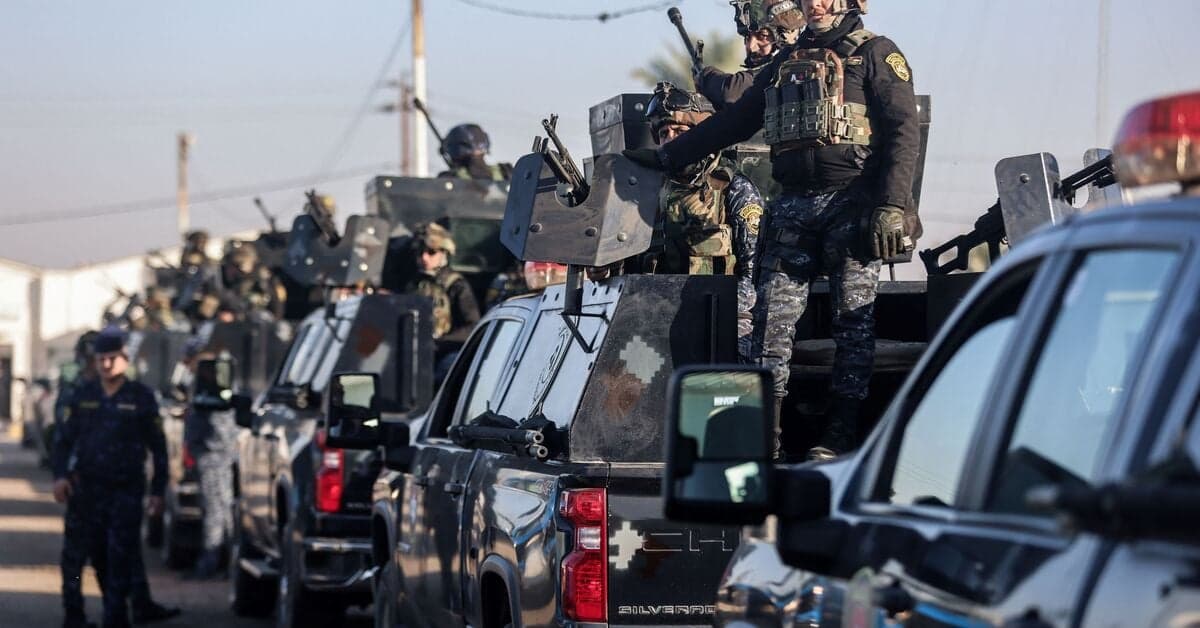
In the Middle East, the geopolitical equilibrium between the Iraqi state and Iranian proxy networks experienced a substantial shift as Iraqi security forces deployed into the fortified enclave of Jurf al-Sakhar[1][2]. Situated approximately 60 kilometers southwest of Baghdad, the territory had functioned for twelve years as an off-limits bastion for Kataib Hezbollah, the most prominent Iran-aligned paramilitary faction in Iraq[1][2]. Under direct orders from Iraqi Prime Minister Ali al-Zaidi, contingents of Iraqi federal police, counterterrorism units, and energy police moved into the district to establish a unified governmental command post and reassert sovereign control[2][3].
The operation followed an anti-corruption investigation launched by Prime Minister al-Zaidi that accused Kataib Hezbollah of operating an elaborate oil-smuggling ring[4][5]. Government findings revealed that the militia had systematically tapped into state-owned transit pipelines passing through the district, diverting hundreds of millions of dollars in crude into black-market networks[4][5]. Prior to the entry of federal forces, al-Zaidi dismissed nine senior regional security and petroleum officials suspected of facilitating the operation[5]. To avert an armed escalation that threatened to spill into central Baghdad, high-level negotiations were convened earlier in the week involving Esmail Qaani, commander of Iran’s Islamic Revolutionary Guard Corps (IRGC) Quds Force, culminating in a brokered framework under which Kataib Hezbollah agreed to a phased redeployment to peripheral operational sectors[5][6].
The reclamation of Jurf al-Sakhar marks a pivotal reassertion of central state authority at the direct expense of Tehran’s "Axis of Resistance" infrastructure[1][2]. For over a decade, Kataib Hezbollah had utilized the area to house heavy rocket manufacturing, chemical propellant storage, and secure training facilities outside state oversight, while barring the return of tens of thousands of displaced Sunni civilians[1][2]. Analysts at the International Crisis Group underscored that while Kataib Hezbollah retains operational units within parts of the broader Babil governorate, the re-entry of the Iraqi state shatters the militia's aura of regional invulnerability[1][7]. This move signals a deliberate effort by Baghdad to limit Iranian operational latitude inside Iraq during a broader, highly volatile standoff involving Washington, Israel, and Tehran[8][2].
- Iraq
- Iran
- Kataib Hezbollah
Story 7 of 15
2 min read
EU and India Align Trade, Security, and Maritime Norms
The European Union and India concluded their 7th Strategic Partnership Review, agreeing to harmonize technical standards for trade agreements and boost industrial cooperation. Key outcomes include fast-tracking Indian ship-recycling facilities for EU vessels and accelerating joint frameworks in semiconductors, AI, and digital infrastructure.
Read the full storyFold the full story1 min · 1 source
The European External Action Service (EEAS) and the Ministry of External Affairs of India released the formal outcomes of the 7th EU-India Strategic Partnership Review Meeting (SPRM), detailing key administrative and policy agreements aimed at clearing longstanding regulatory bottlenecks between the two economies[1]. Co-chaired in New Delhi by Indian Secretary (West) Sibi George and EEAS Deputy Secretary-General Matti Maasikas, the talks focused on synchronizing technical standards to support the conclusion of the India-EU Free Trade Agreement, the Investment Protection Agreement, and a dedicated pact on Geographical Indications[1].
A primary operational breakthrough within the briefing addresses the maritime industrial sector[1]. Both parties agreed to fast-track technical and environmental assessments to include compliant Indian ship-recycling facilities within the official registry of the European Union Regulation on Ship Recycling[1]. This regulatory concession will allow European commercial vessels to utilize Indian dry docks for decommissioned hull dismantling, expanding India's blue-economy industrial sector while providing European shipping firms with cost-effective, environmentally vetted recycling yards in South Asia[1].
The diplomatic consultations also accelerated joint frameworks under the EU-India Trade and Technology Council (TTC)[1]. Negotiators reviewed supply chain security in advanced semiconductors, quantum computing research, artificial intelligence governance, and digital public infrastructure (DPI)[1]. Strategic discussions extended to practical connectivity investments, specifically reviewing the status of the India-Middle East-Europe Economic Corridor (IMEC) alongside the European Union's Global Gateway framework, designed to build alternative transport, energy, and digital fiber networks linking the subcontinent with European ports[1].
The meeting illustrates a mutual diplomatic push to institutionalize economic resilience amid rising global trade friction. Rather than allowing broader free-trade disputes to stall cooperation, Brussels and New Delhi are segmenting their strategic engagement into high-priority technical alignments - such as ship recycling, semiconductor supply chains, and digital standard-setting - ensuring steady economic integration while final market-access negotiations continue behind closed doors.
- European Union
- India
- European External Action Service
Story 8 of 15
2 min read
Indo-Pacific Middle Powers Form Independent Alliances Post-Manila Quad
Middle powers in the Indo-Pacific are establishing independent diplomatic and industrial alliances to hedge against global power volatility. Following the Manila Quad and APEC summits, and amidst concerns over China's stance on Taiwan, nations like Canada and Japan are deepening bilateral integration in critical mineral extraction and aerospace supply chains. This includes participation in programs like the Global Combat Air Programme outside U.S. frameworks.
Read the full storyFold the full story1 min · 9 sources
A parallel geopolitical realignment gained momentum across the Indo-Pacific, where middle powers are formalizing horizontal coalitions to hedge against volatility from both Washington and Beijing[1]. While President Trump concluded his Asian tour - which included stops at the Quad leaders' gathering in Manila alongside Indian, Australian, and Japanese counterparts - regional states reacted with heightened anxiety over Beijing’s explicit warnings in Shenzhen that the U.S. must retreat from its security commitments to Taiwan[2][3][4]. The conspicuous absence of binding bilateral security deliverables from the Shenzhen talks highlighted the risk that great powers may conduct broad strategic trade-offs without consulting regional allies[5][6].
Consequently, middle powers have begun strengthening alternate diplomatic and industrial channels[1]. Newly released assessments following bilateral sessions in Manila and Shenzhen highlight expanding bilateral integration between Canada, led by Prime Minister Mark Carney, and Japan, under Prime Minister Sanae Takaichi[1][7][8]. Rather than relying exclusively on bilateral mechanisms tied to the United States, Tokyo and Ottawa are deepening direct partnerships in critical mineral extraction, refining, and advanced aerospace supply chains[1]. These arrangements parallel Japan's expanding integration with the Global Combat Air Programme (GCAP) alongside the United Kingdom and Italy, which is designed to preserve technological superiority in next-generation defense platforms outside standard U.S. Foreign Military Sales frameworks[1].
The immediate result is a structural diversification of Indo-Pacific security architecture[5][1]. Traditional U.S. allies such as South Korea, the Philippines, and Japan are balancing continued participation in U.S.-led forums - like the Quad's recently finalized critical minerals framework - with autonomous regional hedging[2][1][9]. By creating interlocking webs of middle-power cooperation covering rare earth elements, advanced radar technology, and maritime security patrols, these nations are actively insulating themselves against sudden shifts in U.S. alliance posture, Chinese maritime expansionism in the South China Sea, and potential flashpoints across the Taiwan Strait[5][1][4].
- Quad
- APEC
- Canada
Story 9 of 15
2 min read
Taiwan and Marshall Islands Launch $20 Million Credit Facility for Economic Sustainability
Taiwan and the Marshall Islands have established a $20 million credit guarantee facility, replacing traditional aid with a revolving credit mechanism. This initiative aims to foster economic self-sufficiency by enabling Marshallese enterprises to access commercial loans for key sectors like fisheries and tourism, backed by Taiwanese capital.
Read the full storyFold the full story1 min · 1 source
Taiwan and the Republic of the Marshall Islands executed a definitive US$20 million credit guarantee facility agreement in Taipei, marking the 28th anniversary of formal diplomatic ties with a fundamental restructuring of their bilateral economic relationship[1]. Signed by Taiwan’s Foreign Minister Lin Chia-lung and Marshallese Finance Minister David Paul, the facility replaces conventional cash transfers with a revolving credit-support mechanism[1]. Scheduled to launch operations, the guarantee allows Marshallese enterprises to access commercial loans with extended amortizations and significantly compressed borrowing rates by utilizing Taiwanese sovereign-backed capital to mitigate lender defaults[1].
The initiative addresses persistent structural limitations within the Marshall Islands’ economy, an archipelago nation of approximately 36,000 residents long sustained by Compact of Free Association grants from the United States and external assistance from Taiwan[1]. Minister Paul publicly designated commercial cooperation as the "last frontier" of bilateral ties, arguing that sustainable sovereign partnerships require a transition away from foreign aid toward institutional self-sufficiency[1]. The credit facility is specifically designed to direct private commercial lending into domestic fisheries, modern tourism infrastructure, commercial agriculture, and coastal construction[1].
The diplomatic backdrop highlights Taiwan’s strategic imperative to protect its remaining 12 official diplomatic alliances against intensifying pressure from Beijing[1]. Over recent years, traditional direct-aid diplomacy has proven vulnerable to competing offers of state-backed infrastructure loans from the People's Republic of China. By establishing credit guarantee institutions that integrate with local banking networks, Taipei aims to generate organic domestic commercial buy-in, making diplomatic ties directly beneficial to private enterprise and the domestic business class.
Economic projections presented alongside the deal indicate that if fully utilized, the facility could support an acceleration of the Marshall Islands’ projected gross domestic product growth from its current 2.3% baseline toward approximately 5% annually[1]. For Pacific microstates, the model provides an alternative template for economic assistance that bypasses sovereign debt accumulation while expanding domestic credit markets. Observers view the arrangement as a pilot program that Taiwan may replicate across its remaining diplomatic partners in the South Pacific and Central America to secure diplomatic durability.
- Taiwan
- Republic of the Marshall Islands
- Lin Chia-lung
Story 10 of 15
2 min read
China and Indonesia Initiate Comprehensive Economic Partnership Talks
China and Indonesia have formally begun negotiations for a Comprehensive Economic Partnership Agreement (CEPA), aiming to deepen economic ties in advanced manufacturing, clean energy, and AI. The talks follow advancements in joint projects like the Jakarta-Bandung High-Speed Railway and aim to secure foreign investment for Indonesia's re-industrialization.
Read the full storyFold the full story1 min · 2 sources
Chinese President Xi Jinping and Indonesian President Prabowo Subianto officially initiated bilateral negotiations for a Comprehensive Economic Partnership Agreement (CEPA) during a high-level bilateral meeting on the sidelines of the APEC Economic Leaders' Meeting in Shenzhen[1][2]. The announcement marks an institutional deepening of economic ties between Southeast Asia’s largest economy and its principal commercial trading partner, establishing a framework to harmonize supply chains across advanced manufacturing, clean energy, and artificial intelligence[1][2].
The rapid advancement of bilateral trade talks follows a period of consolidation in Sino-Indonesian industrial integration[1][2]. During the dialogue, President Xi emphasized expanding upon flagship Belt and Road initiatives, specifically pointing to the operational expansion of the Jakarta-Bandung High-Speed Railway and the ongoing "Two Countries, Twin Parks" industrial manufacturing corridors[1][2]. For President Prabowo, the CEPA framework provides an avenue to secure massive foreign direct investment and technical transfer required for his administration’s domestic re-industrialization agenda, particularly in nickel refining, rare earth processing, and electric vehicle battery supply networks[1][2].
Beyond traditional industrial trade, the Shenzhen negotiations focus on digital and energy infrastructure[1][2]. Both leaders confirmed that prospective treaty chapters will govern joint projects in artificial intelligence applications, maritime blue economy partnerships, and grid-scale clean tech implementation[1][2]. In diplomatic remarks, President Prabowo reaffirmed Jakarta’s strict adherence to the One-China policy, while Xi called for heightened coordination between Beijing and Jakarta inside multilateral forums like the United Nations, APEC, and ASEAN[1][2].
The formal launch of CEPA negotiations demonstrates Indonesia's determination to maintain an active non-aligned posture by consolidating economic interdependency with China, even as geopolitical competition intensifies across the Indo-Pacific. By locking in long-term bilateral terms on energy, minerals, and advanced technologies, Beijing secures a critical raw material and industrial hedge in Southeast Asia, while Jakarta leverages Chinese industrial capital to insulate its domestic economy against global trade fragmentation.
- China
- Indonesia
- Xi Jinping
Story 11 of 15
2 min read
U.S. Congress Scrutinizes Saudi Civil Nuclear Pact Amid Nonproliferation Concerns
A Congressional Research Service report indicates the U.S.-Saudi civil nuclear cooperation agreement could take effect soon, despite controversy over relaxed nonproliferation standards. The pact allows for a study on Saudi uranium enrichment, deviating from the traditional 'gold standard' of requiring states to renounce such capabilities.
Read the full storyFold the full story1 min · 1 source
A detailed Congressional Research Service (CRS) legal and policy assessment evaluated the administrative trajectory of the proposed United States-Saudi Arabia civil nuclear cooperation agreement, confirming that the controversial accord could enter into legal effect upon the expiration of its statutory congressional review window in December[1]. The agreement, which was formally submitted to Capitol Hill alongside a bilateral safeguards agreement and two classified side letters, faces a ticking legislative clock that requires opponents to pass a joint resolution of disapproval to block its enactment[1].
The underlying controversy focuses on a significant shift in U.S. nonproliferation doctrine[1]. Historically, successive administrations conditioned bilateral civil nuclear pacts on the "gold standard" - mandating that partner states legally renounce domestic uranium enrichment and spent-fuel reprocessing capabilities, while adhering to the International Atomic Energy Agency's (IAEA) Additional Protocol[1]. In contrast, the current agreement establishes a two-year Joint Enrichment and Conversion Study to assess the commercial feasibility of civil uranium enrichment capacity within Saudi Arabia, accompanied by statutory waivers overriding missing safeguards protocols[1].
Legislative pushback centers on the nuclear proliferation implications of domestic enrichment capabilities within the volatile Middle Eastern security theater[1]. Lawmakers reviewing the unreleased side letters have debated whether the arrangement establishes sufficient legal firewalls against military diversion. However, the CRS analysis warns of significant strategic counter-pressures, noting that if Congress were to formally reject the bilateral pact or impose unworkable preconditions, Riyadh has maintained open communication with alternative international suppliers - including state-backed consortiums from China, France, and Russia - that operate without stringent nonproliferation strings[1].
The looming December deadline sets up an intense period of quiet legislative maneuvering. The resolution of this pact will determine not only the architecture of civil energy production in the Persian Gulf but also the baseline standards for future global nuclear commerce. If the agreement survives congressional scrutiny without amendment, it will solidify Riyadh’s alignment with American commercial nuclear vendors while fundamentally redrawing nonproliferation precedents for emerging nuclear energy programs worldwide.
- United States
- Saudi Arabia
- Congressional Research Service
Story 12 of 15
2 min read
Denmark Ratifies Greenland Defense Pact with U.S. for Missile Defense and New Bases
The Danish Parliament unanimously approved an expanded security agreement with the United States, authorizing the establishment of new U.S. military installations and radar infrastructure in Greenland for the 'Golden Dome' missile defense initiative. This pact aims to bolster Arctic defense capabilities and stabilize U.S.-Danish relations.
Read the full storyFold the full story1 min · 1 source
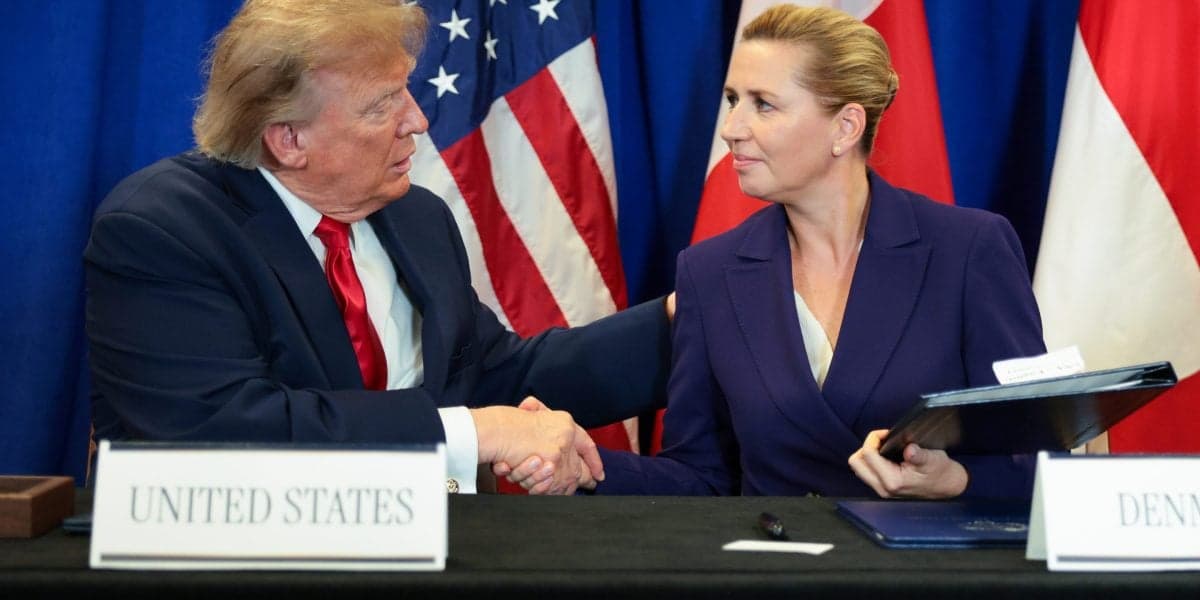
The Danish Folketing unanimously ratified an expanded bilateral security agreement with Washington, granting the United States formal approval to establish at least two additional military installations in Greenland and build essential radar and sensory infrastructure for the "Golden Dome" missile defense initiative[1]. The ratification cements a trilateral pact signed between Donald Trump, Danish Prime Minister Mette Frederiksen, and Greenlandic leadership, establishing an expanded allied defensive footprint across the Arctic territory pending final procedural notices[1].
The decision represents a pragmatic political calculation by Copenhagen to resolve prolonged diplomatic tensions over Greenland's geostrategic vulnerability[1]. The island's geography places it along the direct polar ballistic trajectory between the Russian Federation and North America, making early warning radar facilities like Pituffik Space Base indispensable to Western continental defense[1]. Danish policymakers moved toward formalizing the pact to stabilize relations with Washington and anchor American defense commitments under NATO, particularly as melting polar ice simultaneously expands maritime transit routes and increases accessibility to Greenland’s critical mineral deposits[1].
The core architecture of the agreement centers on the integration of Greenland into the "Golden Dome" - a planned multi-layered, sensor-linked missile interception grid designed to counter hypersonic glide vehicles and low-altitude cruise missiles[1]. Under the ratified terms, the U.S. military gains site-development rights in designated peripheral regions, subject to joint consultation protocols with both Copenhagen and the autonomous Greenlandic government in Nuuk[1]. The measure also outlines shared commitments on environmental remediation and local civil infrastructure upgrades surrounding prospective basing hubs.
While Danish lawmakers approved the measure without dissent, diplomatic analysts and European security officials note that the compromise underscores deeper anxieties regarding transatlantic strategic stability[1]. Although the pact neutralizes near-term friction over Arctic territorial integrity, it accelerates militarization across the High North, likely eliciting responsive forward deployments from Moscow. The agreement also sets a precedent for bilateral base agreements that operate outside conventional collective NATO structures, signaling a broader migration toward tailored bilateral arrangements between Washington and individual European allies.
- Denmark
- Greenland
- United States
Story 13 of 15
2 min read
France Launches 'Children First' Pact with 56 Nations to Address Global Child Welfare Crisis
France has introduced the 'Children First' initiative at the Paris Peace Forum, with over 56 nations endorsing a pact to establish global standards for child welfare, security, and digital safety by 2045. The initiative aims to combat extreme poverty, educational exclusion, and the psychosocial risks faced by children in the digital age.
Read the full storyFold the full story2 min · 3 sources
At the 2026 Paris Peace Forum, French President Emmanuel Macron and the French Ministry for Europe and Foreign Affairs officially launched the "Children First" declaration, a multilateral initiative aimed at establishing long-term global standards for child welfare, security, and digital safety[1][1]. Adopted during a dedicated Child Summit in Paris and formally circulated on World Children's Day, the agreement was endorsed by a coalition of over 56 sovereign nations, eight major international bodies, and roughly 20 non-governmental organizations and private sector enterprises[1][1]. The initiative sets a series of binding and non-binding benchmarks that signatories pledge to achieve by 2045[1][1].
The French diplomatic initiative addresses what international agencies describe as a compounding generational crisis[1][1]. According to data compiled by UNICEF and presented during the forum, more than 417 million children worldwide currently live in extreme poverty, roughly 250 million children and adolescents are excluded from formal education, and over 60 percent of 10-year-olds globally suffer from "learning poverty" - the inability to read or comprehend a basic written text[1]. Furthermore, the rapid, unregulated expansion of digital networks has created severe psychosocial and safety risks, with hundreds of millions of youth vulnerable to exploitation, cyber threats, and digital exclusion[1][1].
The framework focuses on five strategic pillars: public health infrastructure, pediatric nutrition, universal primary and secondary education, protection in conflict zones, and psychosocial well-being in the digital era[1][1]. Key international figures backed the launch, with UN Secretary-General António Guterres delivering an address urging participating states to counter global fragmentation by constructing a "networked multipolar world grounded in international law"[2]. The charter calls on governments to coordinate national legal frameworks that hold digital platforms accountable for child safety while pooling foreign aid to support school-feeding programs and primary health networks across developing economies[1][1][2].
Diplomatically, the declaration reflects France’s broader foreign policy strategy of advancing targeted multilateralism to fill the void left by superpower disengagement[1][2]. By assembling a broad coalition of European, African, and Latin American states around humanitarian and technological governance, Paris is seeking to maintain collective norms at a moment when traditional great-power diplomacy is pivoting toward transactional bilateralism[3][1][2]. Signatory nations will convene annual review summits within the Paris Peace Forum architecture to assess compliance with the 2045 developmental goals and monitor cross-border investments in digital protection technologies[1][2].
- France
- Emmanuel Macron
- Paris Peace Forum
Story 14 of 15
2 min read
UN Talks on Autonomous Weapons Stall, Delaying Binding Rules Until 2028
United Nations negotiations on lethal autonomous weapons systems (LAWS) concluded in Geneva without a treaty. Instead, member states agreed to draft a non-binding regulatory framework by 2028. This outcome reflects a division between nations seeking immediate prohibitions and those prioritizing existing international humanitarian law and defensive capabilities.
Read the full storyFold the full story2 min · 2 sources
A week of contentious United Nations negotiations regarding lethal autonomous weapons systems (LAWS) - commonly termed "killer robots" - concluded in Geneva with member states declining to initiate formal treaty negotiations, opting instead to draft a non-binding regulatory framework by 2028[1]. The consensus document, adopted under the auspices of the Convention on Certain Conventional Weapons (CCW), fell far short of the legally binding prohibitions sought by humanitarian groups, international legal bodies, and more than 100 nation-states[1]. Rather than instituting immediate prohibitions on systems capable of selecting and engaging targets without meaningful human control, the CCW delegates agreed merely to "elaborate" potential rules and mitigation measures over an extended two-year cycle[2][1].
The deadlock in Geneva reflects a sharpening divide between middle powers and the world's preeminent military spenders[2][1]. Heading into the conference, a coalition led by Austria, Belgium, Brazil, Ireland, Mexico, New Zealand, and Panama formally petitioned the assembly to launch binding treaty negotiations in 2026, supported explicitly by UN Secretary-General António Guterres[1]. However, delegations from the United States, the Russian Federation, and Israel successfully resisted the incorporation of legally binding constraints, arguing that existing international humanitarian law (IHL) is sufficient to govern autonomous targeting and warning that premature blanket bans would hamper legitimate defensive capabilities and algorithmic precision[2][1].
Key institutional voices expressed immediate divergence over the outcome[2][1]. UN High Representative for Disarmament Affairs Izumi Nakamitsu described the conclusion as a "significant achievement" that preserved institutional dialogue, while candidly characterizing the compromise as a "glass half full or half empty" scenario given Guterres’ unfulfilled ambition for an immediate treaty[2][1]. Civil society observers were far more critical; the Stop Killer Robots coalition issued a formal rebuke, condemning the mandate as dangerously diluted[2][1]. Beatrice Fihn, director of Lex International, warned that pushing the timetable to 2028 represents an abdication of diplomatic responsibility while battlefield autonomous technologies outpace multilateral governance[2].
The geopolitical consequence of this procedural compromise is substantial. By deferring binding international standards, the agreement grants defense establishments an unhindered runway to field, refine, and normalize machine-learning targeting software, loitering munitions, and unmanned kinetic swarms. With frontline militaries in Eastern Europe and the Middle East already deploying semi-autonomous aerial and ground platforms, this diplomatic postponement indicates that technical and operational faits accomplis on the ground will likely supersede multilateral regulatory efforts long before any international framework is finalized.
- United Nations
- LAWS
- killer robots
Story 15 of 15
2 min read
U.S. Treasury Targets Iranian 'Oil Trustees' in New Sanctions Round
The U.S. Treasury has imposed sanctions on a network of Iranian 'oil trustees' - individuals and front companies managing billions in revenue from illicit petroleum shipments. The action aims to dismantle the financial infrastructure supporting Tehran by targeting intermediaries responsible for repatriating frozen capital.
Read the full storyFold the full story1 min · 2 sources
The United States Department of the Treasury's Office of Foreign Assets Control (OFAC) released comprehensive sanctions targeting an international network of Iranian "oil trustees" - clandestine financial administrators and front companies responsible for liquidating and moving billions of dollars generated by overseas petroleum shipments[1]. The enforcement action specifically designates intermediaries stationed in multiple third-country jurisdictions accused of running shadow logistics operations designed to repatriate frozen and off-book capital back to Tehran[1].
The targeted enforcement follows a pronounced hardening of maritime surveillance and boarding operations across international tanker routes[1]. According to accompanying Treasury statements, the designations aim directly at closing administrative gaps in the secondary sanctions regime, asserting that sanctioned actors have increasingly relied on jurisdictional fragmentation to shelter export revenues from physical interdiction and banking asset freezes[1]. By targeting the individual facilitators who manage capital balances rather than merely seizing physical hull assets, OFAC seeks to dismantle the banking infrastructure sustaining these commercial flows[1].
The designations carry immediate extraterritorial implications for corporate service providers, bunkering agents, and regional financial clearinghouses[2][1]. Under the sanctions framework, foreign financial institutions that knowingly maintain accounts or clear transactions for the designated "oil trustees" risk direct cut-offs from the U.S. correspondent banking system. The action targets accounts located in Middle Eastern and Asian maritime hubs, which serve as primary transshipment centers where petroleum manifests are altered to mask origins[1].
This sanctions maneuver highlights an ongoing shift from interdicting physical oil shipments on the high seas to systematically disrupting the managerial ledger. As regional shipping lanes experience heightened friction, the targeting of financial intermediaries indicates that economic statecraft is increasingly aimed at the administrative nexus of illicit commodity trading, signaling that third-party maritime hubs will face escalating regulatory scrutiny for enabling sovereign sanctions evasion.
- United States Department of the Treasury
- OFAC
- Iran
You're all caught up.
That's every story in Saturday's PiBrief Geopolitics. And there's a newer edition waiting for you.
All PiBrief Geopolitics editions
Subscribe to receive daily briefings about geopolitics and world news in your email.
Get PiBrief Geopolitics in your inbox
A free newsletter on geopolitics and world news. Diplomacy, conflict, the global economy, and elections, ranked and explained, with an audio briefing in every edition.
Free forever / no account / 1-click unsubscribe